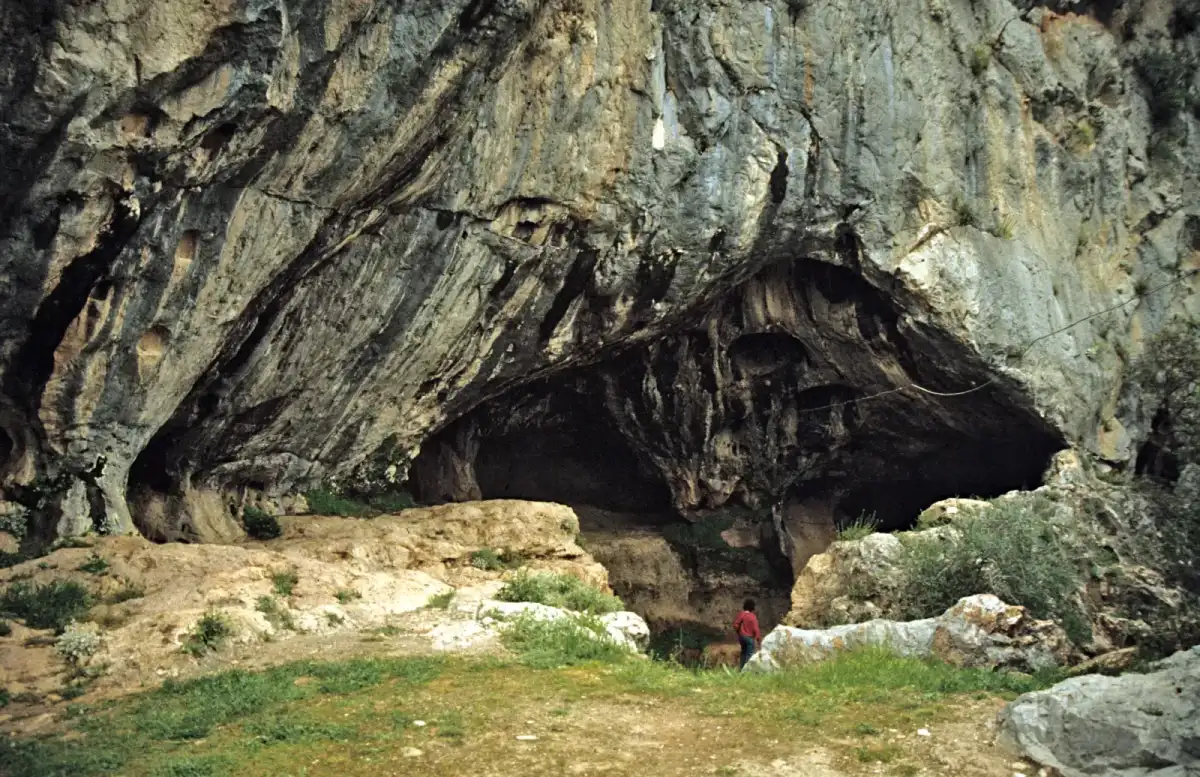
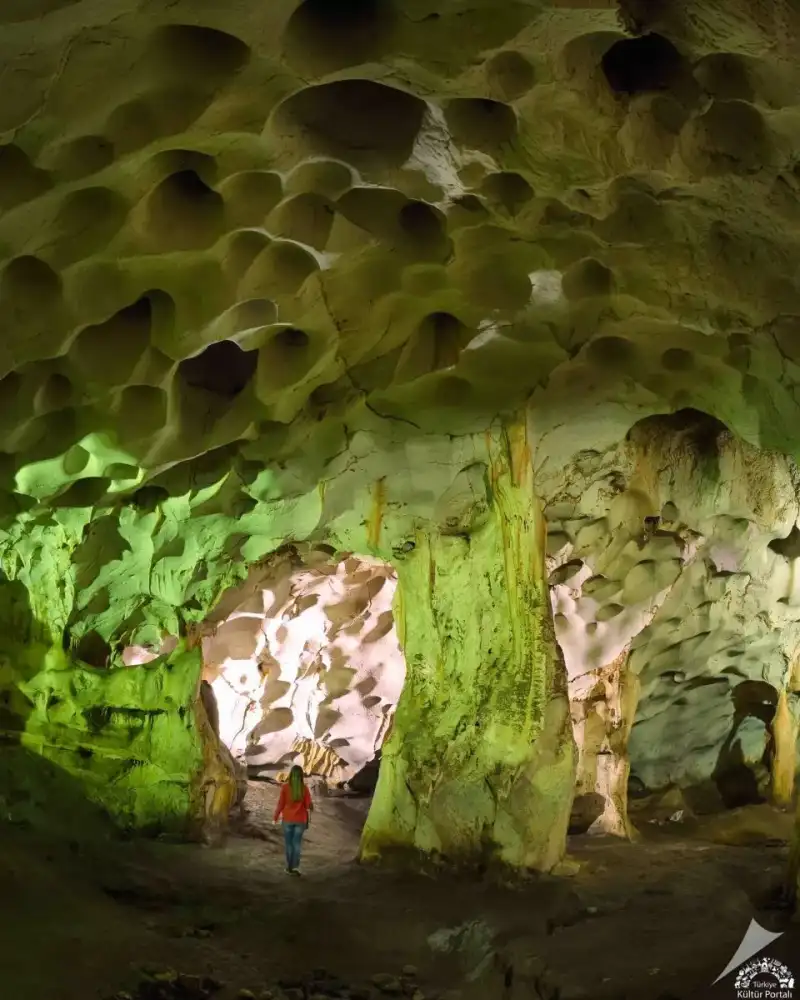
Karain Cave is one of Turkey's largest natural caves, located on the eastern slopes of Mount Katran in Antalya's Döşemealtı district, bearing witness to continuous human settlement since the Paleolithic era.
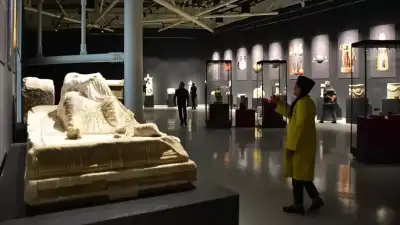
Opening up on the eastern slope of Mount Katran at an elevation of 430-450 meters above sea level, Karain Cave is not only a natural wonder; it is a prehistoric treasure trove containing one of Anatolia's longest-standing records of human settlement. Excavations have unearthed Neanderthal human remains, stone tools, animal bones, and pottery fragments, indicating that the cave was first inhabited at least 150,000–200,000 years ago. A large portion of the artifacts retrieved from the cave is exhibited at the Antalya Archaeology Museum, while some are presented to visitors at the small museum right in front of the cave.
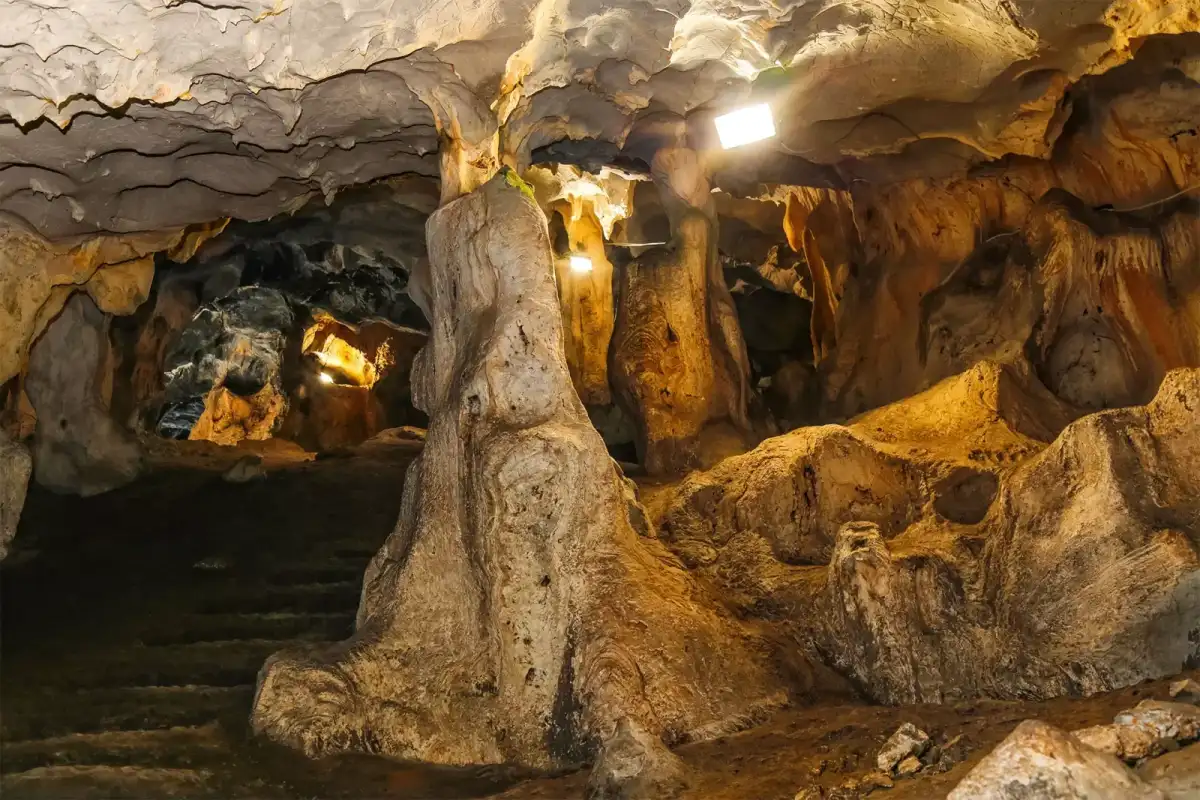
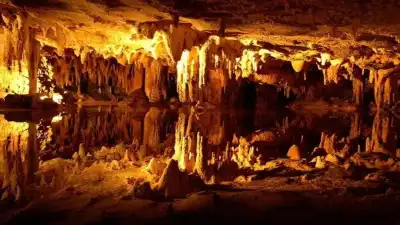
The cave consists of several interconnected chambers. The entrance hall is quite wide, showcasing impressive stalactite and stalagmite formations inside. The lighting system installed along the tour route clearly reveals both the cave's geological texture and the excavation sites. The expansive view stretching over the Antalya plain and the foothills of the Taurus Mountains along the trail leading to the cave is a reward in itself.
Guide's Note
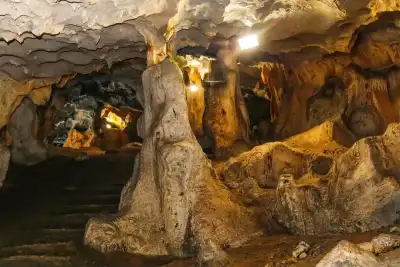
Karain Cave is a historic cave near Antalya considered to be one of humanity's earliest settlement sites. Most visitors emphasize that reaching the cave requires climbing a set of stairs reported to be between 400 and 500 steps. Although the climb is tiring, there are resting spots along the stairs, and the surrounding scenery during the descent is described as enjoyable. Since visits on hot days can be particularly challenging, it is recommended to bring plenty of water and wear comfortable shoes. Entry is available with the Museum Pass, parking is free, and access is possible with all types of vehicles.
The interior of the cave is quite cool, which offers a pleasant relief after the climb, especially in hot weather. History enthusiasts find the cave's past fascinating, and visitors also note that archaeological excavations are still ongoing. However, several visitors mention that there are insufficient information boards or explanations inside the cave, leading to a felt lack of visual support regarding its history and finds.
Before your visit, consider the following points:
- Bat smell: There is a dense bat population inside the cave, and many visitors found the resulting odor unpleasant.
- Safety issues: Stair handrails and safety ropes are broken or missing in places, posing an extra risk for the elderly, children, and those carrying toddlers.
- Slippery ground: The interior floor is quite slippery in places, so step carefully.
- Cafeteria prices: Water prices at the cafeteria inside the facility are reported to be high; bringing your own drinks might be practical.
- Expectation management: The cave is relatively small in size; some visitors felt disappointed after the long climb.
What is Karain Cave?
Karain Cave is located on the eastern slopes of Mount Katran in Yağca Neighborhood, Döşemealtı district of Antalya. Besides being one of Turkey's largest natural caves, it holds a special place in the scientific world as a prehistoric site containing the earliest evidence of continuous human settlement in Anatolia.
Systematic archaeological excavations carried out in the cave revealed that it has a multi-layered past extending from the Paleolithic Age to the Bronze Age, and from there to the Hellenistic and Roman periods. Neanderthal human remains, chipped stone tools, and various animal bones serve as tangible evidence of this long history. A selection of these findings is displayed in the small museum established right in front of the cave.
Best Time to Visit
Although Karain Cave is open to visitors year-round, spring and autumn offer the most comfortable period for both the outdoor weather and the trail leading to the cave. Between April–May and September–October, the view over the Antalya plain is also at its most vibrant.
The cave interior remains cool during the summer months; however, the uphill walk from the parking area to the cave entrance can be tiring in July and August heat. Visitor density decreases in winter, making it a preferred time for those seeking a quieter experience. Keep in mind that the path can be slippery on rainy days.
How to Get to Karain Cave?
The cave is approximately 27-30 km away from Antalya city center. Arriving by car is the most practical option: from Antalya, follow the old Antalya-Burdur highway towards Burdur. Turn off at the Yağca Neighborhood junction and drive for about 5-6 km more to reach the cave. Directional signs are available along the route.
Direct public transport connections are quite limited. Renting a car from central Antalya or opting for day tour options that include city tours provides easier transportation. A parking lot is available near the cave entrance.
How Much Time Should You Allocate?
Karain Cave can be comfortably visited in about 1.5 to 2.5 hours, including the cave tour, the small museum at the entrance, and the surrounding viewpoint. If you have a deep interest in archaeology or prehistory, you might want to spend a bit more time examining the artifacts and reading the information panels at the museum.
The cave can be combined with other historical and natural sites in Antalya to create a day trip itinerary. Especially when combined with other natural beauties around Döşemealtı, a full day can easily be filled.
Recommended Itinerary
You can start early in the morning from central Antalya and make Karain Cave your first stop of the day. After touring the cave, you can take a break at one of the local spots in Döşemealtı that offer traditional village breakfasts. On your way back to Antalya in the afternoon, adding the Ancient City of Perge or Aspendos to your route will enrich your day by blending prehistory with antiquity.
Alternatively, combining Karain with the Antalya Archaeology Museum is also a logical choice, as a major portion of the important artifacts excavated from the cave are exhibited in that museum. This way, you can see the finds first on-site and then in display cabinets.
Photo Spots
The cave entrance, with its wide arched structure, offers framing shots both looking from the inside out and from the outside in. Morning hours, when natural light streams into the cave mouth, create a golden atmosphere, especially in spring and autumn.
Along the trail climbing up to the cave, it is possible to capture panoramic shots featuring both the Antalya plain and the Taurus Mountains at certain points. Using a tripod for the stalactite and stalagmite formations inside the cave will make it easier to get clear images in low-light conditions.
Things to Know Before Visiting
The floor inside the cave can be slippery in places; opt for flat shoes with non-slip soles. Entering in high heels will be both dangerous and uncomfortable. Since the temperature inside the cave remains cool throughout the year, bringing a light layer even in summer is a good idea.
Visiting hours may vary depending on seasonal changes; it is recommended to confirm updated information before arriving. Check on-site whether flash photography is restricted inside the cave. Museum Pass holders can visit free of charge.
This content originates from neresigezilir.com and may not be copied without permission.
Karain Cave Videos
Karain Cave videos load when you open this section to keep the page fast.
Show videos
FAQ
Updated: