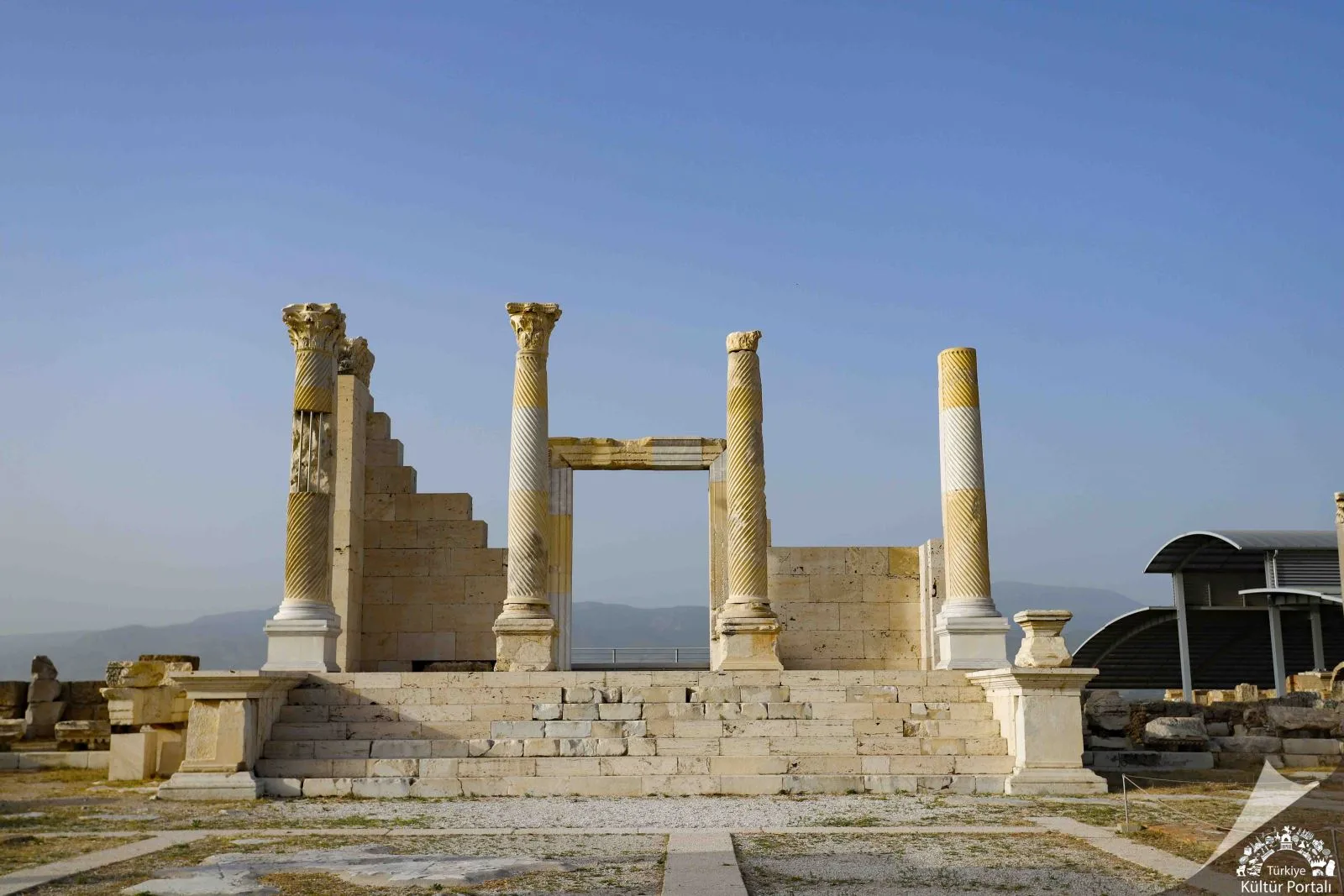
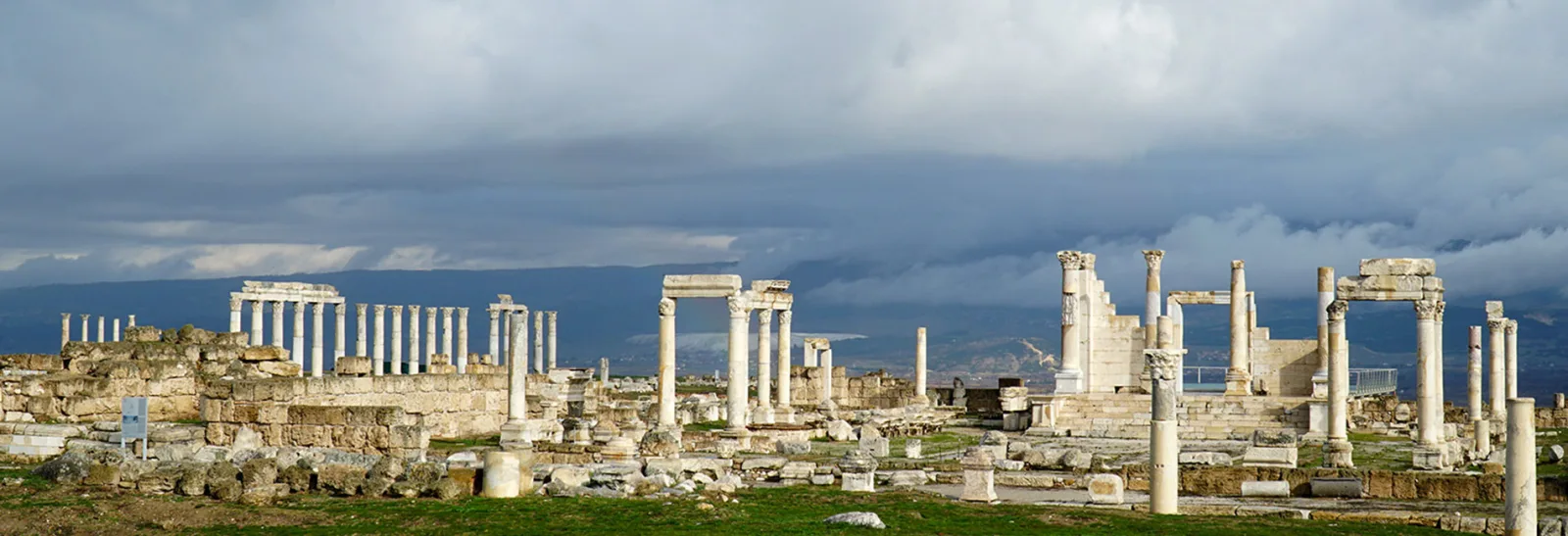
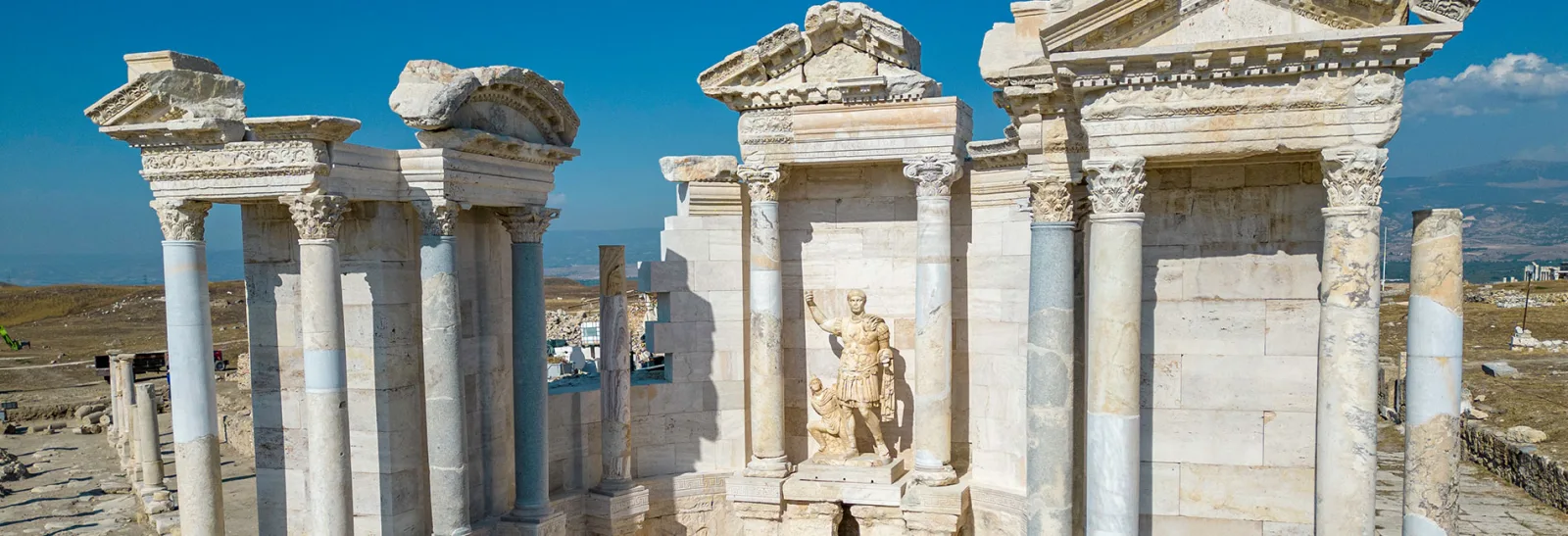
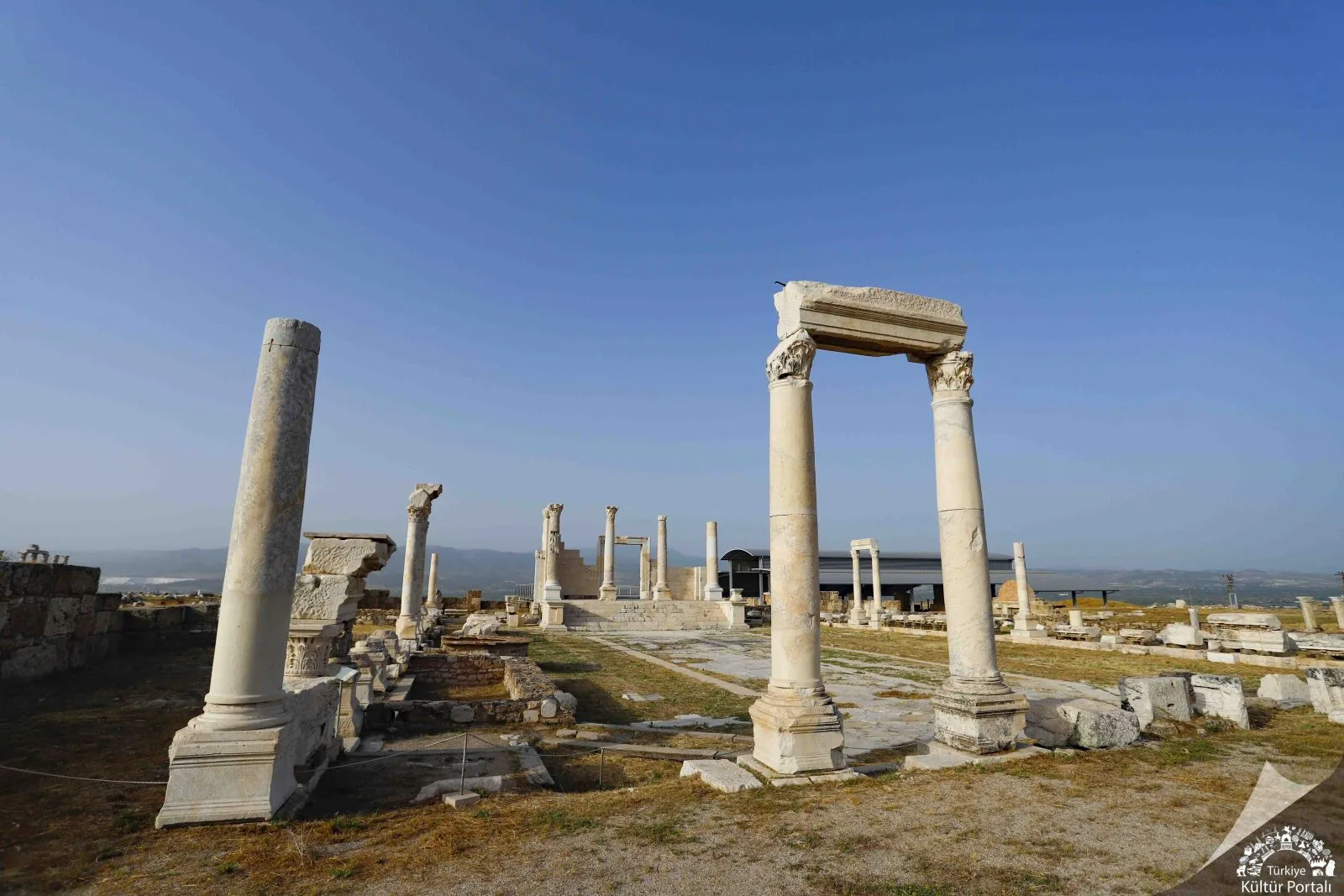
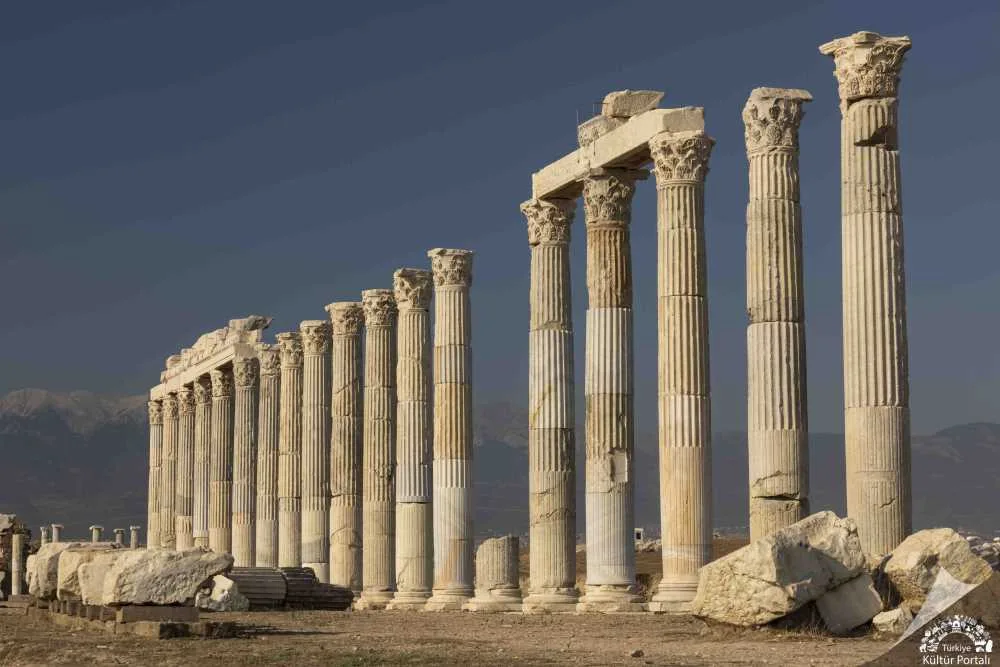
Laodikeia Ancient City, located 6 km north of Denizli, is a 3rd-century BC Roman commercial hub featuring Anatolia's largest stadium, two theaters, five agoras, and one of the Seven Churches of Revelation.
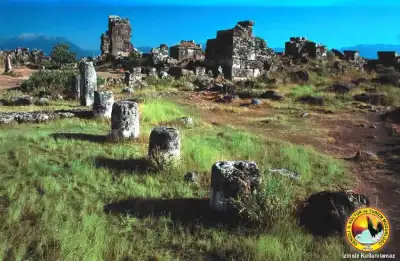
Situated on a gentle hill in the middle of the Lycus Valley, Laodikeia was founded in the 3rd century BC by the Seleucid King Antiochus II and named after his wife, Laodice. Becoming one of the wealthiest commercial cities in the region during the Roman Empire, the city stood out for its advancements in banking, textiles, and medicine. Built on a Hippodamian grid plan, its street layout still reveals how systematically and grandly the metropolis was designed. Anatolia's largest stadium (285x70 meters) is located here; although a large portion remains underground, its sheer scale is awe-inspiring. Two theaters, four bath complexes, and five agoras highlight the vast expanse of the ancient city.
One of the key features setting Laodikeia apart from other ancient sites is that it houses one of the Seven Churches of Asia established in early Christianity. The mosaics inside the church are among the most popular features for visitors, with reviews frequently stressing that the church and its mosaics are absolute must-sees. Information boards across the site feature 3D visual reconstructions, making it much easier to visualize the structures in their original glory. Visitors often note that this detail makes exploring the site far more engaging. Depending on the season, the surrounding landscape covered in poppies and daisies adds an extra layer of visual charm.
Being right next to Hierapolis (Pamukkale) sometimes overshadows Laodikeia's fame; however, many travelers emphasize that it is one of the largest yet least crowded ancient ruins they have ever explored. Walking around during the midday summer heat can be quite exhausting, so visiting towards sunset is frequently highlighted in reviews as a much more pleasant experience. Allocating at least 4-5 hours is recommended for a thorough tour.
When to Visit?
The best time to explore Laodikeia is during April and May. In spring, temperatures are pleasant, and the ground is covered with wild poppies and daisies, creating a striking backdrop against the ancient ruins. In summer, the midday sun can be scorching. Visitors consider the late summer closing time of 21:00 a great advantage, recommending an evening walk to escape the heat. At sunset, the colonnades and theaters take on an enchanted atmosphere. Arriving early in the morning is another excellent choice for those wanting to photograph the site peacefully before tour groups arrive.
How to Get There?
Laodikeia Ancient City is situated about 6 km from Denizli city center, spanning the borders of the Eskihisar, Bozburun, and Goncalı districts. Being located along the road to Pamukkale, you can easily combine visits to both ancient cities on the same day; the drive to Pamukkale takes only 10 to 15 minutes. Parking is available for those arriving by car, though because the ticket counter sits before the parking area, brief queues can occur during peak entry times. The site is easily reachable from central Denizli by taxi or private vehicle.
How Much Time to Spend?
Laodikeia is one of the largest ancient cities in Turkey. Even for a quick overview, you should set aside 2 to 3 hours. If you are a history enthusiast who wants to closely examine every structure—including the stadium, theaters, church, agoras, and bathhouses—plan for at least 4 to 5 hours. Combining Laodikeia with Pamukkale on the same day is straightforward: dedicating the morning to Laodikeia and the afternoon to Pamukkale makes for an efficient itinerary.
Top Photography Spots
Laodikeia offers rich photography opportunities. The colorful floor mosaics inside the church yield striking images under soft morning or evening light. The grand colonnaded streets and ancient theaters acquire a breathtaking look during golden hour. In spring, fields of blooming poppies and daisies surrounding the ruins create vibrant compositions. To capture quiet, uncrowded landscapes, aim to arrive in the earliest hours of the morning before tour buses arrive.
Food & Drink
There is a cafeteria inside the ancient site; however, visitors often note that prices are relatively high. Bringing your own supply of water and light snacks will help preserve both your budget and energy levels during a long walk. Once you exit Laodikeia, plenty of local restaurants and cafes can be found in central Denizli or the Pamukkale district.
Important Tips & Things to Know
Because the archaeological zone is vast and terrain is uneven, wearing comfortable, thick-soled walking shoes is essential. In summer, strong sunlight makes hats, sunscreen, and plenty of water indispensable. Food and drinks at the cafe can be pricey, so carrying your own snacks is advised. Restroom facilities at the entrance are free. Museum Pass holders can skip ticket lines for direct access. As audio guides are currently offered in English, following the informative signs and 3D reconstruction illustrations is the most practical way to explore if you want detailed historical context.
About Laodikeia
Laodikeia was established in the 3rd century BC by Seleucid King Antiochus II, rising to become one of the wealthiest and most populous commercial cities in the region under Roman rule. Renowned for its banking houses, black wool textile industry, and medical school, the city also hosted one of the Seven Churches of Revelation in Asia Minor. Although its proximity to Pamukkale (Hierapolis) often overshadows its reputation, Laodikeia remains one of the largest and most comprehensive archaeological sites in Anatolia. Ongoing excavations and restorations mean visitors frequently discover newly uncovered or meticulously restored monuments on every visit.
This content originates from neresigezilir.com and may not be copied without permission.
Laodikeia Ancient City Videos
Laodikeia Ancient City videos load when you open this section to keep the page fast.
Show videos
FAQ
Updated: