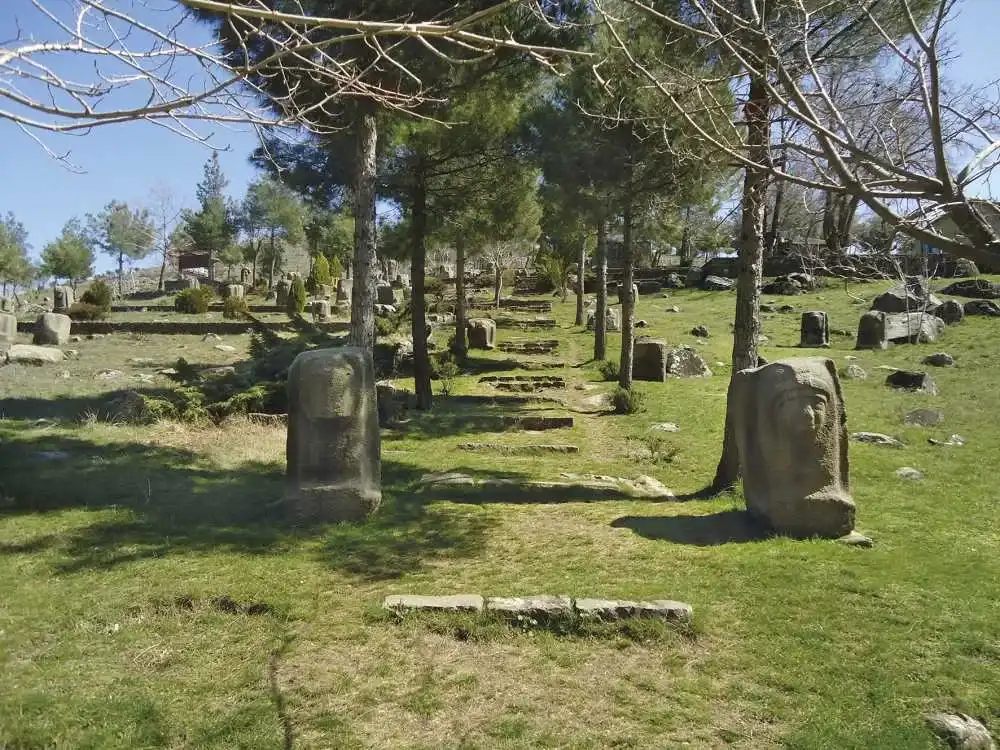
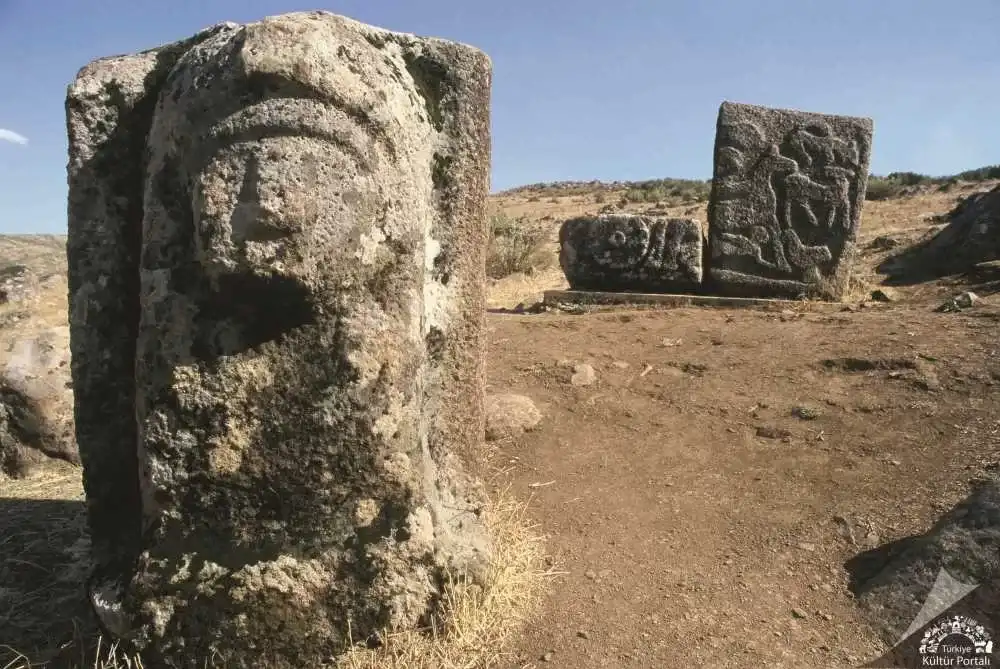
Yesemek Archaeological Site, located in Gaziantep's İslahiye district, is the ancient world's largest sculpture workshop, operating from the mid-2nd millennium BC to the 8th century BC, preserving 518 sculpted blocks in situ.
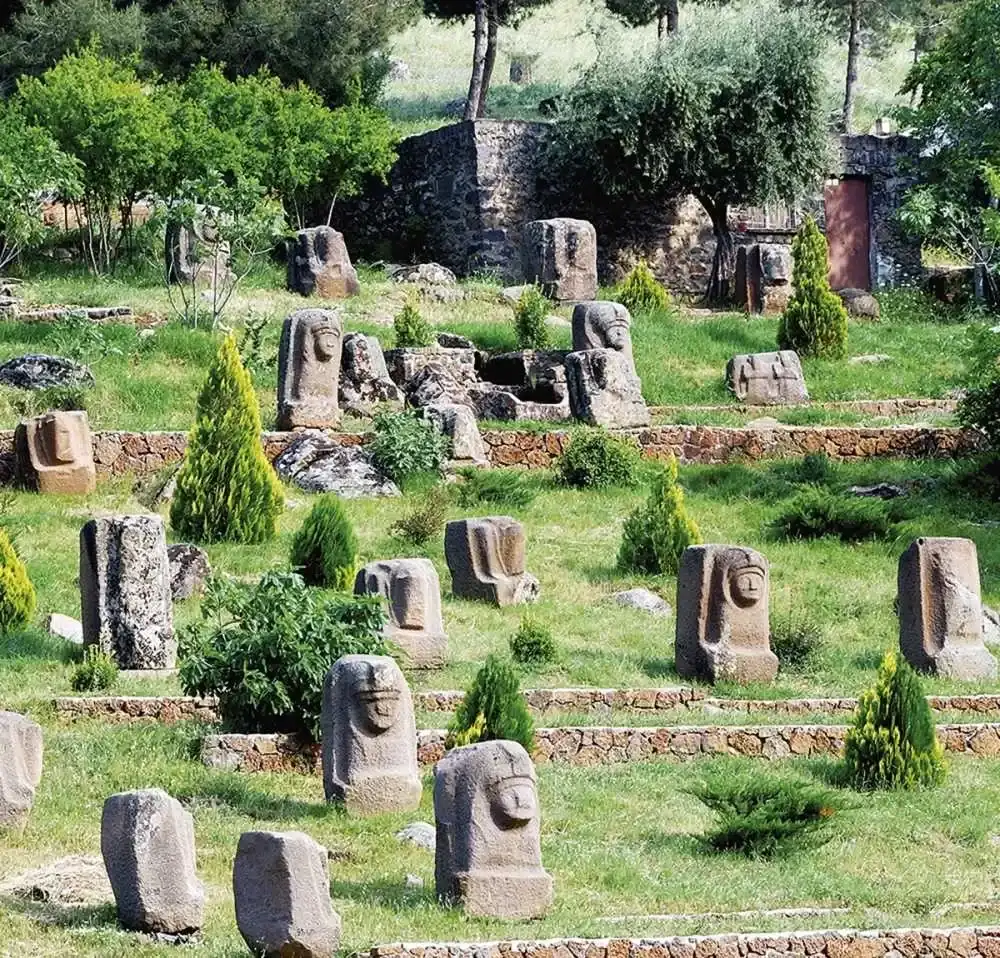
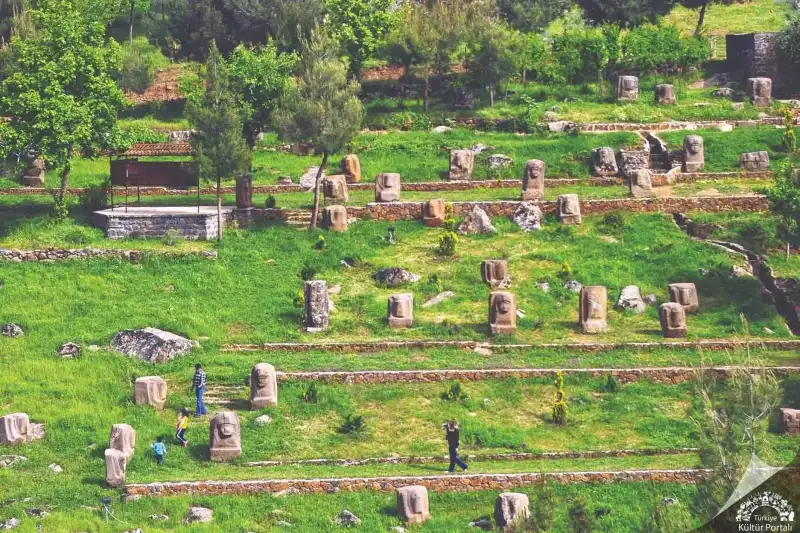
Yesemek Archaeological Site is an open-air archaeological area situated on the ridges of Karatepe, approximately 113 km from Gaziantep city center and 23 km from the district of İslahiye. Operated during the Hittite period, likely by Hurrian master stonemasons, this quarry and sculpture workshop functioned continuously from the mid-2nd millennium BC until the 8th century BC. The site preserves 518 sculptural drafts—including lions, sphinxes, and various relief figures—in situ, right where they were carved. On the upper slopes of the hill, traces of how the stone blocks were quarried can still be observed today.
The site holds the distinction of being the largest known sculpture workshop of the ancient Near East. Unfinished sculptures or those abandoned during transport provide a step-by-step view into the production process of Hittite art—an irreplaceable window unparalleled at any other Hittite site. Following landscaping works sponsored by Opet in 2005, visitor infrastructure was improved, and the site was added to the UNESCO World Heritage Tentative List in 2012. Managed under the Gaziantep Museum Directorate, Yesemek stands as one of Turkey's most unique destinations for archaeology enthusiasts and travelers seeking to experience Hittite civilization firsthand.
Guide's Note
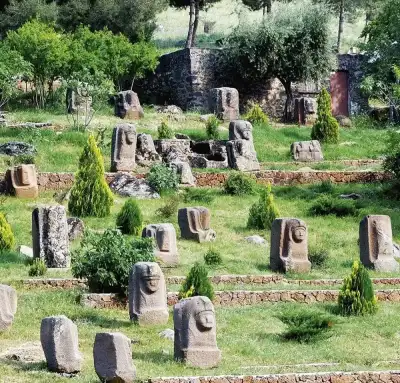
Yesemek Archaeological Site leaves a lasting impression on visitors with its open-air Hittite sculpture workshop dating back approximately 3,200 to 3,400 years. Featuring a blend of finished and unfinished sphinxes, lion statues, and raw basalt blocks, this area stands out as one of the oldest known sculptural production centers in the world. Surrounded by a nearby stream and green landscape, it offers a visually pleasant environment alongside its rich archaeological value.
Visitors appreciate the warm tea offered by locals near the entrance and the historic context shared by knowledgeable attendants. Walking through the main area takes around 15–20 minutes, making it an enjoyable side trip along your route without setting overly high expectations. Some travelers also note enjoying free entry during certain promotional periods.
However, some visitors point out that the presentation and overall infrastructure could be improved. Points to keep in mind include:
- Information panels are present, but some visitors find the descriptions overly brief and feel the background stories of the sculptures could be detailed more thoroughly.
- While a modern restroom facility exists, feedback notes it can be poorly maintained, with issues such as missing water in the men's section or lack of cleaning supplies in the women's section.
- Climbing up the stone quarry in high temperatures can be exhausting; visiting early in the morning during summer is advisable.
- Driving to the site in your own vehicle is highlighted as the most reliable way to arrive.
Best Time to Visit
Yesemek is an open-air site exposed to the harsh continental climate of Southeastern Anatolia. April, May, and October offer the most comfortable conditions in terms of temperature and wind. During the summer months (June–August), temperatures can reach 35–40°C; because the area offers no shade, starting your tour early in the morning makes a huge difference. Winter months occasionally bring cold weather and rain, which may turn unpaved pathways muddy.
Weekends bring a slight increase in visitors from nearby İslahiye; opt for a weekday visit if you prefer a quieter experience. The surrounding countryside is also visually stunning in the spring.
How to Get to Yesemek
The most practical way to reach Yesemek Archaeological Site is by private car. From Gaziantep city center, you can follow the Kilis road or route through the Karapolat–Akınyolu villages for a drive of about 113 km. Road signs guide you along the route, though the final few kilometers follow narrow village roads requiring careful driving.
Hiring a taxi from İslahiye district center is another popular option; the distance from İslahiye is approximately 23 km. Regular buses run from Gaziantep to İslahiye, from where you can continue by taxi. Direct public transport to the site is currently not available.
Where to Eat Nearby
Dining options around the immediate perimeter of Yesemek Archaeological Site are practically nonexistent. We recommend heading to İslahiye district center before or after your visit. Local eateries in İslahiye offer simple yet satisfying tastes of Gaziantep cuisine, including lentil soup, regional kebabs, and freshly baked flatbreads (pide).
If you plan a full-day trip, bring adequate water and snacks with you, as there are no cafes or food kiosks on-site.
Photography Spots
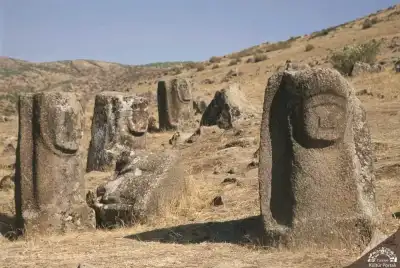
Yesemek is a rewarding destination for photography enthusiasts. Hundreds of unfinished basalt sculptures scattered along the Karatepe ridges produce striking images under the low-angled light of early morning or late afternoon. Close-up shots of sphinxes and lion statues accentuate the texture of the stone, evoking a powerful sense of ancient history.
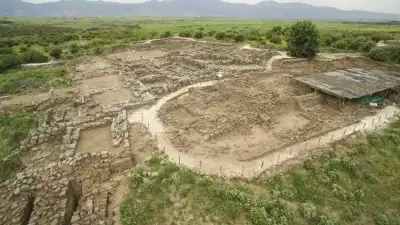
Looking down from the upper quarry area captures both the layout of the workshop and the surrounding rural scenery. A wide-angle lens or a drone (check permit rules in advance) works well for conveying the scale of the site. Midday sun creates harsh shadows due to the lack of tree cover, so aiming for the golden hours is recommended.
Things to Know Before You Go
Yesemek is not an enclosed museum building; it is a fully open-air archaeological reserve traversed on natural, uneven ground. Visitor comments frequently mention limited site maintenance and preservation barriers; many sculptures rest out in the open without physical shelters.
The site is not suitable for wheelchair access or strollers due to rocky, uneven paths. Essential items for your visit include plenty of drinking water, sunscreen, and closed-toe walking shoes. Because there are limited facilities on-site, taking care of restroom needs in İslahiye before heading to the ruins is recommended.
How Much Time to Spend?
A half-day is sufficient to explore Yesemek Archaeological Site. Walking through the site takes roughly 1.5 to 2.5 hours, though visitors wishing to photograph or closely inspect every carving may spend a bit longer. It works well as a day trip from Gaziantep; stopping in İslahiye for a local lunch on the return trip makes a pleasant addition to your itinerary.
If you wish to discover multiple historical sites in the region, researching neighboring Hittite ruins allows you to craft a broader cultural itinerary across Southeastern Anatolia.
Historical Significance of Yesemek
Yesemek holds the distinction of being the largest known sculpture workshop in the ancient Near East. Established under Hittite rule in the mid-2nd millennium BC, the quarry and workshop were likely operated by skilled Hurrian stonemasons. Throughout its long production period ending in the 8th century BC, statues of lions, sphinxes, mountain deities, and decorative reliefs were carved here before being transported to various cities across the Hittite Empire.
Among the 518 sculptural drafts remaining at the site, some were left incomplete while others were abandoned mid-transit. This provides a rare opportunity to observe every phase of Hittite stone carving step by step—a feature unmatched at any other Hittite archaeological site. Added to the UNESCO World Heritage Tentative List in 2012, Yesemek remains one of Turkey's most distinctive archaeological treasures.
This content originates from neresigezilir.com and may not be copied without permission.
FAQ
Updated: