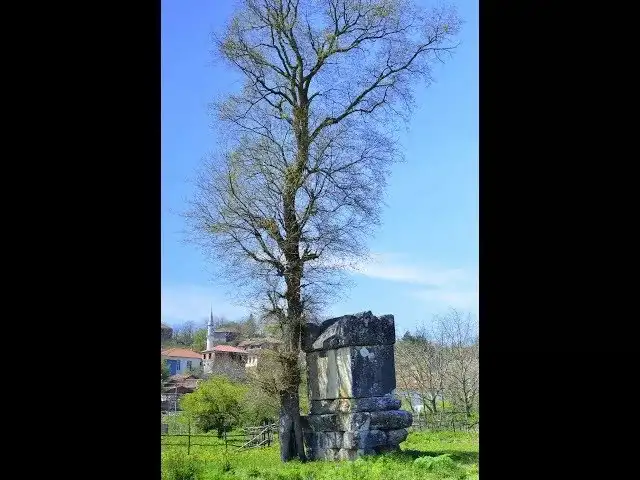
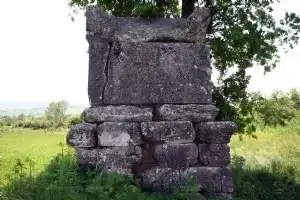
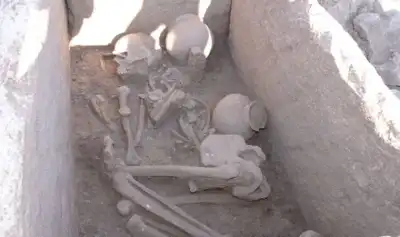
The Şemsettin Village Sarcophagus is a Roman-period marble tomb located in Körfez, Kocaeli, famous for its Greek inscription and ancient curse tablet.
Located on private property (parcel numbers 1333-1334) in Şemsettin Village of Körfez district, standing in an east-west orientation, this sarcophagus dates back approximately 2,000 years to the Roman period. Being preserved in-situ (without being moved from where it was found) makes it exceptionally valuable both archaeologically and in terms of authenticity. Four rows of stone blocks can also be seen around the sarcophagus.
The most striking aspect of the sarcophagus is the Greek inscription carved onto it. The individual who introduces herself as Octavia, a Roman woman, describes having lived a happy life in and around Nicomedia (ancient İzmit), making good marriages, and bearing beautiful children. The continuation of the inscription contains a curse: it states that anyone who opens the sarcophagus, disturbs her body, or steals her jewels will pay 40,000 silver coins to the nearest Roman legion and bear the full curse of the gods forever. The inscription closes with a greeting to the living. Such curse inscriptions were widely used in the Roman world to protect tombs; such a well-preserved example is extremely rare in Kocaeli.
Evaluated within the scope of cultural tourism, the sarcophagus is situated at a point accessible by road. Visitors to the village highlight its clean nature and nostalgic atmosphere, with the proximity of the forest and the quiet village structure complementing the visit.
Guide's Note
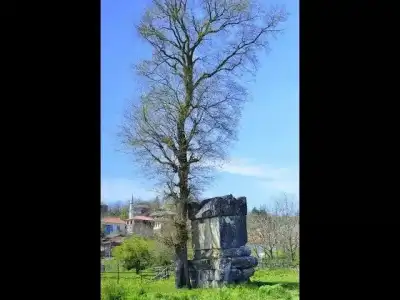
Located in Şemsettin Village of Kocaeli, this sarcophagus stands out as one of the most intriguing historical remains in the region, boasting a history of nearly 2,000 years. Visitors find the largely intact structure and the Greek inscription carved upon it particularly fascinating. The inscription, in which a woman identifying herself as Octavia describes her life and issues severe warnings to potential grave robbers, adds remarkable historical depth to the site.
The village itself receives positive feedback from visitors as well. Its fresh air, proximity to the forest, and nostalgic countryside atmosphere are frequently praised. Its relative proximity to highway exits is also noted as a convenience.
However, most available visitor reviews are over two years old, and reviews focusing directly on the sarcophagus itself are quite limited. Therefore, keep the following points in mind:
- Since detailed reviews about the sarcophagus are few, it is advisable to check current access conditions before your trip.
- Online comments often blend the village and the sarcophagus together, so there is little specific information regarding site maintenance or visitor infrastructure.
Best Time to Visit
Since the sarcophagus is situated outdoors on private land, weather conditions directly impact your visit. April–June and September–October are the most favorable months both for mild weather and lush greenery around the village. High summer temperatures can be intense, so visiting between 09:00 and 11:00 ensures a much more comfortable experience. In winter, village roads can become muddy, so vehicle selection requires care.
How to Get There
Şemsettin Village belongs to the Körfez district of Kocaeli. It is reached by road from the Körfez district center. Driving a private car is the most practical method; as village roads are narrow, small or mid-sized vehicles are recommended. For public transport options, we suggest checking current minibus schedules with Körfez Municipality. Taxis from central İzmit or Körfez are also an option.
About the Octavia Sarcophagus
The sarcophagus belonged to a Roman woman named Octavia who lived in the region during the Roman period. In the Greek inscription, Octavia introduces herself as someone who lived a happy life in and around Nicomedia (modern İzmit), made good marriages, and raised fine children. The second part of the text contains a curse directed at anyone who opens the sarcophagus, disturbs her body, or steals her jewels: a fine of 40,000 silver coins to the nearest Roman legion and the eternal curse of the gods. Such curse formulas were standard legal-religious practices used in the Roman world to deter grave robbing.
The sarcophagus is situated east-west on private land (parcel numbers 1333-1334), with four rows of stone blocks visible around it. It is promoted by Kocaeli Metropolitan Municipality and Körfez Municipality as one of the district's key historical assets.
Photography Spots
The most striking photos of the sarcophagus are close-up shots where the Greek inscription is clearly visible. The carved details on the stone surface become much more pronounced under daylight; morning and early afternoon sun angles highlight the lettering beautifully. Taking a few steps back captures the whole sarcophagus along with the surrounding stone blocks and rural village backdrop, adding depth to your photos.
Things to Know Before Visiting
The sarcophagus lies within private property boundaries. Before planning your visit, contact Körfez Municipality or the village head (muhtar) to confirm current access conditions. It is a legal requirement not to touch or alter the sarcophagus or surrounding stones, as they are protected under cultural heritage laws. Leaving the area clean is also an important courtesy to the village residents.
Where to Eat Nearby
There are no restaurants or cafes inside Şemsettin Village itself. For dining, you will need to head into the Körfez district center. In Körfez, along the Izmit Bay coastline, you can find various seafood restaurants and local eateries. If you plan your visit around midday, bringing snacks and water along is recommended.
How Much Time to Allocate
Allocating 30 to 60 minutes is sufficient for viewing the sarcophagus itself. For travelers who also wish to enjoy the peaceful village atmosphere, nearby forests, and rural scenery of Şemsettin, a half-day itinerary is more satisfying. Those interested in exploring other historical and natural spots across Körfez district can plan a full-day trip.
This content originates from neresigezilir.com and may not be copied without permission.
Şemsettin Village Sarcophagus (Octavia Sarcophagus) Videos
Şemsettin Village Sarcophagus (Octavia Sarcophagus) videos load when you open this section to keep the page fast.
Show videos
FAQ
Updated: