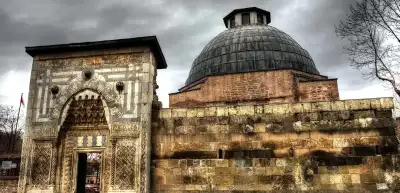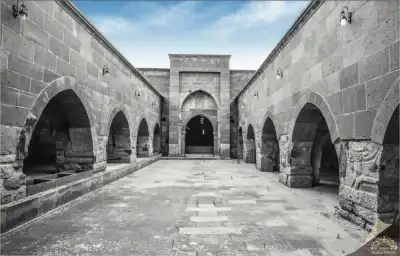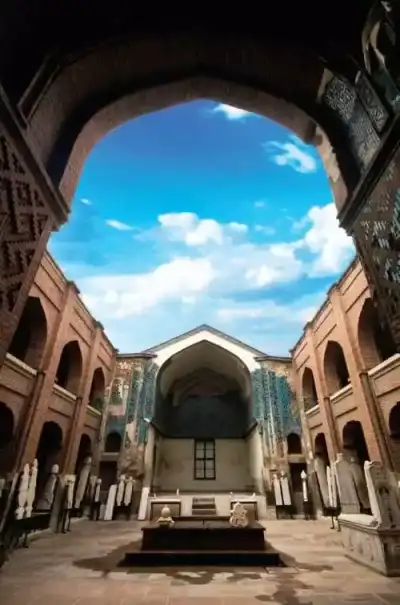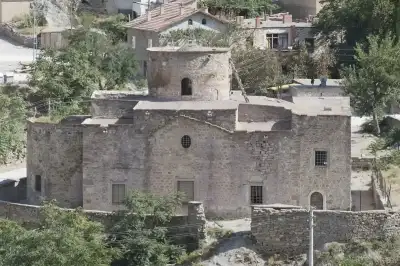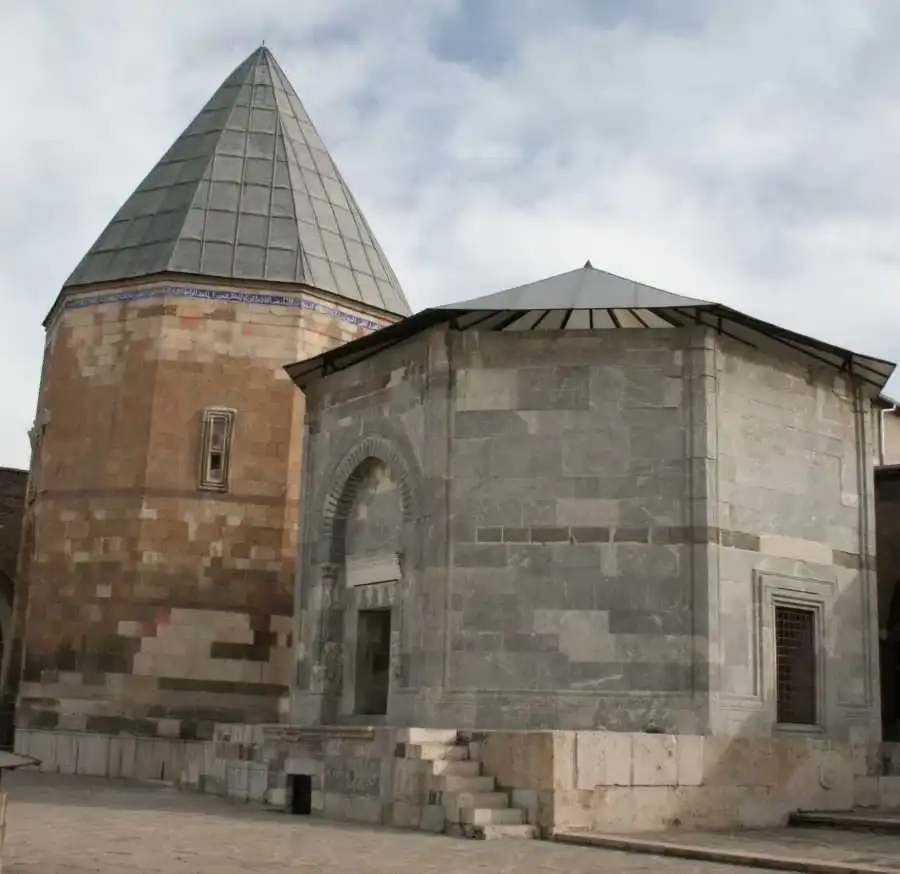
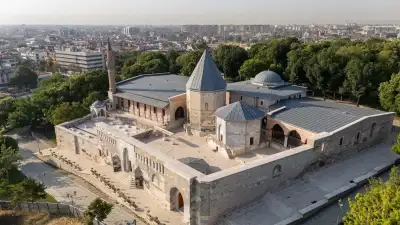

The Alaaddin Tomb is an Anatolian Seljuk-era mausoleum located on Alaaddin Hill in central Konya. Reflecting Seljuk architecture with its fine stonework and geometric ornaments, the exterior and surroundings can be visited for free.
The Alaaddin Tomb is one of the Seljuk-era mausoleums sitting atop Alaaddin Hill in central Konya. This mound has been inhabited since prehistoric times and served as a palace and religious center when the Seljuks used Konya as their capital. The tomb remains a tangible and standing legacy of this deep-rooted history.
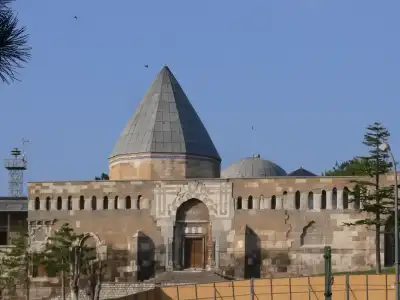
Standing out with its stonework and geometric decorations, the structure conveys the true spirit of Seljuk-era Konya when viewed alongside the adjacent Alaaddin Mosque. The panoramic view opening up over the city center from the hill adds an extra layer to the visit.
Guide's Note
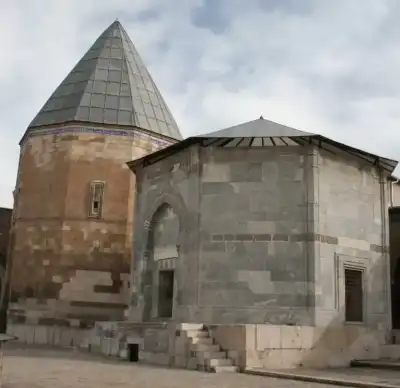
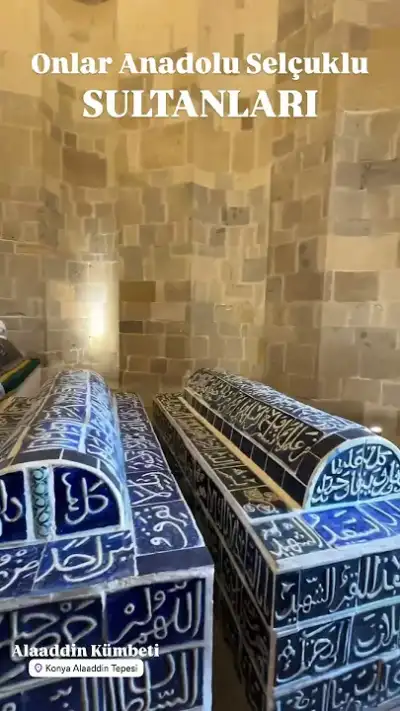
Rising on Alaaddin Hill in the center of Konya, this structure is an important stop for history enthusiasts as it houses the sarcophagi of eight to eleven Anatolian Seljuk sultans. Here you can see the tombs of prominent figures of the era, such as Kilij Arslan II, Alaeddin Keykubad I, and several Ghiyath al-Din Kaykhusraws. Visitors note that knowing this rich historical background enhances the depth of the experience.
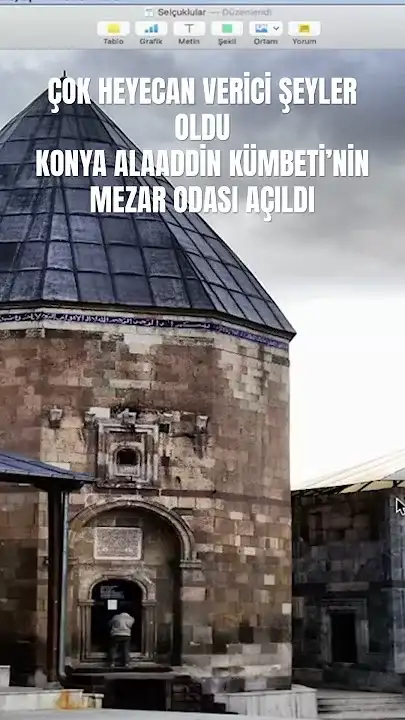
The architecture of the building is also striking. Featuring a ten-sided ashlar stone body and a pyramidal cone roof from the outside, the tomb is considered a unique example of Seljuk mausoleum architecture. Recommended to be visited alongside the Alaaddin Mosque, it is a popular spot for cultural and religious heritage tourism in the city.
When planning your trip, consider the following practical details:
- Interior opening hours may be limited: Multiple visitors mention finding the tomb closed; according to one review, it only opens during Friday prayer times.
- Friday guard change: It is reported that entering the interior is not possible on Fridays due to guard changes, leaving only the external symbolic stones visible.
- Access expectations: Some visitors wish the site were open to the public during broader hours; checking in advance can help ensure a smoother visit.
Best Time to Visit
Summers in Konya are quite hot and dry. If you want to comfortably explore the Alaaddin Tomb and surrounding historical sites, the months of April–May and September–October are much more pleasant. During these periods, the weather is mild, making time spent on the hill effortless. If visiting in summer, choose early morning or late afternoon; finding shade on the hill around noon is quite difficult.
In winter, Konya can be cold and occasionally snowy. While a snow-covered Alaaddin Hill offers a distinct ambiance, it is wise to check weather conditions in advance. The city receives high visitor volume during religious holidays and the Whirling Dervish Commemoration Ceremonies in December, so starting early on these dates will make your visit smoother.
How to Get to Alaaddin Tomb
Since the Alaaddin Tomb is right in the heart of Konya, getting there is very simple. You can take the Konya Tramway, get off at the Alaaddin stop, and walk up the hill in just a few minutes. Most city bus lines also pass through this area.
For those walking from the Mevlana Museum, the distance is about 1 kilometer. Taking this stroll while soaking in the city's historic ambiance is enjoyable in itself. Parking is available around the hill for those arriving by taxi or car, but public transport remains the most practical choice given its central location.
How Much Time Should You Spend?
The Alaaddin Tomb alone warrants a 30–45 minute visit. Since the mausoleum forms a unified complex with the Alaaddin Mosque and Alaaddin Hill, planning 1 to 1.5 hours to explore all three together is more appropriate. Leave a little extra time to take photos and enjoy the view over the city center.
When combined with other historic attractions in Konya—such as Karatay Madrasa, Ince Minaret Madrasa, and Mevlana Museum—it easily fills a full day. A minimum of two full days is recommended for travelers who wish to explore the city thoroughly rather than superficially.
Suggested Itinerary: A Day in the Footsteps of the Seljuks
For travelers interested in exploring Konya's historical heritage, this itinerary makes a great starting point: Start early in the morning at Alaaddin Hill; visit the tomb and mosque, then enjoy the city view from the hill. Next, walk over to Karatay Madrasa, where the tile collection and dome architecture are truly impressive.
In the afternoon, visit Ince Minaret Madrasa to tour the Museum of Stone and Wood Artworks. Wrap up your day at the Mevlana Museum and Tomb. For dinner, choose one of the local restaurants serving Konya's famous etli ekmek (flatbread with minced meat) and oven-roasted lamb kebab.
Where to Eat Nearby
Right around Alaaddin Hill and along the nearby walking streets, you will find numerous restaurants serving classic Konya cuisine. Etli ekmek is an iconic Konya specialty available all across the city; the bakery-restaurants you pass as you head down the hill are reliable places to try it.
Fırın kebabı (oven-baked lamb kebab), bamya çorbası (okra soup), and höşmerim (a sweet cheese dessert) are among the staples of Konya dining. Small local eateries located in the downtown bazaar area offer both budget-friendly prices and an authentic culinary experience.
Photography Spots
Morning light is ideal for capturing close-ups of the Alaaddin Tomb's stonework and geometric carvings, as the eastern facade receives beautiful sunlight at sunrise. Framing the tomb with the minaret of Alaaddin Mosque in the background creates a compelling composition.
The viewpoints overlooking Konya city center from Alaaddin Hill are also great for urban photos. Pictures of the city skyline taken from the hill around sunset yield particularly great results. A wide-angle lens or smartphone camera is more than sufficient for this area.
Things to Know Before You Visit
Since the paths leading up Alaaddin Hill are paved with cobblestones and inclined, wearing comfortable, flat walking shoes is recommended. Walking up the hill in high heels can be both difficult and risky. Carrying water with you is important, especially during the summer months.
Because the building is a religious and historic sanctuary, a quiet and respectful attitude is expected during your visit. When visited together with Alaaddin Mosque, modest clothing (and a headscarf for women) may be required for entering the mosque. Take care not to disturb other visitors or worshippers while taking photographs.
This content originates from neresigezilir.com and may not be copied without permission.
Alaaddin Tomb Videos
Alaaddin Tomb videos load when you open this section to keep the page fast.
Show videos
FAQ
Updated: