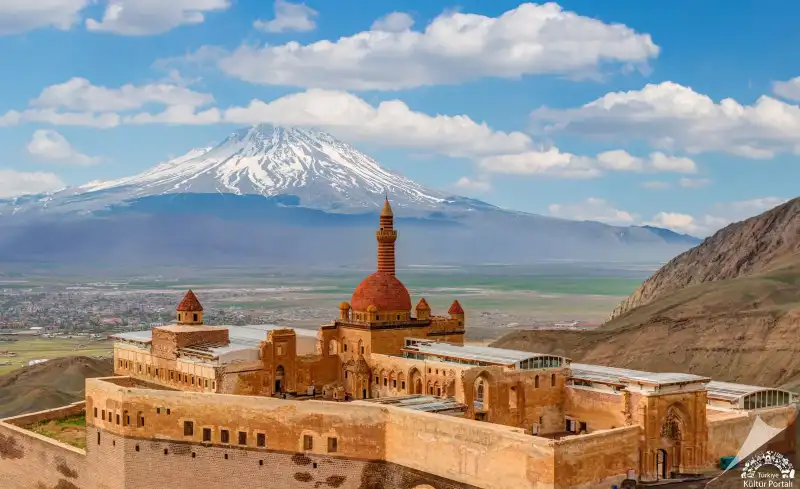
I have prepared a 3-day itinerary covering Ağrı and Erzurum for a family trip in the heart of Eastern Anatolia. This program offers rich content, from the splendor of Ishak Pasha Palace to the mystery of the Meteor Crater, from the mystical atmosphere of Noah's Ark to Erzurum's Seljuk madrasahs. Feel the spirit of the East with this route that brings history and nature together.
I have prepared a three-day itinerary covering Ağrı and Erzurum to discover the historical and natural riches of Eastern Anatolia. This trip brings together both architectural wonders and natural formations. A program full of stops that are easy to visit for families, consider walking distances, and where you can take plenty of photos awaits you.
Ishak Pasha Palace
We start our first day in Ağrı with Ishak Pasha Palace, the symbol of Doğubayazıt. This 18th-century complex, built on a hill, is a structure with 116 rooms. It stands out with one of the first central heating systems and its ornate stone decorations. As you wander through the courtyards, harem, and selamlik sections of the palace, you can observe the intricacies of Ottoman architecture. Photographing the palace in its reddish tones, especially towards sunset, is a must.
Doğubayazıt Urartian Castle
Right next to Ishak Pasha Palace, on a steep rocky outcrop, stand the ruins of Doğubayazıt Urartian Castle. Its proximity to the palace makes visiting both structures very easy. Inside the castle, there are traces from the Urartian period such as rock tombs, a temple, and water cisterns. Admission is free, and after the palace, you can spend a short time here to touch the older layers of the region.
Old Beyazıt Mosque
Located at the foot of Doğubayazıt Castle, the Old Beyazıt Mosque is a single-domed Ottoman structure dating from the reign of Selim I. With its cut stone masonry and simple architecture, it is one of the oldest religious structures in the region. In the courtyard of the small but detailed mosque, remnants of a fountain and library can also be seen. It is an ideal stop for a short break with its calm atmosphere.
Ahmedi Hani Tomb
The tomb of Ahmed-i Hani, the author of the Masnavi Mem û Zîn, an 18th-century scholar and poet, is located close to Ishak Pasha Palace. The tomb, with its adjacent mosque and cemetery, is one of the spiritual stops in the region. Here you can commemorate a historical figure and visit the graves of the sayyids in the vicinity. It is an important point especially for those seeking a spiritual atmosphere.
Doğubayazıt City Museum (Ahmed-i Hani City Museum)
As the last stop of the day, visit the Doğubayazıt City Museum. In the museum, which consists of two separate buildings, Ahmed-i Hani's life is brought to life with silicone sculptures. In the other building, traditional local life is exhibited in the Old Bayezid House with adobe architecture. It offers a pleasant stroll with its fountain courtyard. It can also be an educational and interesting stop for children.
We start our second day by exploring the natural wonders of Ağrı. Our route is a bit more scattered, but each stop is worth seeing.
Meteor Crater
Located 35 kilometers east of Doğubayazıt, within Mount Ağrı National Park, the Meteor Crater is a cylindrical depression 60 meters deep and 35 meters in diameter. It is popularly known as the trace of a meteorite that fell in 1892. Its desolate and quiet nature, with views overlooking the Iğdır plain, offers a different experience. You can allocate approximately 1.5 hours to visit here.
Noah's Ark
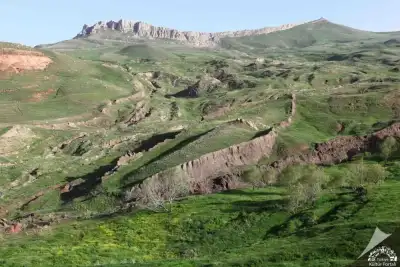
On the southern slope of Mount Ağrı, between the villages of Telçeker-Üzengili, there is a ship-shaped natural land formation. It was discovered in 1959 and associated with the legend of Noah's Flood. There is also a small visitor center in this area, which is protected as a natural site. This is an intriguing stop with both its natural beauty and mystical story.
Ice Cave
Located at the foothills of Little Mount Ağrı, near Hallaç village, the Ice Cave is known for its stalactites and stalagmites that do not melt throughout the year. The cave, covered with basalt rocks, is part of the same lava tunnel system as the Meteor Crater. In this natural formation, approximately 100 meters long, you will find a cool atmosphere even in the summer heat. Admission is free, and a visit of about 1.5 hours is sufficient.
Diyadin Hot Springs
Located in the Diyadin district of Ağrı, on the banks of the Murat River, this thermal area consists of the Davut, Yılanlı, Tunca, and Köprü hot springs, known for their mineral-rich water at 60-70°C. You can relax in its waters, which are said to be beneficial for rheumatism and skin conditions, and shake off the day's fatigue. There are also facilities where you can have a pleasant time with children.
Diyadin Canyon
Right near the hot springs, Diyadin Canyon, where the Murat River passes through steep cliffs, captivates with its natural beauty. With trekking trails, small waterfalls, and natural pools, it is an ideal place for nature lovers. Here you can take a short walk and enjoy the fresh air and scenery.
For our third day, we move from Ağrı to Erzurum. After a journey of approximately 3 hours, we will delve into the historical fabric of Erzurum.
Twin Minaret Madrasah
When you arrive in Erzurum, your first stop should be the Twin Minaret Madrasah, considered the symbol of the city. This 13th-century Seljuk madrasah is notable for its stone masonry on the stone gate and its two minarets. Built by Hüdavend Hatun, this madrasah is easily accessible in the center of Erzurum. Wandering through its inner courtyard and examining its architectural details may take about 1.5 hours.
Three Tombs
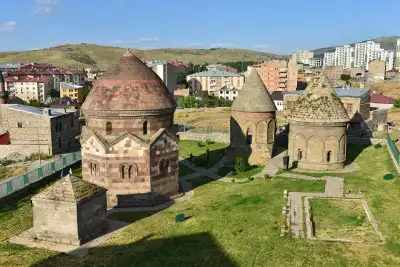
Behind the Twin Minaret Madrasah, opposite the Erzurum Museum, are the Three Tombs, monumental tombs from the Seljuk period. The largest is the Emir Saltuk Tomb, dating to the late 12th century. It stands out with its octagonal body and animal figures such as bulls, snakes, bats, and eagles on its facades. Admission is free and takes approximately 20 minutes.
Erzurum Museum
The Erzurum Museum, adjacent to the Three Tombs, has a vast collection spanning from the Chalcolithic Age to the Ottoman period. Karaz Culture artifacts, Urartian, Roman, and Byzantine era finds are exhibited in the modern two-story building. The mammoth skeleton at the entrance will also attract children's attention. You can enter with a MuseumCard; plan for a visit of approximately 1.5-2 hours.
Yakutiye Madrasah Turkish Islamic Works and Ethnography Museum
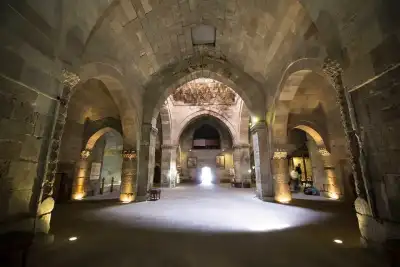
Located in the city center of Erzurum, Yakutiye Madrasah was built in 1310 during the Ilkhanid period and is the largest madrasah with a closed courtyard in Anatolia. It stands out with its leopard-eagle figures on the stone gate and its ethnography collection. The marble waqf inscription and the remnants of the tiled minaret are also worth seeing. It is ideal for a visit of approximately 1.5 hours.
Redoubts (Aziziye and Mecidiye Redoubts)
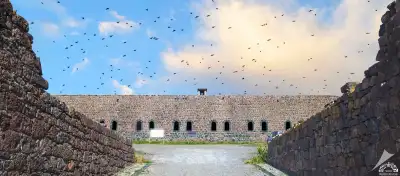
At the end of the day, visit the Aziziye and Mecidiye Redoubts, located 3 km from Erzurum city center. These stone structures, which protected the city during the 1877-1878 Ottoman-Russian War, offer a historical atmosphere. Nene Hatun's tomb is also located in the Aziziye Redoubts. From the redoubts, you can watch the panoramic view of Erzurum and witness history.
This route is ideal for families who want to explore both the historical and natural beauties of Eastern Anatolia. For meal breaks, you can find many restaurants offering local delicacies in Doğubayazıt and Erzurum city center. Traveling by your own car will facilitate transitions between stops. I wish you a pleasant trip!
This content originates from neresigezilir.com and may not be copied without permission.
Places in This Article
Places to visit mentioned in this article
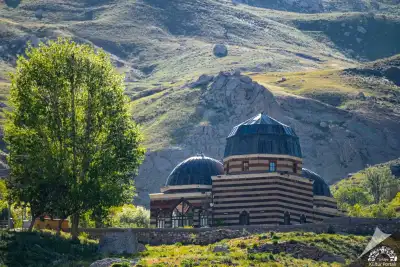
Ahmed-i Hani Tomb
The 18th-century tomb of Ahmed-i Hani, author of Mem û Zîn, located near Ishak Pasha Palace …
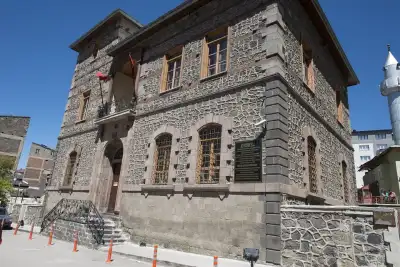
Atatürk House Museum
The mansion where the Erzurum Congress was held for 52 days is now a free museum. Mustafa Ke…
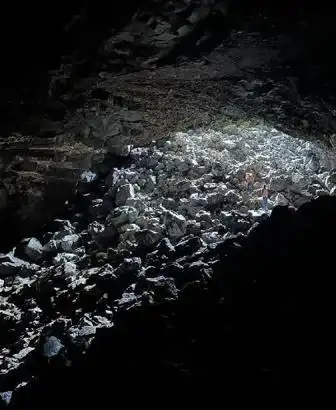
Ice Cave
A natural cave located near Hallaç village, Doğubayazıt, at the foot of Mount Küçük Ağrı. It…
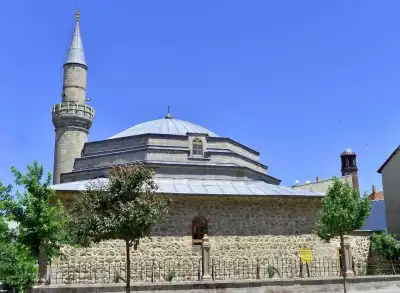
Caferiye Mosque
This 1645 Ottoman mosque on Cumhuriyet Street in Erzurum was built by the treasurer Hacı Caf…
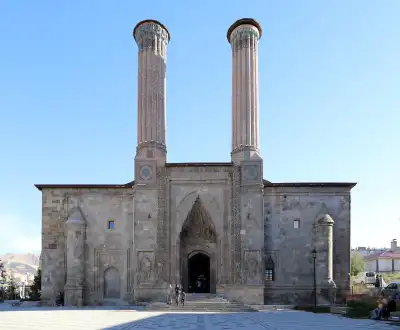
Twin Minaret Madrasah
A 13th-century Seljuk madrasah considered the symbol of Erzurum. Built by Hüdavend Hatun, th…
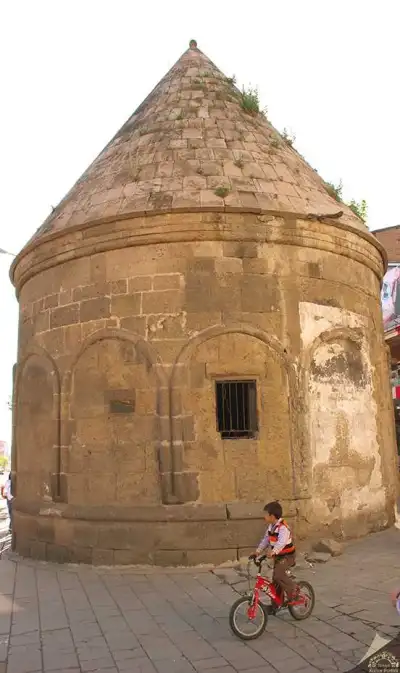
Cimcime Hatun Tomb
An early 14th-century tomb monument located in Erzurum city center, near the Grand Mosque. A…
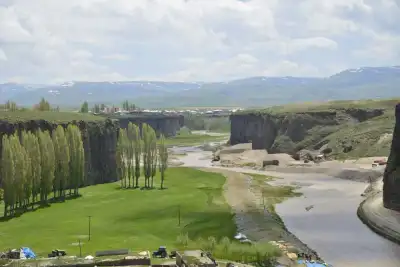
Diyadin Canyon
A natural canyon in Diyadin district of Ağrı, through which the Murat River flows. A popular…
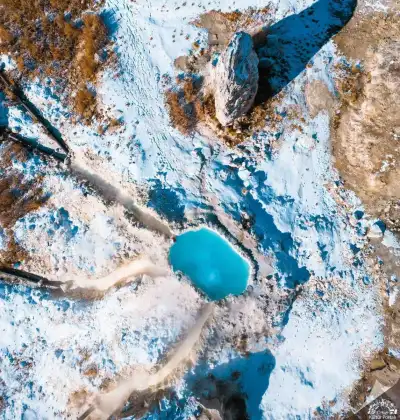
Diyadin Thermal Springs
A thermal spring region located in the Diyadin district of Ağrı, on the banks of the Murat R…
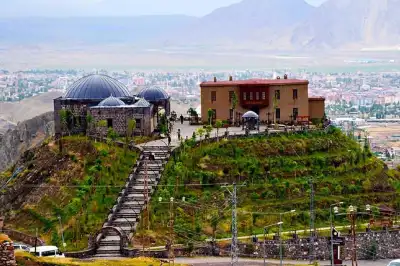
Doğubayazıt City Museum (Ahmed-i Hani City Museum)
A two-building museum opened in 2017 on the way to Ishak Pasha Palace: madrasah scenes depic…
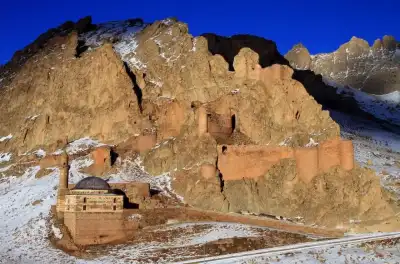
Doğubayazıt Urartian Castle
An Urartian castle built on a steep rock, 150 meters from Ishak Pasha Palace. Admission is f…
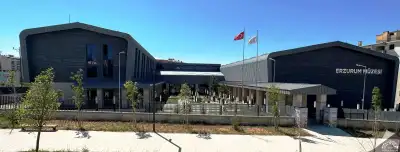
Erzurum Museum
A museum in Yakutiye, within walking distance of the Double Minaret Madrasa. Artifacts rangi…
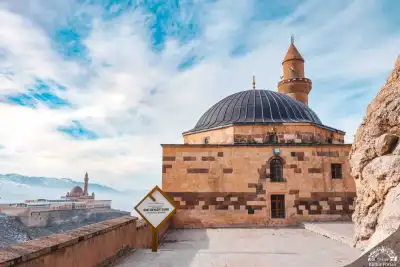
Old Beyazıt Mosque
A single-domed Ottoman mosque from the period of Selim I, located right next to Doğubayazıt …
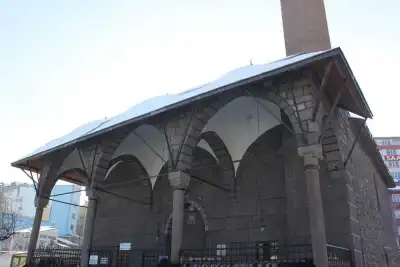
Gürcü Kapı Ali Ağa Mosque
A single-domed mosque built in 1608 by Janissary Agha Zakreci Ali Ağa in Yakutiye, Erzurum. …
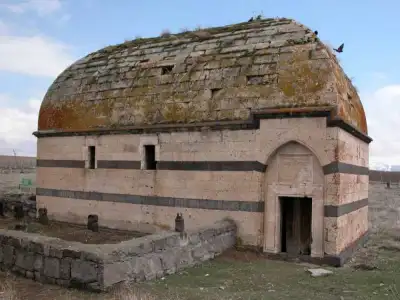
Hamur Tomb
An Ottoman tomb in Hamur district of Ağrı, whose builder is not precisely known. Its inscrip…
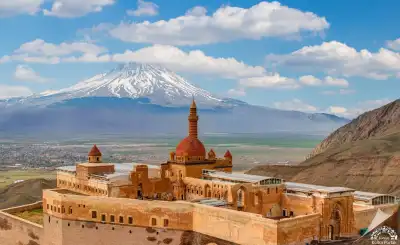
Ishak Pasha Palace
An 18th-century palace complex built on a hill in Doğubayazıt. The 116-room complex, with it…
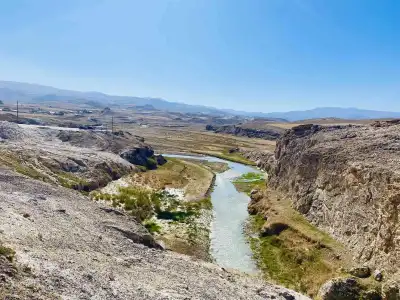
Kudret Bridge
A natural bridge formed in the rocks eroded by the Murat River in the Diyadin district of Ağ…
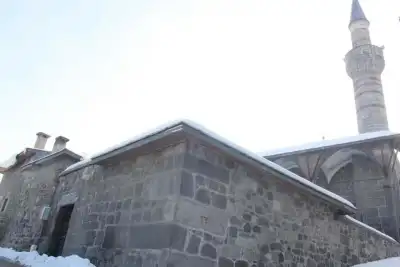
Kurşunlu Mosque and Madrasah
A mosque-madrasah complex dating back to 1701, located on the northwestern skirt of the inne…
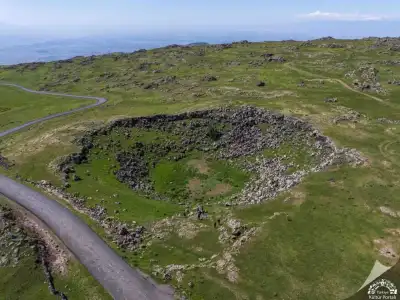
Meteor Crater
A massive depression located 35 km east of Doğubayazıt, near the Iranian border. 60 meters d…
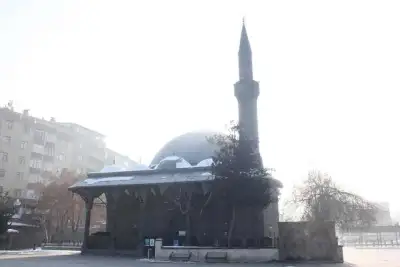
Narmanlı Mosque
Built in 1738 by Narmanlı Hacı Yusuf Efendi, Narmanlı Mosque is located in Erzurum's Tebrizk…
Noah's Ark
A boat-shaped natural formation on the southern slope of Mount Ararat, between the villages …
Redoubts (Aziziye and Mecidiye Redoubts)
Aziziye and Mecidiye Redoubts, two of the 21 redoubts built on the hills east of Erzurum, be…
Three Tombs (Üç Kümbetler)
Seljuk-era monumental tombs located opposite the Erzurum Museum, behind the Double Minaret M…
Yakutiye Madrasah Museum of Turkish-Islamic Arts and Ethnography
Built in 1310 during the Ilkhanate period, it is Anatolia's largest madrasah with a covered …
Bu yazıyı paylaş