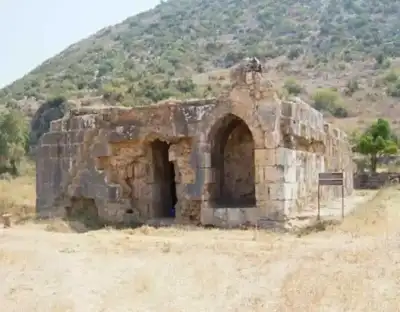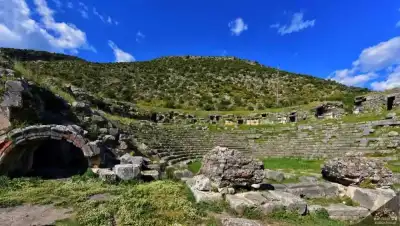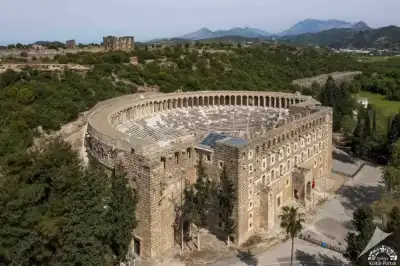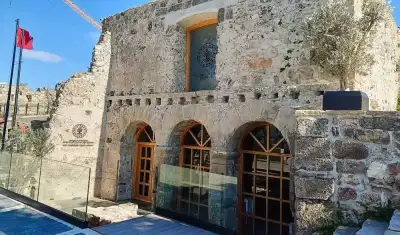
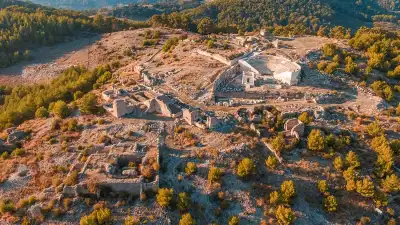
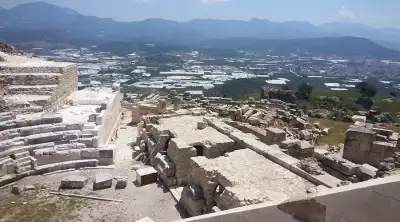
Rhodiapolis is a major ancient Lycian city founded by Rhodian colonists, nestled among pine forests in the Sarıcasu neighborhood of Kumluca, Antalya. Uncovered through Akdeniz University excavations, its ruins offer fascinating insights into ancient urban life.
Rhodiapolis, as its name suggests, was a Lycian city founded by Rhodian colonists. Sharing the same foundational history as Phaselis and Olympos, this ancient city is situated on a commanding hill within the boundaries of Kumluca's Sarıcasu neighborhood. Tucked amidst pine forests, its setting grants the city both visual allure and a refreshing atmosphere.
Rhodiapolis has etched its name into history as one of the noteworthy settlements within the Lycian League. Unearthed through archaeological excavations led by faculty members from the Archaeology Department of Akdeniz University, its structures offer vital clues into the vibrant urban life of the city in antiquity. As excavations are still ongoing, visitors also get the opportunity to observe an active archaeological site firsthand.
Its proximity to Kumluca's town center and the possibility of pairing it with nearby ancient cities make Rhodiapolis a valuable stop for culture enthusiasts touring the region. However, keep in mind that a 2–3 km walk along a steady path is required during your visit.
Guide's Note
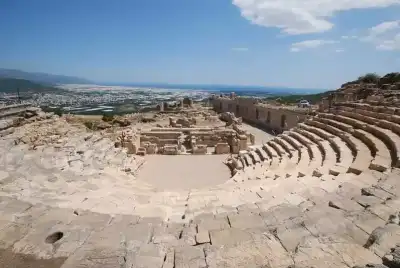
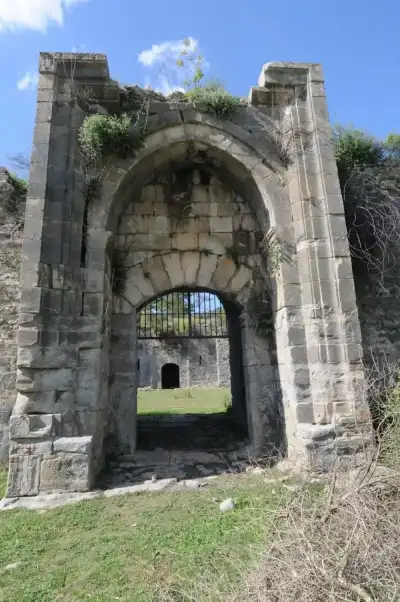
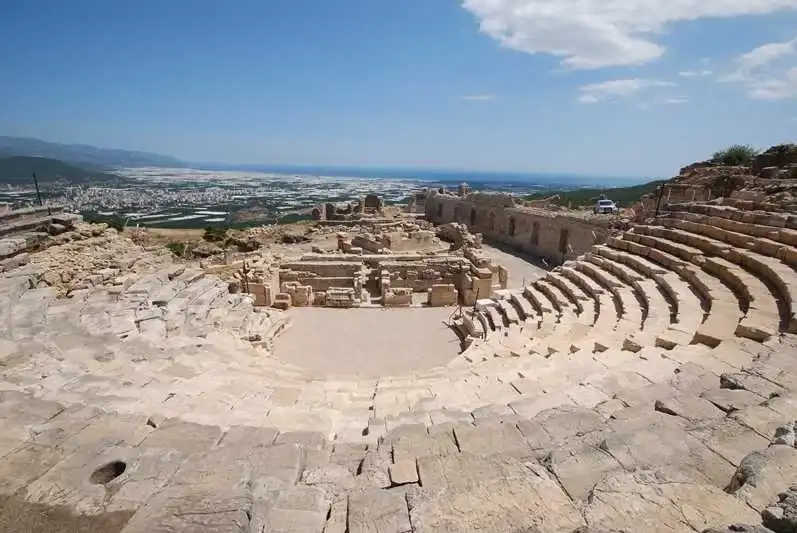
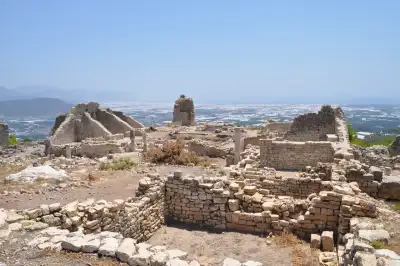
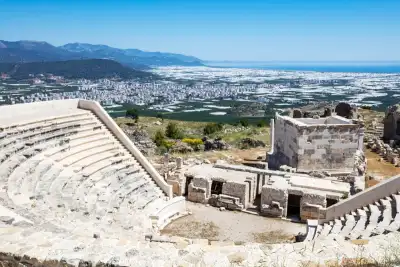
Rhodiapolis is a hilltop settlement overlooking Kumluca, famous for its ancient theater, sweeping mountain vistas, and sea views. Visitors are especially captivated by the theater's panoramic setting and its magical atmosphere at sunset. Rock-cut tombs, monumental structures, and partially restored areas offer plenty of engaging content for history lovers.
It is helpful to keep a few practical details in mind before visiting. Although an access road exists, the gate may be closed; you can park your vehicle near the entrance and follow the trail on the left to reach the site. Summer temperatures can be high, so bringing plenty of water and wearing sturdy shoes is recommended. There are no convenience stores or dining options nearby, so plan accordingly. Visitors note that Google Maps provides more reliable directions than Apple Maps when navigating to the site.
Several visitors point out that despite its immense potential, the site suffers from noticeable neglect. Basic infrastructure like a ticket building and restrooms have been constructed but remain non-functional.
- No staff on site: Most visitors report encountering no personnel at the location.
- Lack of signage and information: There are no information boards describing the structures, requiring visitors to research the details independently.
- Unclear exit route: The way out of the site is not clearly marked and can be tricky to navigate.
- Restrooms out of order: The existing restroom facilities have no running water.
- Very low visitor density: Especially on weekdays and off-season, the site is almost completely empty, which may cause safety concerns for some solo travelers.
Best Time to Visit
The best times to explore Rhodiapolis are April–May and September–October. During these months, the weather is ideal for the uphill walk, and the surrounding pine forest is lush and vibrant. Summer temperatures can reach extreme levels in the region. As many Tripadvisor reviewers highlight, those planning to visit in summer should aim for early morning or late afternoon. Climbing the hill around midday can be both exhausting and risky for your health.
How to Get to Rhodiapolis?
Rhodiapolis Ancient City is located within the borders of Sarıcasu Neighborhood in Kumluca. The distance to the town center ranges between 2.5 to 5 km. If you are starting from Antalya city center, drive towards Kumluca, a journey of roughly 1.5 to 2 hours.
While public transport to Kumluca is available, there are no regular minibuses or buses running directly to the ancient site. Therefore, taking a private or rental car remains the most convenient option. From central Kumluca, follow the direction signs toward Sarıcasu Neighborhood. Searching for "Rhodiapolis Ancient City" on navigation apps will lead you straight there.
How Much Time Should You Allocate?
Compared to larger ancient metropolis sites, Rhodiapolis is relatively compact. An average of 1.5 to 2.5 hours, including the walking path, is sufficient for most travelers. For photography lovers or visitors with a deep interest in archaeology, this duration may extend up to 3 hours. If you combine this visit with surrounding sightseeing, you can create a full-day itinerary covering Kumluca and other historical sites along the coast.
Suggested Route with Nearby Ancient Cities
Rhodiapolis shares the region with several other ancient Lycian sites. If you are planning a full-day itinerary around Kumluca, visit Rhodiapolis early in the morning before moving on to other Lycian ruins or Kumluca's coastline. Since Phaselis and Olympos were also founded by Rhodian colonists, a Lycian route encompassing all three offers a rich historical context that you can experience firsthand.
Photography Spots
The hilltop location of Rhodiapolis offers a natural vantage point for capturing wide-angle landscapes. Ancient structural ruins framed by dense pine foliage yield impressive shots, especially during morning light and the golden hour. Close-up photos of excavation zones also offer compelling images documenting ancient craftsmanship. A wide-angle lens or a telephoto lens will prove useful for both landscape panoramas and detailed shots.
Things to Know Before You Visit
Accessing the ancient city requires a 2–3 km walk, making comfortable, closed-toe hiking shoes essential. As there may be no active ticket booth, cafe, or functioning restrooms on site, be sure to bring enough water and snacks. Sunscreen and a hat are indispensable during summer. Because it remains an active excavation site, access to certain sections may be restricted; pay attention to safety signs. We recommend checking official sources of the Ministry of Culture and Tourism for up-to-date visiting hours and potential restrictions prior to your trip.
General Information About Rhodiapolis
Rhodiapolis holds an important place in historical records as a prominent member of the Lycian League. Its name links it directly to the island of Rhodes, indicating it was established by Rhodian colonists—a shared heritage with neighboring Phaselis and Olympos. The site undergoes systematic archaeological excavation led by a team headed by Prof. Dr. Nevzat Çevik from Akdeniz University's Archaeology Department. Thanks to these ongoing efforts, new details regarding the city's urban fabric and history come to light regularly.
This content originates from neresigezilir.com and may not be copied without permission.
Rhodiapolis Ancient City Videos
Rhodiapolis Ancient City videos load when you open this section to keep the page fast.
Show videos
FAQ
Updated: