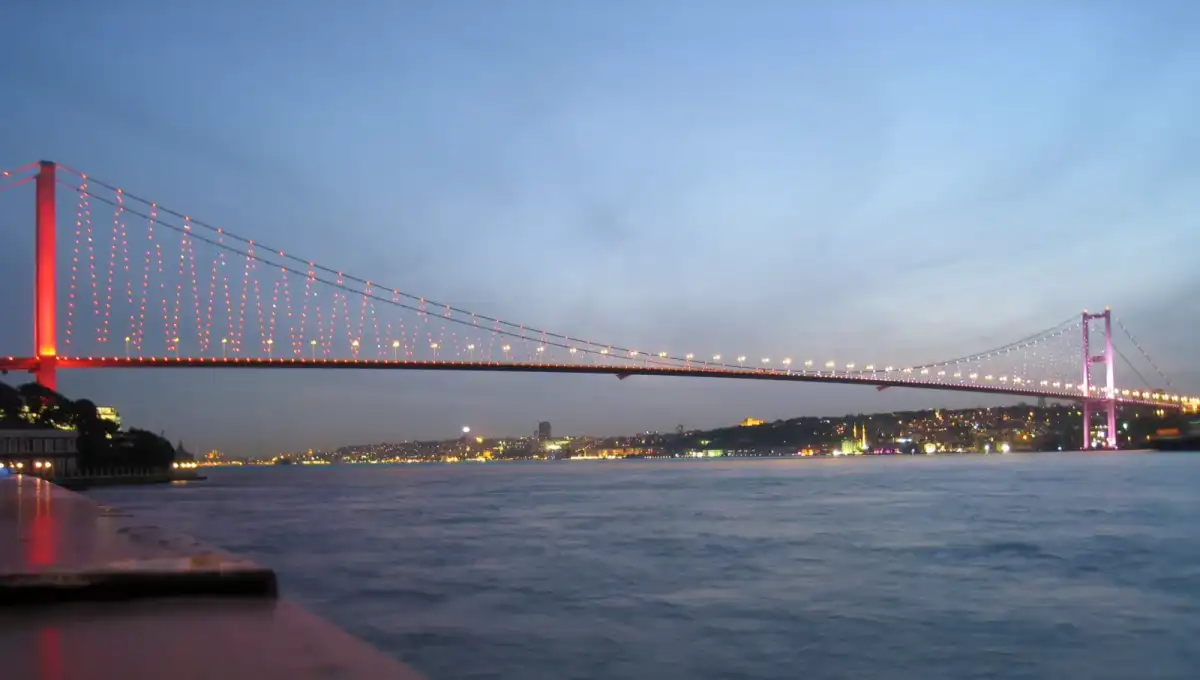
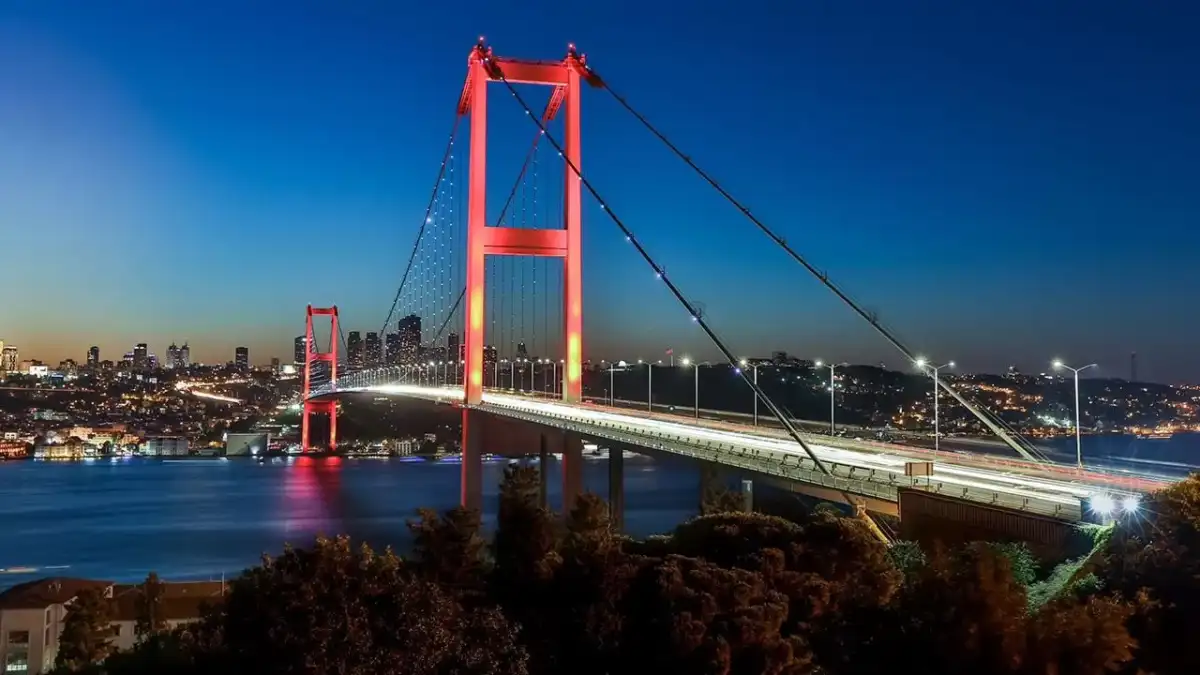
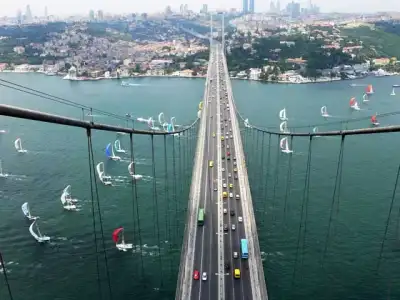
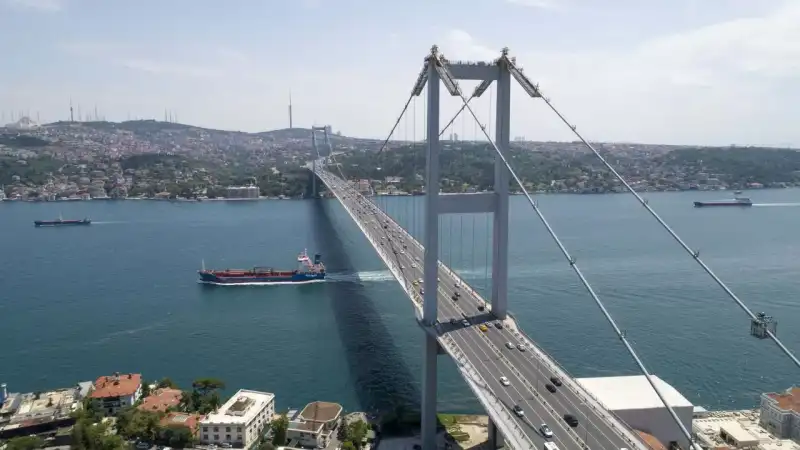
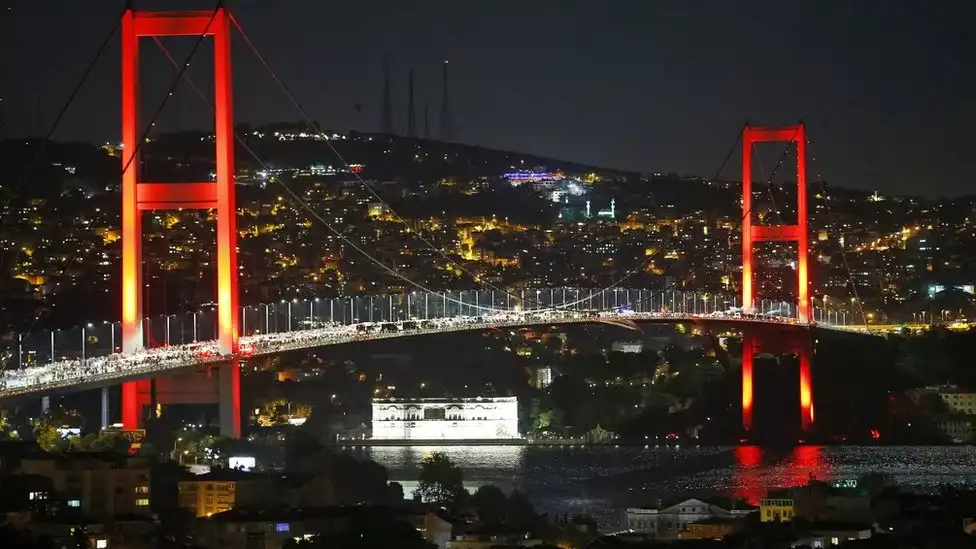
The July 15 Martyrs Bridge is a suspension bridge connecting Beşiktaş and Üsküdar across the Bosphorus Strait in Istanbul. Opened in 1973, it is 1,560 meters long and 165 meters high. Vehicle crossing requires a toll, and pedestrian access is not permitted.
Holding the title of the first bridge to span the Bosphorus Strait, the July 15 Martyrs Bridge saw construction begin on February 20, 1970, and was officially opened with a ceremony on October 30, 1973, marking the 50th anniversary of the Republic. Connecting the districts of Beşiktaş and Üsküdar, this suspension bridge is located on the O-1 highway and remains one of Istanbul's busiest transit points, carrying approximately 200,000 vehicles daily.
Designed by British engineers Gilbert Roberts, William Brown, and Michael Parsons, the structure is technically and aesthetically remarkable with a main span of 1,074 meters, a width of 33.40 meters, and a clearance of 64 meters above sea level. The bridge's towers reach a height of 165 meters. Still colloquially referred to as the First Bridge or Bosphorus Bridge, the structure received its current name following the 2016 coup attempt; a memorial museum and martyrs' site were also established near its pillars on the Asian side.
History and Significance of the Bridge
The July 15 Martyrs Bridge is not merely a transit structure connecting two continents; it is also a concrete symbol of Turkey's modernization history. Construction began on February 20, 1970, took about three and a half years to complete, and opened on October 30, 1973, commemorating the 50th anniversary of the founding of the Republic. The opening ceremony resonated strongly in the political and social atmosphere of the period, and the bridge quickly became one of Istanbul's most recognizable icons.
The structure was designed by a British engineering team led by Gilbert Roberts, William Brown, and Michael Parsons. Built of steel, the suspension bridge features a main span of 1,074 meters and a total length of 1,560 meters. With tower heights reaching 165 meters, the bridge deck sits 64 meters above the water surface, providing sufficient clearance for large cargo ships passing underneath.
The bridge acquired its current name following the 2016 coup attempt. Symbolizing that night, the structure is no longer just a transportation link, but an important part of national memory. Built near the base on the Asian side, the July 15 Memory Museum displays documents and artifacts related to that historic event to visitors.
Best Photography Spots
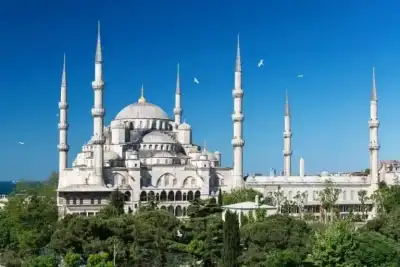
Since walking on the bridge is not allowed, the most impressive photos are taken from surrounding neighborhoods. Ortaköy Square is perhaps the most popular location, allowing you to frame the bridge's European tower alongside the Ortaköy Mosque in a single shot. At sunset, the orange sky, mosque minarets, and bridge towers combine to form a captivating composition.
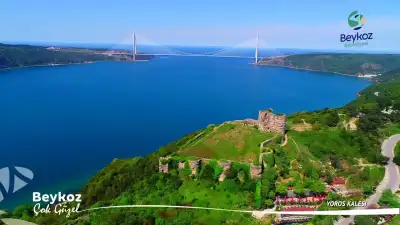
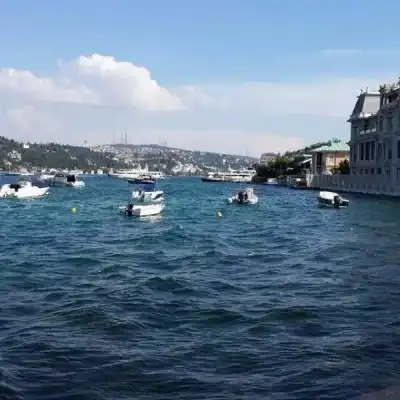
The Üsküdar coastline offers the widest perspective from the Asian side, capturing the bridge in its full length. Long-exposure night photographs taken near the ferry terminal also yield stunning results. Taking a Bosphorus cruise that passes directly beneath the bridge is the most direct way to appreciate its true scale. From Çamlıca Hill, you can capture a panoramic bird's-eye view of the bridge as part of Istanbul's vast skyline.
When to Visit?
The most enjoyable periods to explore the bridge and its surroundings are the spring and autumn months. Mild weather between March–May and September–November makes spending extended time along the shores of Ortaköy and Üsküdar very pleasant. Tourist crowds increase in summer, making Ortaköy Square particularly busy on weekends.
The most special time of day is undoubtedly sunset. As the sun lowers toward the European side, the bridge and its environment are bathed in golden light—a sight well worth experiencing in person and through a camera lens. Early morning hours offer a contrasting atmosphere with mist resting on the calm waters of the strait. Occasional winter snowfalls transform the bridge and its surrounding landscape into a breathtaking scene.
How to Get There?
Located on the O-1 highway, the bridge is accessible exclusively by motorized vehicles; pedestrian and bicycle crossings are strictly prohibited. To reach the bridge area from the European side, take the Metrobus to Zincirlikuyu stop, then proceed by taxi or private vehicle toward the ramp. Reaching the vicinity by taxi from Beşiktaş takes only a short time.
On the Asian side, take a ferry to Üsküdar, from where a short taxi ride brings you to the bridge base and the Memory Museum. For those wishing to see the bridge up close, Ortaköy is the most practical starting point; it is within walking distance of Beşiktaş, and the bridge's European tower is clearly visible from there. Bosphorus tour boats also sail directly underneath, allowing you to experience the structure from below.
Where and What to Eat Nearby?
Situated right at the foot of the bridge on the European side, Ortaköy is one of Istanbul's favorite food and drink destinations. The neighborhood's signature dish, kumpir (baked stuffed potato), is sold at dozens of stalls, often drawing long queues on weekends. Enjoying a cup of Turkish tea while taking in the Bosphorus view is an indispensable part of the Ortaköy experience.
Waffles and gözleme (flatbread) are also very popular at the square's cafes. For a fuller meal, seafood restaurants lining the shore offer fresh fish accompanied by Bosphorus views. On the Üsküdar side, traditional meatball diners, pide houses, and historic pastry shops reflecting classic Istanbul cuisine take center stage.
Suggested Itinerary
A half-day itinerary is recommended for those wanting to fully experience the bridge and its surroundings. Start in the morning at Beşiktaş and walk along the coast to Ortaköy; the bridge's European tower will grow larger along the route. Enjoy a kumpir break at Ortaköy Square, visit Ortaköy Mosque, and take your bridge photos.
In the afternoon, cross over to Üsküdar by ferry; this roughly 20-minute ride takes you directly beneath the bridge. From Üsküdar, take a short taxi ride to visit the July 15 Memory Museum. Conclude your day watching the sunset from the Üsküdar waterfront, which reveals the bridge's silhouette in the finest evening light. You can easily navigate ferry and Metrobus trips using an Istanbulkart.
Things to Know Before You Visit
Walking onto the bridge is strictly forbidden; failing to comply with this rule is dangerous and incurs legal penalties. Vehicles crossing the bridge must be equipped with an HGS or OGS automatic toll payment tag, as cash payments are not accepted. Checking KGM's official channels for current toll rates is recommended.
Rather than trying to step onto the bridge for photos, head to surrounding viewpoints like Ortaköy, Üsküdar, or Çamlıca. If you plan to visit the Memory Museum, check its current opening hours in advance. Heavy traffic can build up on roads near the bridge during peak hours, so early morning or late-night drives offer smoother crossings.
This content originates from neresigezilir.com and may not be copied without permission.
July 15 Martyrs Bridge Videos
July 15 Martyrs Bridge videos load when you open this section to keep the page fast.
Show videos
FAQ
Updated: