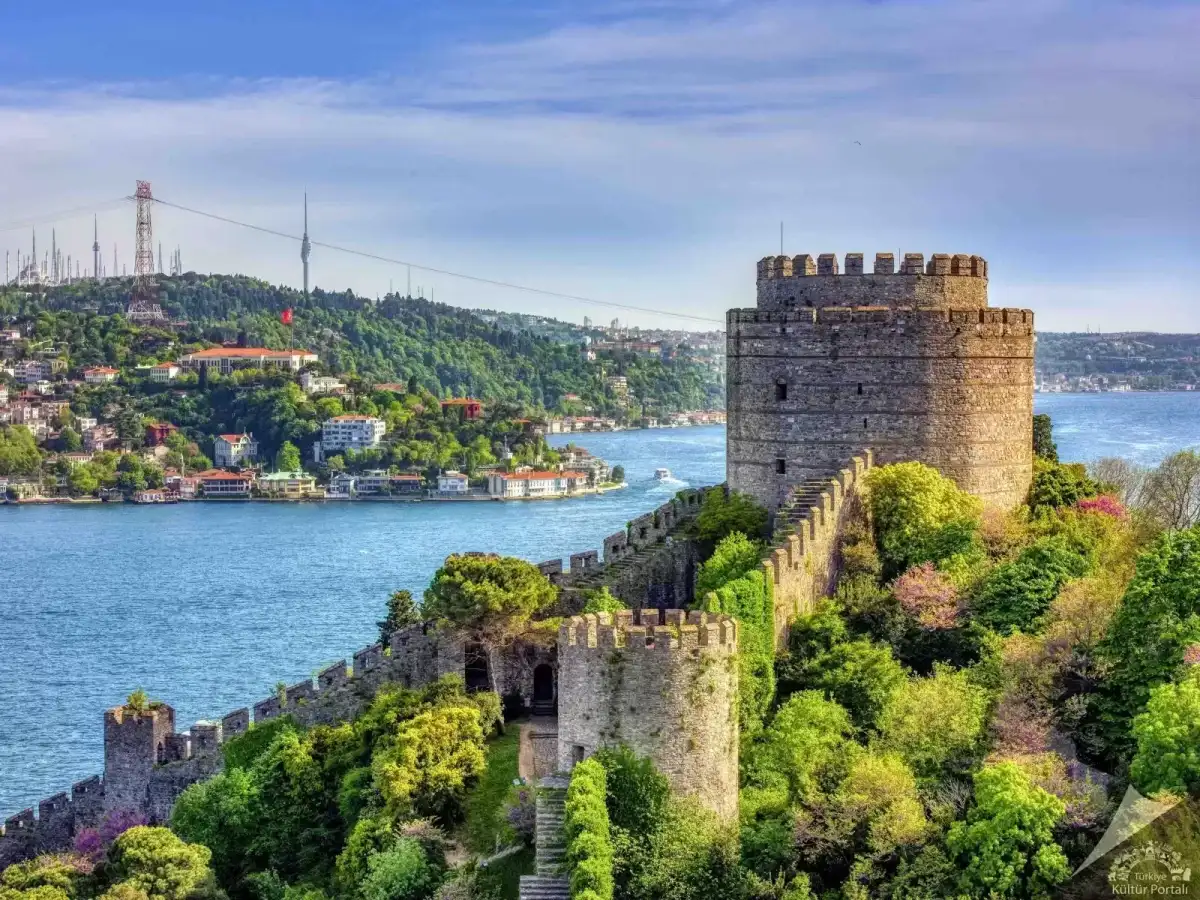
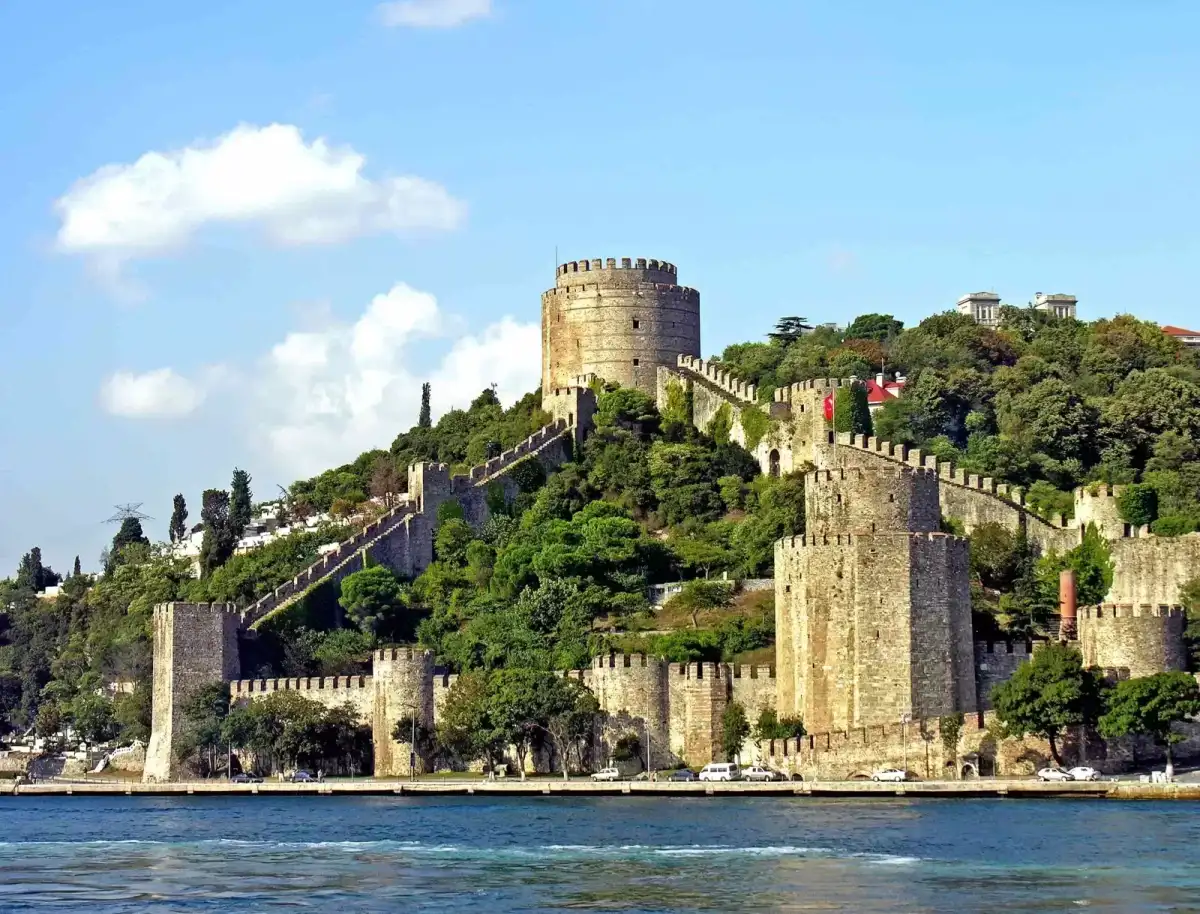
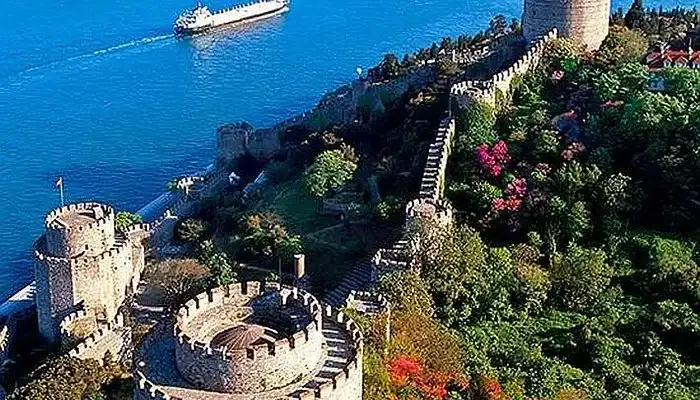
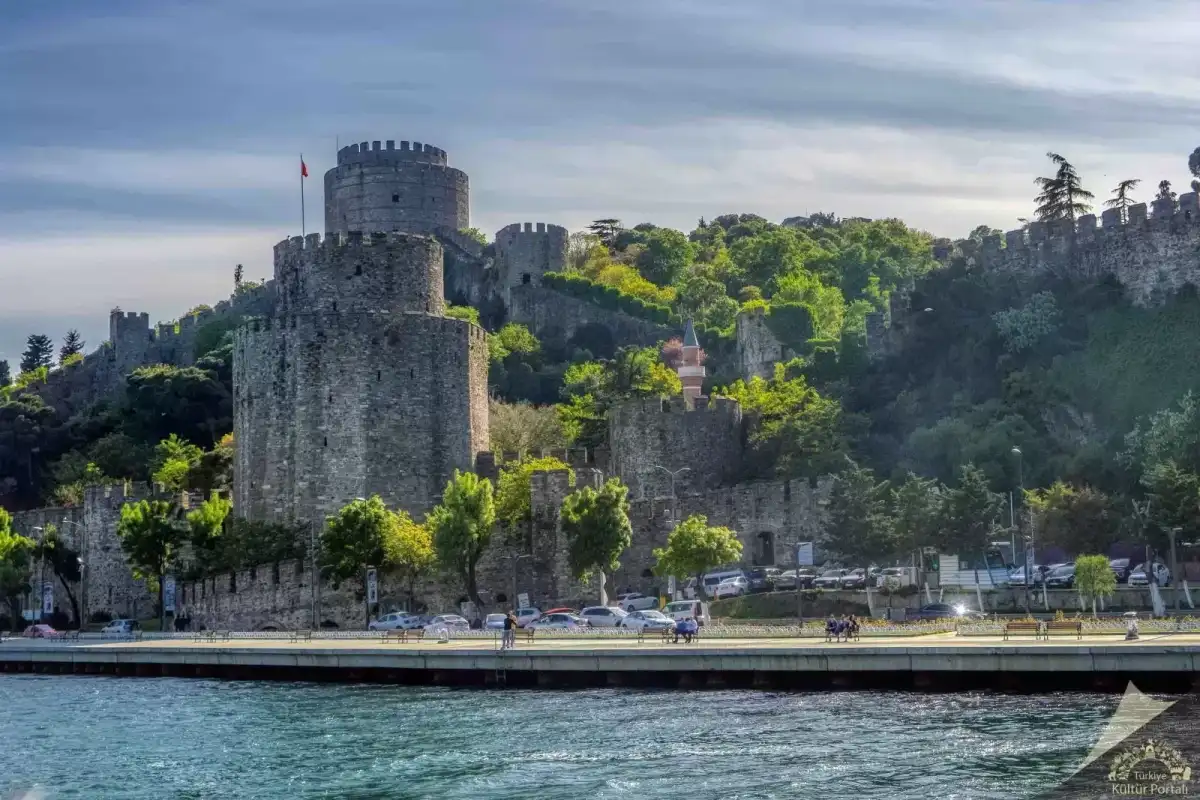
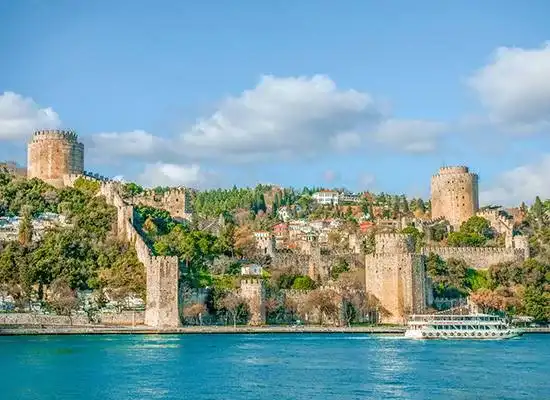
Rumeli Fortress is a 15th-century Ottoman fortress located at the narrowest point of the Bosphorus in Istanbul's Sarıyer district, built by Sultan Mehmed II in 1452 in just 90 days. Featuring three massive towers and extensive ramparts, it is open to visitors as an open-air museum.
Rumeli Fortress is a historic Ottoman castle situated in Istanbul's Sarıyer district at the narrowest point of the Bosphorus (approximately 698 meters), giving its name to the surrounding neighborhood. It was commissioned by Sultan Mehmed the Conqueror just before the conquest of Constantinople to prevent potential attacks from the Black Sea and to control maritime traffic passing through the strait. Construction began in March 1452 and was completed in August of the same year, recording it as one of the fastest fortress constructions in world history.
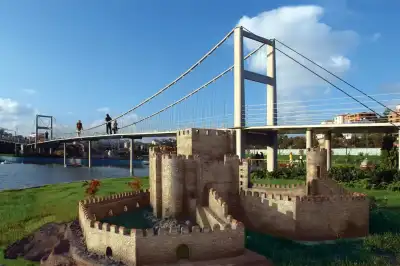
Spanning an area of 32,000 m², the structure consists of three major towers—considered among the largest castle bastions in the world—and defensive walls connecting them. Positioned directly opposite Anadolu Fortress on the Asian shore, it created a complete line of control across the strait. Operating today as an open-air museum, Rumeli Fortress is an unmissable stop for both history enthusiasts and travelers seeking to photograph scenic Bosphorus views.
Guide's Note
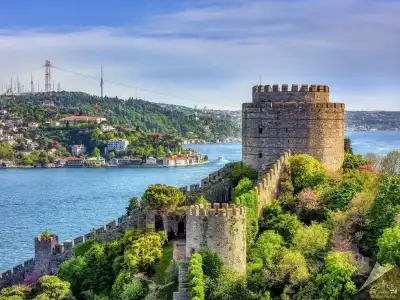
Rumeli Fortress leaves a strong historical impression on visitors with its commanding position over the narrowest point of the Bosphorus. Constructed by Sultan Mehmed II right before the siege of Constantinople, the complex stands out for its architectural scale and strategic positioning. The panoramic Bosphorus views, especially when combined with a stroll along the waterfront, make the visit visually rewarding.
Most visitors thoroughly enjoy the fortress, frequently highlighting the rich historical ambiance and sweeping views over the strait. However, there are important practical details to consider before planning a trip.
- Ongoing restoration work: Multiple visitors note that large sections of the fortress are currently closed. Only the garden and lower courtyard areas are accessible; climbing the towers or accessing the upper ramparts is currently not permitted.
- Admission fee: The entry fee is around 6 Euros; given the restricted access during restoration, some visitors feel the price is somewhat steep.
- Visit timing: Anyone planning to visit before restorations are complete should keep in mind that full access to the complex may not be available.
What is Rumeli Fortress? A Brief History
Rumeli Fortress stands as tangible proof of one of the most critical strategic moves made by Sultan Mehmed the Conqueror prior to taking Constantinople. Built at a point where the Bosphorus narrows to just 698 meters, the fortress worked alongside Anadolu Fortress on the opposite shore to gain complete tactical control over the strait, effectively severing Byzantine access to relief ships from the Black Sea.
Construction began in March 1452 and was completed in August of the same year. Completing such a massive fortification in roughly 90 days was an extraordinary accomplishment given the construction techniques of the era. The fortress features three major bastions—Halil Pasha Tower, Saruca Pasha Tower, and Zaganos Pasha Tower—linked by thick curtain walls. Following the conquest, the fortress served for a time as a prison, fell into disrepair over the centuries, and was finally restored starting in 1953 before opening as a public museum in 1968.
Best Time to Visit
The most enjoyable period to visit Rumeli Fortress is between April and October. Pleasant weather and extended visiting hours make exploring the outdoor grounds far more convenient. Arriving early in the morning during summer helps you avoid peak crowds and capture optimal lighting for photography.
Autumn months, particularly September and October, offer a unique atmosphere with soft light and misty mornings over the Bosphorus. Winter brings shorter visiting hours and occasional section closures, though crowd levels drop significantly. Keep in mind that the site is strictly closed on Mondays.
How to Get to Rumeli Fortress
Taking a public bus is the most convenient way to reach the fortress. Bus lines 40, 40T, and 42T departing from Taksim Square stop directly at Rumelihisarı, from where it is just a short walk to the main entrance. You can also board these same lines from Beşiktaş.
Travelers starting from Kabataş can board bus lines 22, 22RE, or 25E. If you are taking the T1 Bağcılar–Kabataş tram, ride to the end of the line at Kabataş and transfer to one of these buses. Driving is generally discouraged due to very limited parking along the waterfront road.
Photo Spots and Panoramic Views
Rumeli Fortress is one of Istanbul's most iconic locations for photography. Walking along the fortress walls overlooking the Bosphorus allows you to frame both the ancient stonework and Anadolu Fortress on the Asian shore in a single shot. Golden hour light near sunset beautifully highlights the texture of the historic stone walls.
From accessible elevated points, visitors are rewarded with a sweeping 360-degree view. Capturing cargo ships gliding through the strait alongside the Bosphorus bridges and twin coastlines provides classic, compelling compositions. Early morning visits when mist still hangs over the water also yield stunning aesthetic shots.
Where to Eat & What to Do Nearby
The Rumelihisarı neighborhood offers plenty of inviting spots for breakfast or lunch after touring the fortress. Small waterfront cafes and restaurants along the shore are popular for dining with unobstructed Bosphorus views. These spots fill up quickly on weekends, especially for traditional Turkish breakfast.
Before or after your visit, you can grab quick snacks from local bakeries and kiosks tucked into the neighborhood's narrow streets. For a broader dining selection, head a few minutes down the coast to Bebek, where you will find an array of upscale cafes, bakeries, and international restaurants.
Important Tips Before Your Visit
Ground surfaces inside the fortress grounds consist mostly of uneven cobblestones, stone steps, and steep inclines. Wearing comfortable shoes with good grip is essential for safety and comfort. Strollers and wheelchairs are difficult to maneuver due to the site's rugged terrain.
Museum Pass holders and visitors aged 65 and older enjoy free admission. Be sure to check muze.gov.tr before your trip for current ticket prices and potential temporary section closures due to ongoing restoration. The site can also be visited as part of a joint ticket covering the Fortress Museum network (including Yedikule and Anadolu Fortresses).
Suggested Nearby Itinerary
Integrating Rumeli Fortress into a full-day Bosphorus itinerary is easy and rewarding. After touring the fortress in the morning, take a pleasant seaside walk or a quick bus ride down to Bebek. From Bebek, continue along the coast to Arnavutköy to admire its charming historic wooden mansions and explore its picturesque side streets.
If you prefer a longer route, cross over to the Asian side of the Bosphorus on the same day to visit Anadolu Fortress, allowing you to experience both strongholds from opposing shores. Conclude your day with dinner or tea in Ortaköy or Beşiktaş.
This content originates from neresigezilir.com and may not be copied without permission.
Rumeli Fortress Videos
Rumeli Fortress videos load when you open this section to keep the page fast.
Show videos
FAQ
Updated: