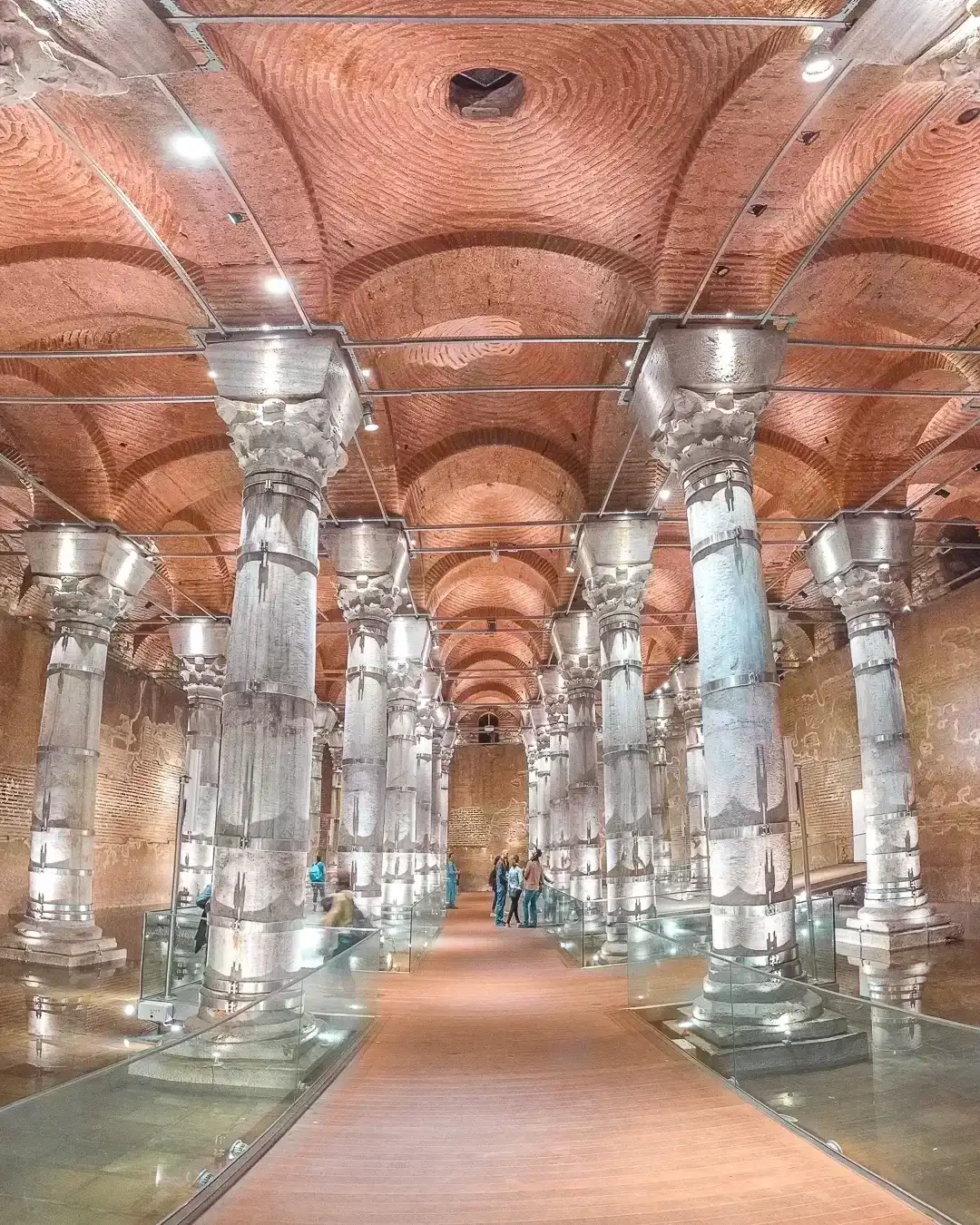
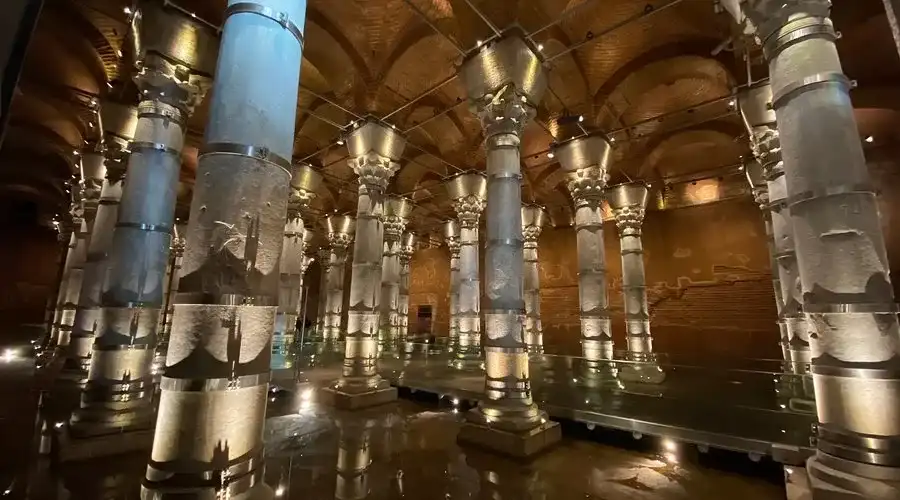
Şerefiye Cistern is a Byzantine-era water reservoir in the Fatih district near Sultanahmet, constructed between 428 and 443 AD during the reign of Emperor Theodosius I. Supported by 32 columns, the structure is open to visitors for a paid admission fee.
Şerefiye Cistern is a Byzantine-era water reservoir hidden in Istanbul's historic peninsula, just south of the intersection of Divan Yolu and Piyer Loti Avenue. Built between 428 and 443 AD during the reign of Emperor Theodosius I, it is also known as the Theodosius Cistern. Having remained largely unknown to the general public for many years, it became one of Istanbul's most captivating underground sites following its extensive restoration and opening to visitors.
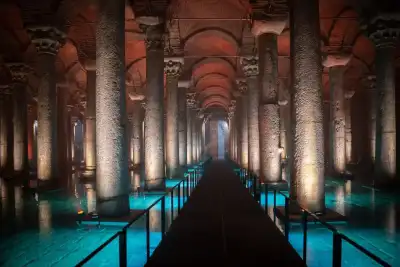
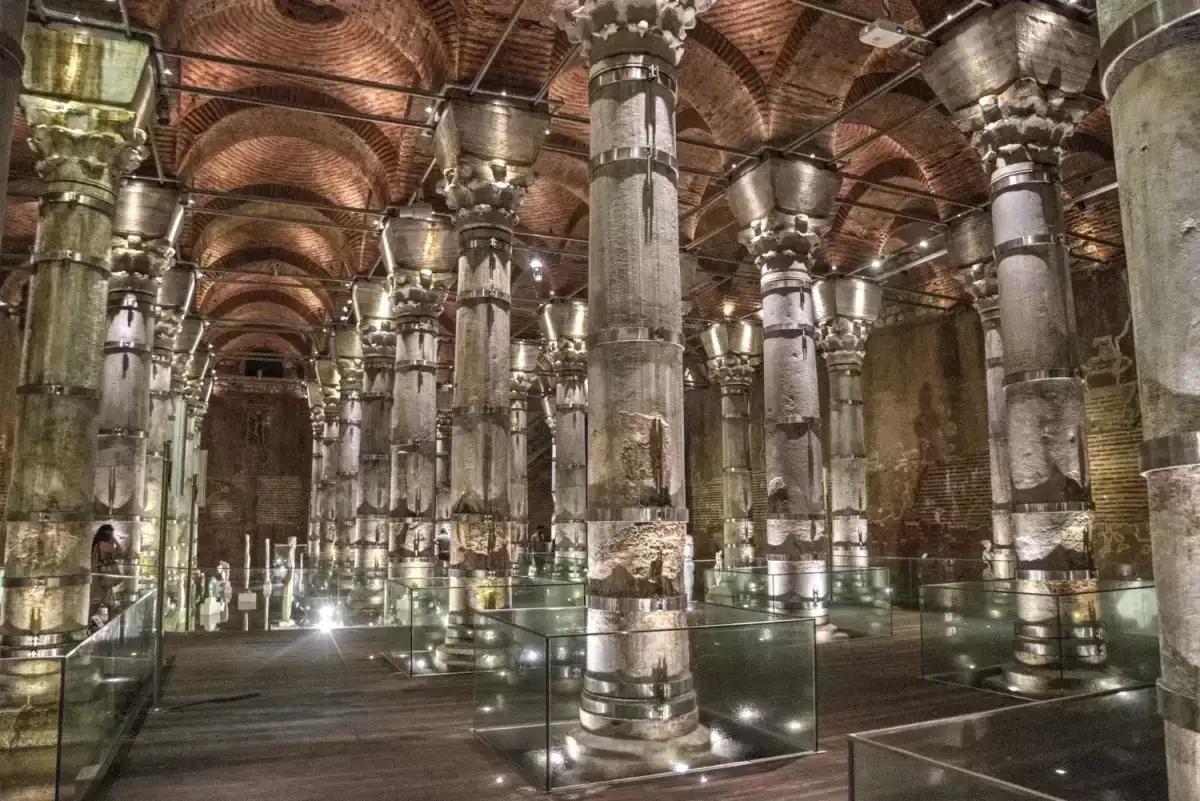
With an impressive scale of 40 meters in length, 20 meters in width, and 11 meters in height, the cistern resembles an underground palace supported by 32 columns. Positioned south of the ancient Mese axis and southeast of the Forum of Constantine, it lies west of the Binbirdirek Cistern and was designed to draw water from the aqueduct line along the Mese. Abandoned in the 15th century, the cistern waited silently for centuries beneath the former municipal conservatory building and later the Eminönü Municipality building.
Guide's Note
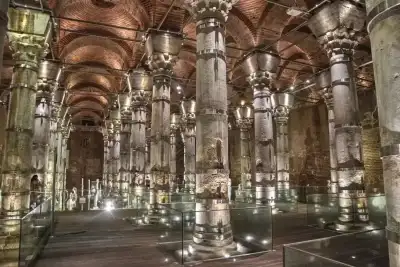
Şerefiye Cistern is an intriguing stop for travelers seeking a calm and cool atmosphere slightly removed from Istanbul's heavily crowded tourist paths. Visitors generally praise the cistern's historic architecture and dim, serene ambiance. It is highlighted as an excellent spot to escape the summer heat thanks to its natural subterranean coolness. Visitors feeling overwhelmed by the crowds at the Basilica Cistern often find this venue a peaceful alternative.
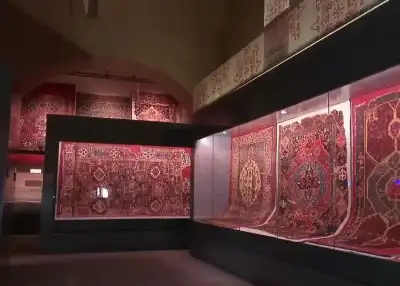
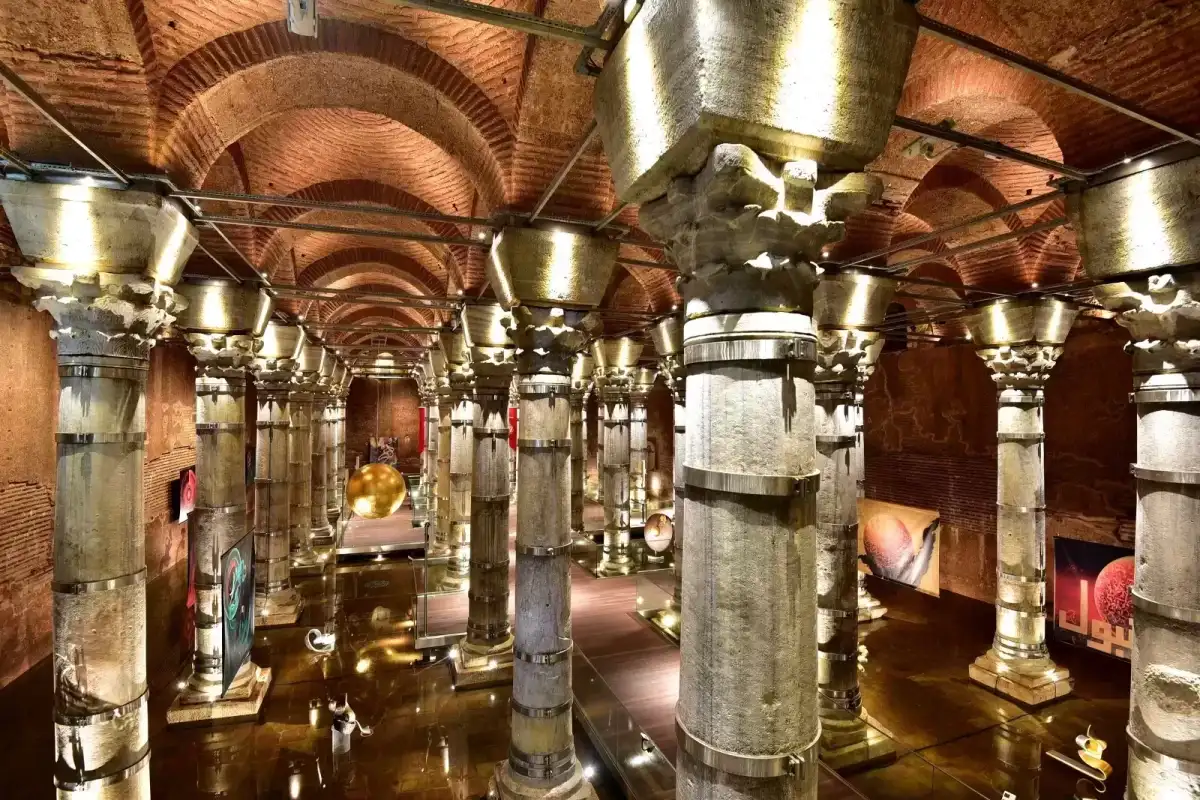
Contemporary art exhibitions are currently displayed inside the cistern. While some visitors feel this adds a unique modern layer to the historic venue, others feel it diverges from their expectations of an ancient landmark. Additionally, multiple visitors expressed disappointment over the removal of the former projection mapping light and sound show, noting that its absence lowered their overall impression of the experience.
- Entrance fee: Many visitors consider the ticket price (330 TL / approx. £16) steep for a short visit of about 20–30 minutes.
- No child discount: Families note the lack of discounted ticket options for children.
- Compact area: The venue is smaller compared to major cisterns, making overall visit duration relatively short.
- No restrooms: Visitors point out the absence of accessible toilet facilities inside.
- Limited signage: Some feedback mentions a lack of informational panels or guided direction.
- Light show discontinued: As of early 2025, the previous sound and light projection show is no longer offered.
What is Şerefiye Cistern?
Şerefiye Cistern is one of the most significant underground water reservoirs on Istanbul's historic peninsula, constructed between 428 and 443 AD under Byzantine Emperor Theodosius I. Also known by its Greek name Kisterna Theodosiou, the structure remained hidden from public awareness for a long time, resting quietly beneath a municipal building until recent years.
Measuring 40 by 20 meters with a height of 11 meters, the vaulted structure is supported by 32 imposing marble columns. Located south of the ancient Mese road and southeast of the Forum of Constantine, this cistern was a critical component of Constantinople's water supply system. Abandoned during the Ottoman period in the 15th century, it spent centuries hidden under buildings used for various civic functions. Following a meticulous restoration, it was opened to visitors, becoming Istanbul's third major accessible historical cistern.
When to Visit?
Şerefiye Cistern is open to visitors every day of the week. Because it is located underground, it can be comfortably visited in any season regardless of weather conditions outside; even on scorching summer days, the interior remains refreshing and cool.
Since summer marks the peak tourist season in Istanbul, Şerefiye Cistern—like all historic landmarks in the Sultanahmet area—can become quite crowded. For a quieter visit, choose the months between September and November or March and May. Arriving early in the morning near opening time makes it easier to enjoy the space without crowds.
How to Get to Şerefiye Cistern?
The cistern is situated in one of Istanbul's most central locations, within easy walking distance of Sultanahmet, making public transport the most convenient route.
By Tram: Take the T1 tram line, get off at the Sultanahmet stop, and walk along Divan Yolu Avenue for about 5 to 7 minutes. Once you turn onto Piyer Loti Avenue, you will easily locate the cistern entrance.
By Marmaray: Get off at Sirkeci station, where you can either transfer to the T1 tram or enjoy a pleasant 10 to 12-minute walk up to the venue.
By Metro: Sirkeci metro station serves as another close alternative.
If arriving by car, finding parking nearby can be challenging; opting for public transportation is both practical and environmentally friendly.
Photo Spots
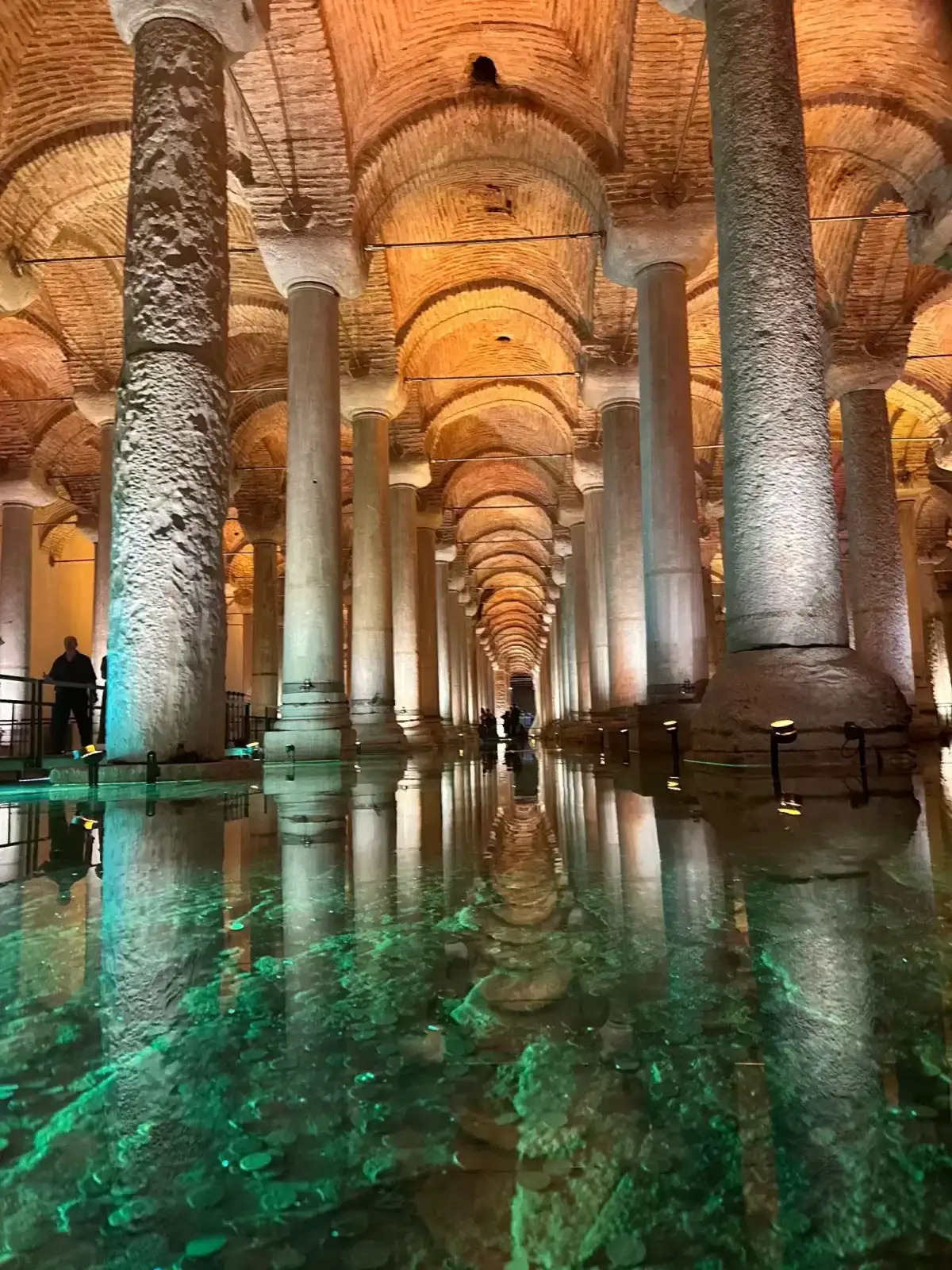
Şerefiye Cistern serves as a natural photography studio for photo lovers. The soft underground lighting, rhythmic perspective created by the column rows, and reflections on the water surface combine to create striking visual compositions.
Column Arrays: The repeating perspective of the 32 columns creates powerful compositions full of depth when shot with a wide-angle lens. Water Reflections: Pools of water on the ground offer ideal opportunities for mirror-like, symmetrical photos. Play of Light: The ambient lighting inside produces dramatic contrasts between light and shadow. A wide-aperture lens or a good low-light/night mode will make a noticeable difference in your shots.
Where to Eat Nearby?
Şerefiye Cistern sits at the heart of one of Istanbul's culinary hubs. The areas surrounding Sultanahmet and Divan Yolu offer numerous dining choices suitable for every budget.
Along Divan Yolu, traditional Turkish restaurants serve classic dishes such as meatballs (köfte), kebabs, and flatbreads (pide). Nearby cafes and eateries are also scattered around the Arasta Bazaar. If you combine your visit with a trip to the Grand Bazaar or Spice Bazaar, you can enjoy lunch at well-established historic lokantas around these market quarters. For lighter bites, cafes around Sultanahmet Square serve simit, savory pastries (börek), and authentic Turkish tea.
Suggested Route: Cisterns and the Historic Peninsula
You can combine your visit to Şerefiye Cistern with other subterranean historic sites for a complete Byzantine water architecture tour. All three major cisterns are conveniently located within walking distance of one another.
Start your day at Şerefiye Cistern, then walk a few minutes to the nearby Binbirdirek Cistern (Cistern of Philoxenos). In the afternoon, head over to the famous Basilica Cistern in Sultanahmet. This itinerary allows you to fully appreciate Byzantine hydraulic engineering. Adding the Blue Mosque, Hagia Sophia, and Topkapı Palace to your schedule lets you experience the historic peninsula's premier highlights in a single day.
Things to Know Before Your Visit
Keeping a few practical tips in mind before entering will ensure a smoother visit.
Museum Pass is not valid: Turkey's national Müzekart / Museum Pass is not accepted at Şerefiye Cistern. Entrance tickets can be purchased online via Passo or directly at the door. Slippery surfaces: Due to humidity underground, walkways can be damp and slippery; wearing comfortable shoes with good grip is highly recommended. Low light conditions: The interior is dimly lit; prepare your camera or smartphone for night mode or wide-aperture settings. Large bags: Navigating narrower walkways can be tricky with bulky backpacks, so travel light if possible.
This content originates from neresigezilir.com and may not be copied without permission.
Theodosius Cistern Videos
Theodosius Cistern videos load when you open this section to keep the page fast.
Show videos
FAQ
Updated: