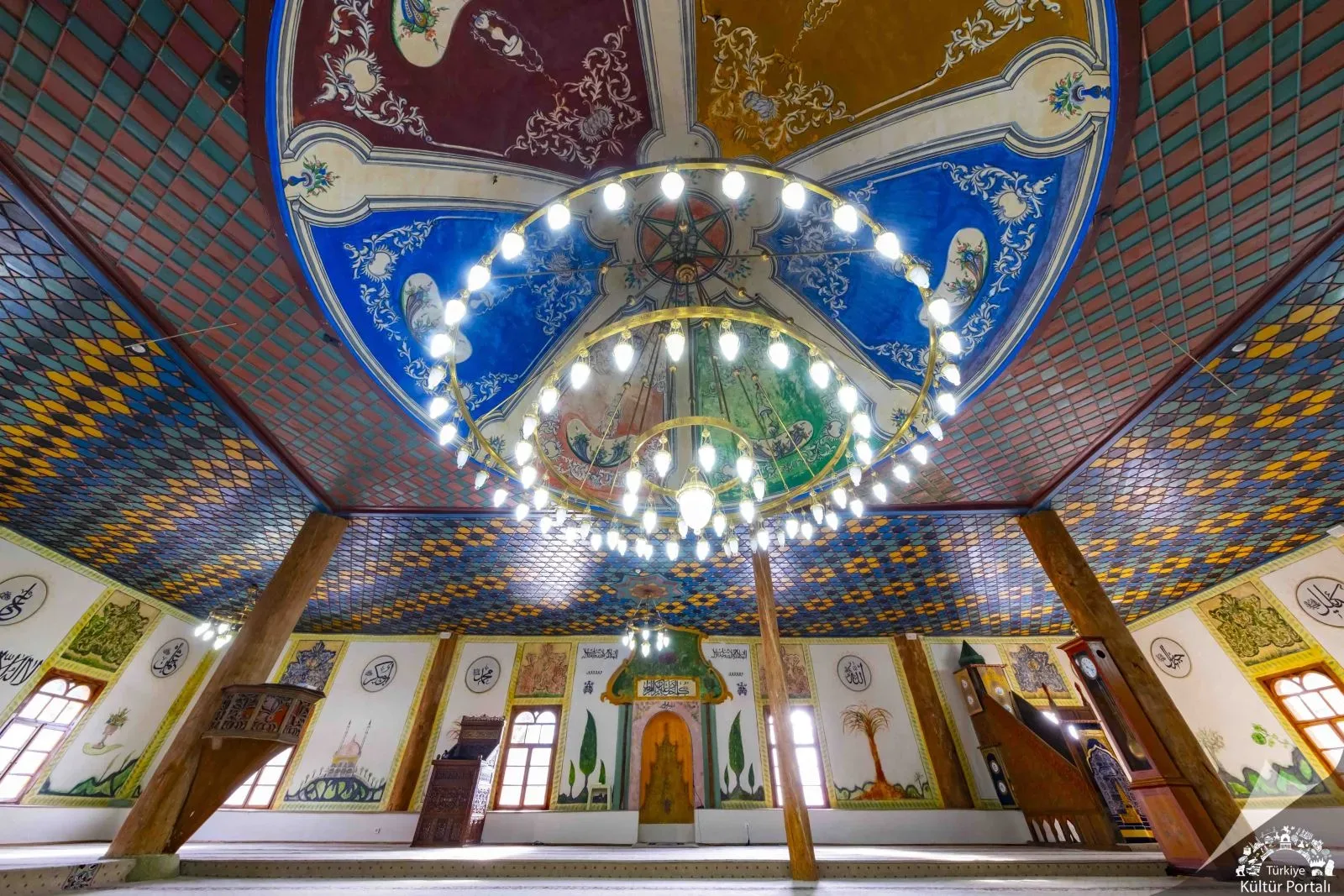
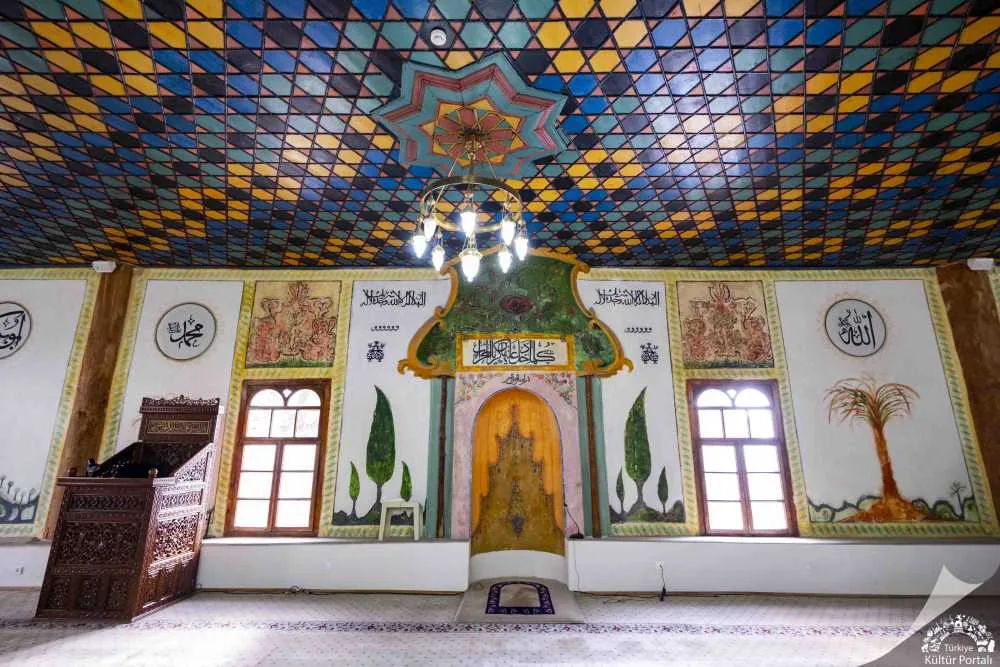
Kocaseyfullah Mosque is a wooden Ottoman mosque dated back to 1490, located in the Şaphane district of Kütahya. Built using wooden pillars without metal nails, the interior features hand-painted wall decorations and a ceiling medallion with an eight-pointed star motif.
Kocaseyfullah Mosque is built on rugged terrain in the town center of Şaphane. The mosque's charter dates its construction to 1490; while some sources attribute it to the Ottoman period, others connect it to the Principality of Germiyan. It takes its name from Koca Seyfullah, who commissioned it. Although a post on Facebook claimed the name refers to an apprentice of Mimar Sinan, a commenter pointed out that this is historically impossible, arguing that the mosque is a Germiyan-era structure carrying Seljuk influences. Thus, the exact founder remains debated, but sources agree that the building dates from the late 15th century.
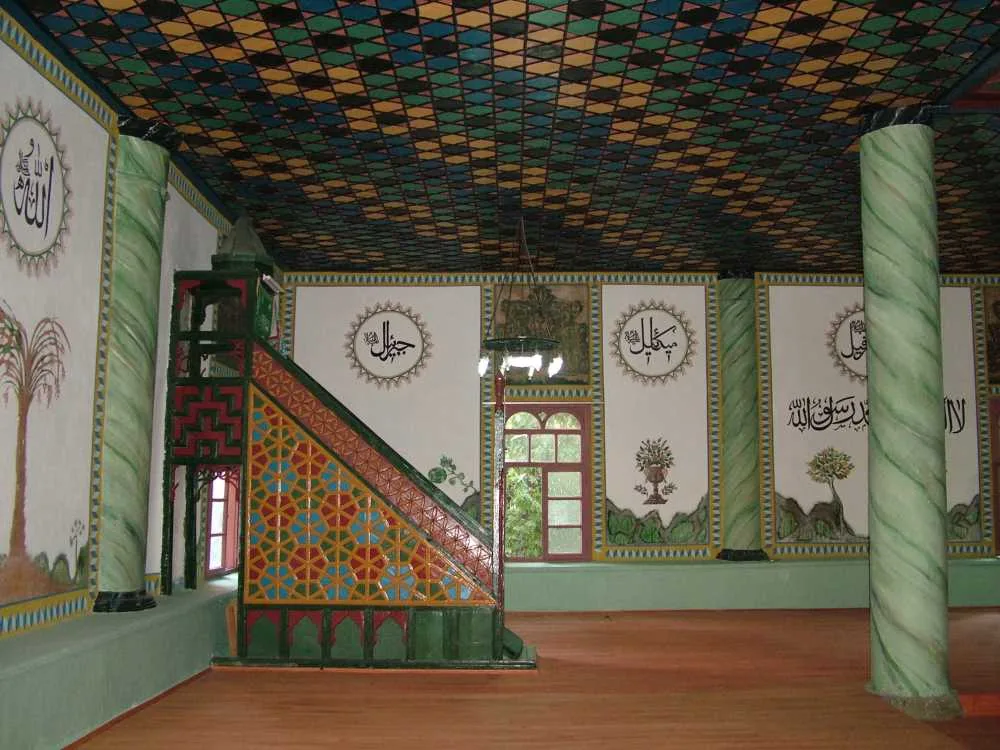
Stepping inside, you encounter something quite unexpected. The rectangular main prayer hall is supported by wooden pillars made from thick tree trunks cut like columns, topped by a domed wooden ceiling. The women's gallery (mahfil) is constructed with the same wooden craftsmanship. The minbar is original and features traces of kundekari (interlocking wood joinery), while the mihrab is made of plaster, decorated with geometric and floral motifs. Visitors find it remarkable that a building constructed entirely without metal nails has managed to stand for centuries despite being in an earthquake zone.
The hand-painted wall decorations (kalemişi) are the mosque's real surprise. The eastern, western, and southern walls are divided into panels of various sizes, displaying Quranic verses and floral motifs alongside figurative paintings such as clocks, mosque depictions, and the tree of life. Since these figurative illustrations differ from typical modern mosque decorations, they are the most talked-about feature among visitors. The ceiling features geometric surfaces painted in yellow, black, blue, and terracotta red, highlighted by a central medallion in front of the mihrab formed by intertwined eight-pointed stars.
History and Architecture of the Mosque
According to the mosque's charter, its construction date is 1490. Determining the exact founder is difficult: while some sources point to a benefactor named Koca Seyfullah, oral traditions link the era to the reign of Bayezid II (around 1491). Although a Facebook post claimed the name refers to an apprentice of Mimar Sinan, a visitor commented that this information is historically inconsistent, arguing that the mosque actually dates to the Germiyanid period and carries traces of Seljuk architecture. What is certain is that the building has over 500 years of history and stands as one of the rare surviving wooden mosques in Anatolia.
Interior: Woodwork and Wall Decorations
The main prayer hall has a rectangular plan running parallel to the qibla wall. Wooden pillars crafted from thick trunks support the domed wooden ceiling and women's gallery, built without using a single metal nail. The eastern, western, and southern walls are divided into panels of various sizes containing Quranic verses, floral motifs, trees of life, and mosque depictions. Painted in yellow, black, blue, and terracotta red, star and square patterns spread across the entire ceiling, while the eight-pointed star medallion in front of the mihrab is the most photographed detail.
When to Visit
Since it is a small mosque in the town center, it can be visited year-round. Spring and autumn offer a more comfortable drive along the mountainous Şaphane road. If you are traveling along the Kütahya-Uşak route, taking a brief detour to visit makes great sense; one visitor noted stumbling upon it by chance in this exact way and having no regrets.
How to Get There
The mosque is located on Emet Street in the Pazar neighborhood of Şaphane town center. It is 128 kilometers from central Kütahya. If coming from Uşak, it is along the way, though you will need to turn off into the village center. Since public transport options are limited, going by private car is the most practical route along a mountainous but picturesque road.
How Much Time to Spend
Exploring the mosque itself takes 10 to 15 minutes. For those wishing to examine the decorations, ceiling motifs, and minbar craftsmanship up close, this duration can be slightly longer. If traveling specifically to Şaphane, you can reserve half a day to explore other corners of the town.
What to Eat Nearby
One visitor suggests trying the local pit-roasted lamb (kuyu kebabı) after visiting the mosque. As Şaphane is a small town, restaurant options are limited, but simple and satisfying meals are available at local traditional eateries.
Things to Know Before You Go
The mosque is active for worship; visitors should be mindful of prayer times and dress respectfully. Basic facilities (restrooms, ablution area) are available in the town center, though there are no major tourist complexes. It is advisable to check accessibility beforehand for wheelchair users, as the structure is built on hilly terrain.
This content originates from neresigezilir.com and may not be copied without permission.
FAQ
Updated: