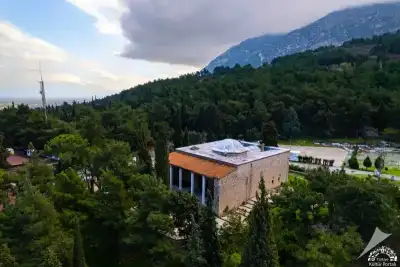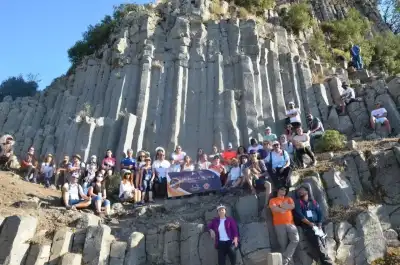
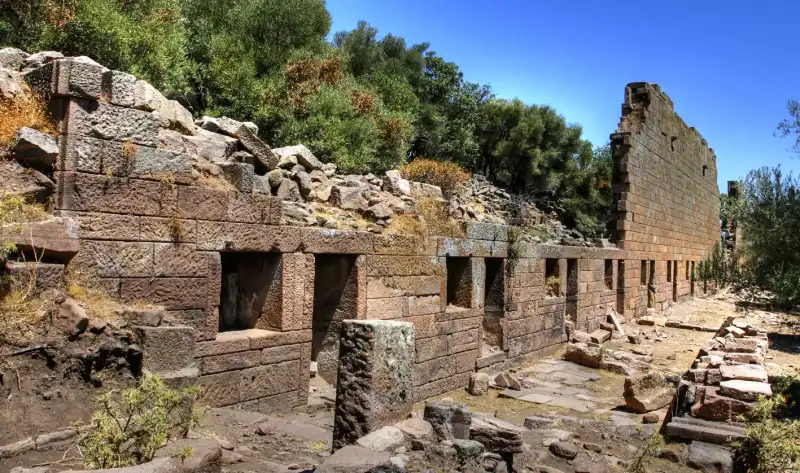
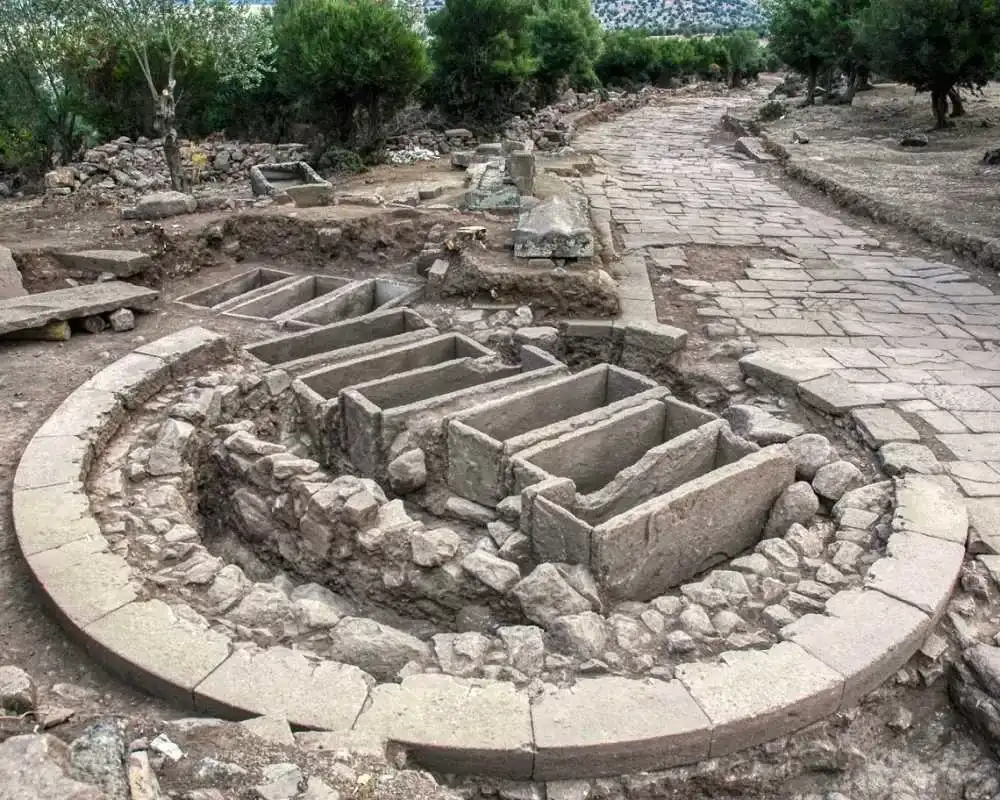
The Ancient City of Aigai is an ancient settlement located on Yunt Mountain in Manisa's Yunusemre district, dating back to the 8th century BC. With the ruins of its theater, agora, and city walls, it was one of the prominent centers of the Aeolis region.
Aigai takes its name from the ancient Greek word for goat. Located within the borders of Köseler Village on Yunt Mountain, about 49-50 kilometers from Manisa city center, this ancient city is considered one of the rare surviving examples of the Aeolis region with its Hellenistic-period structures. Also known as Nemrut Castle or Köseler Castle, the settlement was built on the steep slopes of the mountain, unlike typical Hellenic cities situated on plains. This strategic choice provided the city with excellent defense capabilities and created an extraordinary panorama for modern visitors.
Among the remaining structures are a theater, agora, temple foundations, and fortification walls. The dense surrounding vegetation has preserved part of the structures over the centuries, making Aigai an intriguing stop for both archaeology enthusiasts and hikers. The history of the city dates back to the 8th century BC, and ongoing excavations continue to unearth new insights into ancient life.
Related explorations: Places to visit in Manisa, Alaşehir Yıldırım Bayezid Mosque, Akhisar Museum, Sultan Mosque and Complex, Izmir Manisa Balikesir Bursa Istanbul: 6-Day Itinerary from Aegean to Marmara.
Guide's Note
Aigai Ancient City is an open-air site located at the peak of Yunt Mountain, about 25 km from central Manisa, that pleasantly surprises most visitors. Thanks to its elevated altitude and relatively remote access, its structures stand out for being remarkably well-preserved. Parking and restroom facilities are available at the entrance.
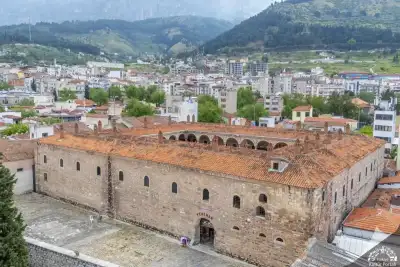
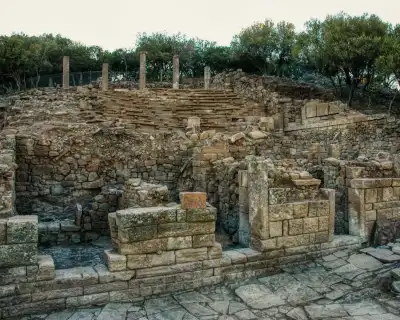
The site's most striking feature is the Agora Building, whose walls still reach a impressive height of around 11 meters. Key points of interest include the council building (bouleuterion), bathhouse ruins, and the Macellum, believed to have served as a meat and fish market. As archaeological excavations are ongoing, new sections are opened to visitors over time. The panoramic view stretching over the valley and surrounding hills is a highlight in its own right. Budgeting between 1.5 to 2.5 hours is recommended to explore the entire area.
Many visitors arrive without prior research yet express that the experience exceeded their expectations. Please note that bringing lighters or smoking inside the site is strictly prohibited.
- Rugged terrain: Paths and stone surfaces are steep and uneven; navigating the full route can be challenging for elderly visitors and young children.
- Water and sun protection: Shaded areas are scarce at the summit and strong winds are common; carrying plenty of water, a hat, and sunscreen is strongly advised.
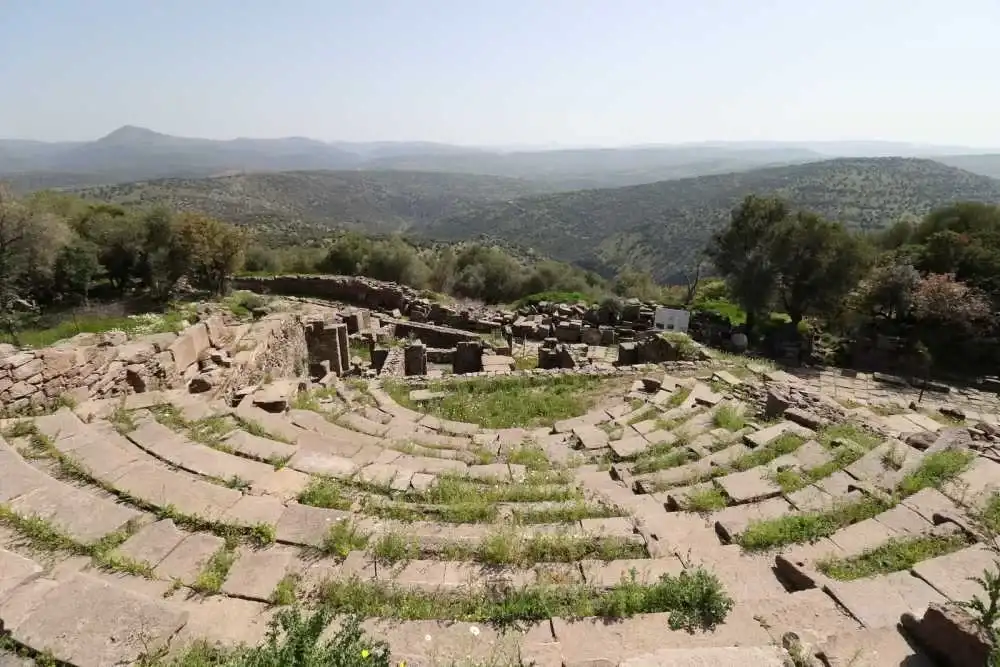
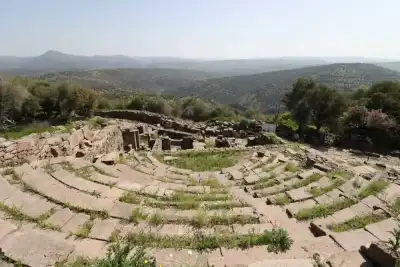
- Theater area: Ruins of the ancient theater have not yet been restored or re-erected, so it is best to manage expectations regarding this section.
- Information signs: Comprehensive information panels on site are somewhat limited; researching the history prior to your visit will enhance your overall experience.
Best Time to Visit
The best period to visit Aigai is during April–May and September–October. In spring, the slopes of Yunt Mountain turn vibrant green, making walking among the ancient ruins significantly more enjoyable. In autumn, crowds thin out, temperatures drop, and the natural lighting becomes ideal for photography. During summer months, visiting early in the morning or late afternoon is recommended, as the midday sun can be relentless. In winter, mountain roads are prone to fog and rain, so careful advance planning is necessary.
How to Get to Aigai Ancient City?
The distance from Manisa city center to Köseler Village by private vehicle is around 49-50 kilometers. While the road is mostly paved, it becomes narrow and winding as you approach the village; vehicles with higher ground clearance offer a more comfortable drive. Public transport options are very limited; you should verify minibus schedules operating from Manisa bus terminal to Köseler Village with local transit operators. From the village to the ancient site, there is a walk of approximately 2 kilometers. Visitors coming from Izmir can follow the same route via Manisa.
Where to Eat Nearby?
There are no comprehensive dining options in the immediate vicinity of Aigai Ancient City. Small local amenities may be available in Köseler Village, but researching beforehand or packing your own food and drinks is a safer strategy. Upon returning to Manisa city center, numerous restaurants serving Aegean cuisine await you. Do not leave without trying Manisa's famous Mesir paste and local dessert specialties.
Photography Spots
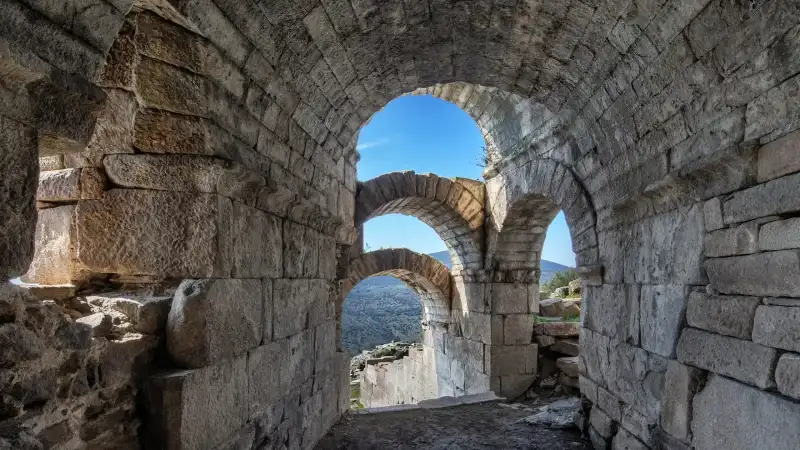
Aigai is a compelling destination for photography enthusiasts. The theater ruins offer dramatic shots, particularly in the soft morning light. Panoramic view photos taken from the top of the volcanic hill capture both the surrounding mountains and plains in a single frame. In spring, when slopes are blanketed with wildflowers, using them as a foreground creates a beautiful contrast against ancient stone structures. The fortification wall remnants and the agora section are also excellent spots for capturing detailed architectural photography. Bringing a wide-angle lens or a smartphone lens adapter will come in handy.
Suggested Itinerary
If you are planning a one-day trip to Manisa, set off early in the morning to explore Aigai Ancient City before noon. Afterwards, return to central Manisa to include attractions like Spil Mountain National Park, Manisa Castle, or Muradiye Mosque in your afternoon schedule. For a two-day itinerary, adding the Ancient City of Sardis (Sart) allows you to experience Manisa's ancient heritage in a much more complete way.
Things to Know Before You Go
Since Aigai is perched on a mountain slope, wearing sturdy walking shoes is essential. Due to rocky and uneven ground, exploring in sandals or high heels is both difficult and risky. Bring sufficient drinking water and light snacks, as nearby stores or kiosks may not be open. Adding sunscreen and a hat to your gear is equally important. During winter and early spring, mountain roads may experience fog and rain; check the weather forecast prior to travel. Museum Pass holders enjoy free entry; if you do not have a pass, check the official site of the Ministry of Culture and Tourism for current ticket fees.
General Information About Aigai
Aigai was one of the significant cities of the Aeolis region, with roots tracing back to the 8th century BC. Standing at approximately 360 meters above sea level on a volcanic hilltop, it clearly sets itself apart from other Hellenic cities located on flat coastal plains along the Aegean. The name of the city stems from the ancient Greek word for goat, reflecting the region's rugged geography and livestock tradition. Archaeological excavations continue today, unearthing fresh findings every season. As one of Manisa's lesser-known gems, it is tailor-made for travelers seeking a peaceful historical exploration away from heavy tourist crowds.
This content originates from neresigezilir.com and may not be copied without permission.
Aigai Ancient City Videos
Aigai Ancient City videos load when you open this section to keep the page fast.
Show videos
FAQ

Updated: