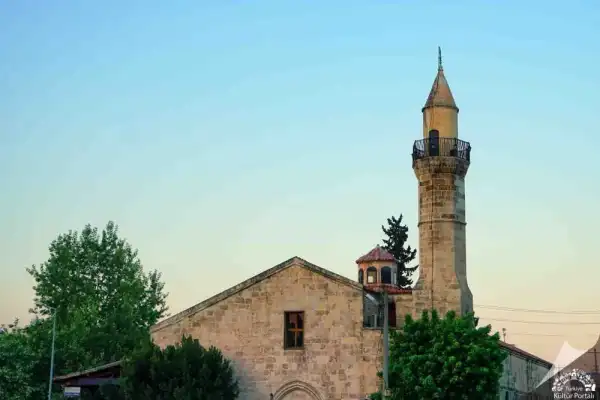
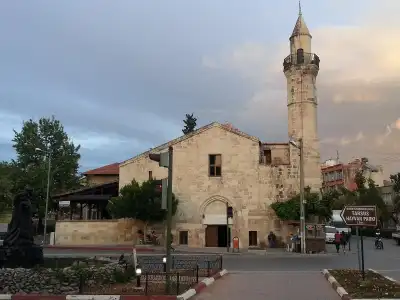
Tarsus Old Mosque (Baytemir Mosque) is a historical landmark in the Tarsus district of Mersin, originally constructed as a medieval church and later converted into a mosque. Featuring thick walls and deep window niches characteristic of 13th–14th century design influenced by Roman architecture, admission is free and it remains an active place of worship.
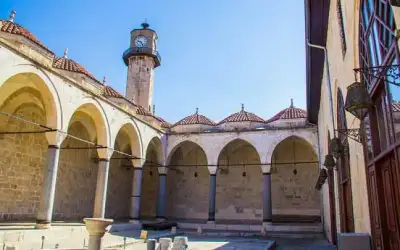
Rising in the heart of Tarsus's historical center, opposite the Tomb of Prophet Daniel (Danyal Peygamber Makamı), the Old Mosque (Eski Cami) is one of the city's most multi-layered structures. While its exact construction date remains debated, its architectural features point to the 13th to 14th centuries of the Middle Ages. According to a common view among visitors and researchers, the building originally served as a church dedicated to Saint Paul. Some historical sources note that in 1360, Seyfeddin Bay-Temur el-Khwarizmi converted the church into a mosque, which is why the structure was long known as Bay-Temür Mosque. Other sources record that in 1415, Shehabeddin Ahmet Bey of the Ramazanid dynasty converted the church into a mosque and added a minaret to its southwest corner. The southern entrance was replaced with a mihrab, a narthex (porch) was added to the northern facade, and side rooms were built on either side of the apse.
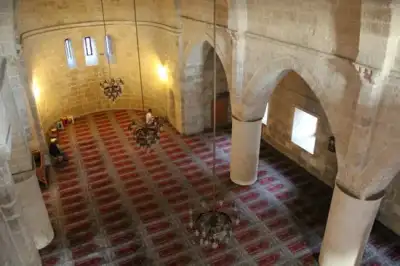
The structure combines the robustness of Roman architecture with the spatial depth of Medieval Christian design: thick stone walls, deep window niches that narrow outward and widen inward, and massive pillars. Visitors frequently describe stepping inside as feeling like traveling back in time. Due to its historical significance, the building has undergone continuous restorations throughout history, reaching its current well-preserved state following restoration works completed in 2007. The vast majority of travelers visiting Tarsus report that the city's rich history far exceeds their expectations, with the Old Mosque leading the list of pleasant surprises.
Conversion of a Church into a Mosque
The origins of Tarsus Old Mosque lie in a history defined by varying accounts across historical sources. Its architectural features point to construction somewhere between the 13th and 14th centuries of the Middle Ages. Some sources state that Seyfeddin Bay-Temur el-Khwarizmi converted the church into a mosque in 1360, which led to the building being called Bay-Temür Mosque for a long time. Another widely accepted view holds that in 1415, Shehabeddin Ahmet Bey of the Ramazanid dynasty converted it into a mosque shortly after taking Tarsus from the Karamanids, adding a minaret to its southwest corner. The southern door was sealed and replaced with a mihrab, a narthex (porch) was added to the northern facade, and rooms were arranged on both sides of the apse.
Architectural Features
The structure reflects both the robustness of Roman architecture and the spatial depth of medieval church design. From the outside, the most striking feature is its exceptionally thick stone walls. Deep window niches that are narrow on the exterior and wide on the inside appear carved into these heavy walls. Massive pillars create an imposing atmosphere inside. Visitors often remark that stepping inside feels like taking a step centuries back into history.
When to Visit?
Due to its Mediterranean climate, Tarsus can get quite hot during the summer months. The most comfortable periods for exploring historical sites are between April–June and September–November. As the mosque remains an active place of worship, planning your visit around prayer times increases the likelihood of gaining entry. Since some visitors report finding it locked outside prayer hours, preferring noon (Dhuhr) or afternoon (Asr) prayer times is recommended. Always check local arrangements before visiting.
How to Get There?
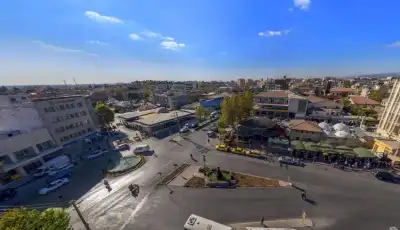
To reach Tarsus from Mersin city center, you can take intercity buses or minibuses; the journey takes about 30–40 minutes. Upon arriving in Tarsus, head toward the historical bazaar district. The Old Mosque is easy to locate as it sits on the same street as the Tomb of Prophet Daniel. If arriving by car, street parking is available nearby, though exploring the historical center on foot is far more practical due to the narrow streets.
Suggested Tarsus Historic Center Itinerary
The Old Mosque is a natural part of a walking route through historic Tarsus. After visiting it along with the nearby Tomb of Prophet Daniel, you can walk to the Kırkkaşık Bazaar, St. Paul's Church, and Cleopatra's Gate. Because all these attractions are clustered close together, you can comfortably explore them all on a half-day walking tour.
Where to Eat Nearby?
Tarsus boasts a rich culinary heritage. In the restaurants surrounding the historical bazaar, you can savor regional dishes unique to the Çukurova region. Tarsus kebab and içli köfte (stuffed meatballs) top the list of must-try specialties. Small local eateries around the Kırkkaşık Bazaar offer both affordable and authentic dining options.
Photography Spots
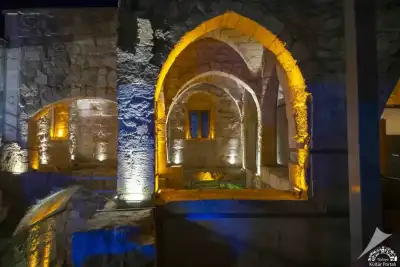
The exterior of the building is ideal for photography highlighting the rich stone texture and deep window niches. Wide-angle shots capturing the minaret alongside the facade beautifully reflect the mosque's former church silhouette. Inside, sunlight filtering between the pillars creates a dramatic atmosphere in the morning hours. Street-level perspective shots incorporating the Tomb of Prophet Daniel also capture the historic context seamlessly.
This content originates from neresigezilir.com and may not be copied without permission.
Tarsus Old Mosque (Baytemir Mosque) Videos
Tarsus Old Mosque (Baytemir Mosque) videos load when you open this section to keep the page fast.
Show videos
FAQ
Updated: