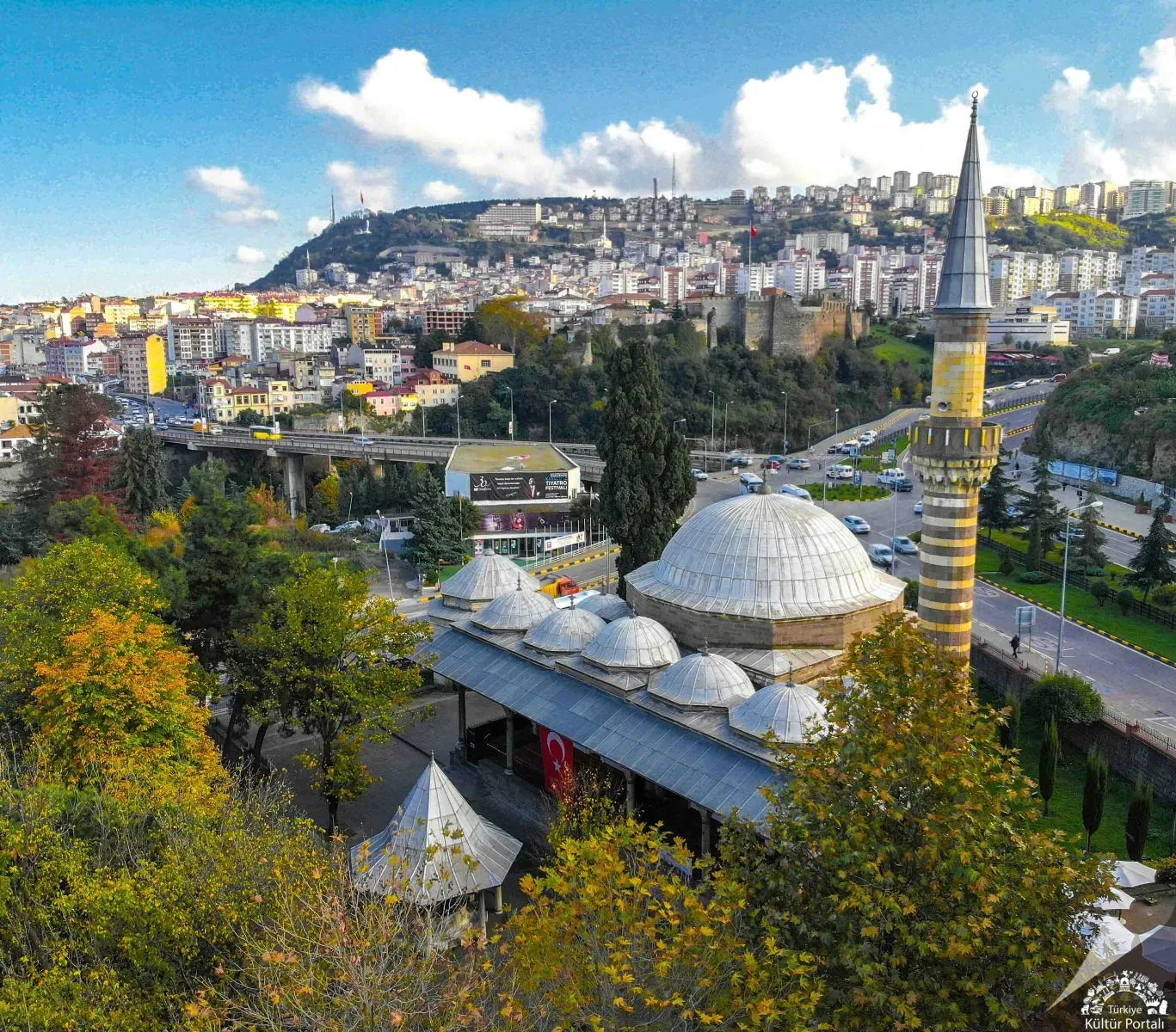
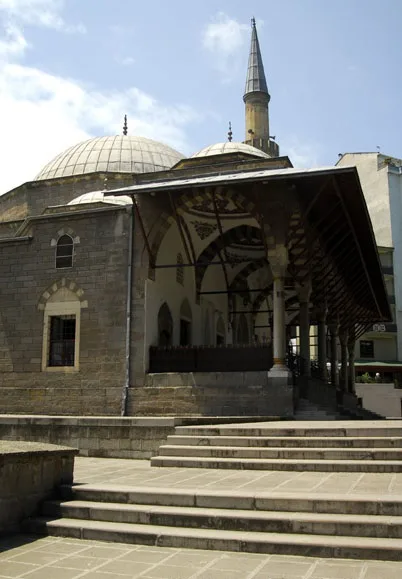
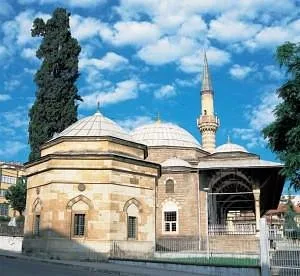
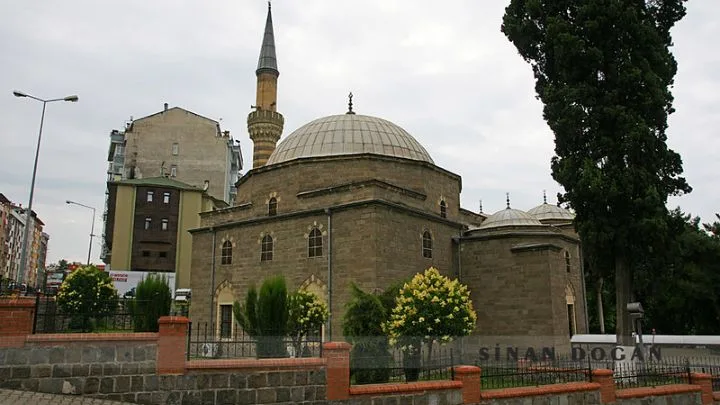
Gülbahar Hatun Mosque in Trabzon's Ortahisar is an Ottoman mosque built in 1514 for Sultan Selim I's mother, featuring a luminous interior with 23 windows and a tomb in its courtyard housing Gülbahar Hatun's sarcophagus.
Gülbahar Hatun Mosque was built in 1514 in honor of the mother of Sultan Selim I (Yavuz Sultan Selim). It was once the center of the Hatuniye Complex, which comprised a tomb, madrasa, soup kitchen, school, bathhouse, and Quran recitation school, though only the mosque and tomb have survived to this day. It is also known as Büyük İmaret Mosque or Hâtûniye Mosque.
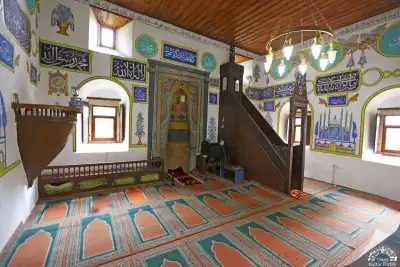
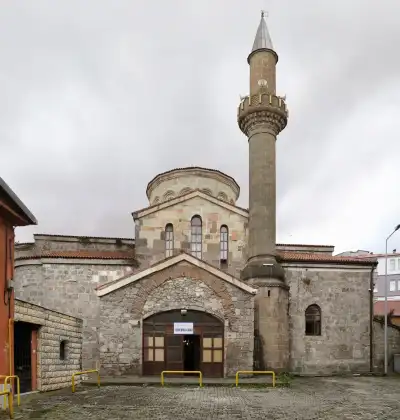
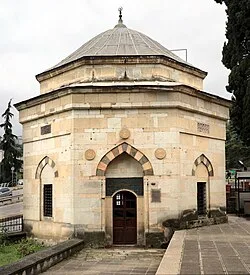
Reflecting the hospice-style (zaviyeli) typology of early Ottoman architecture, the structure features a 12x12-meter square main prayer hall flanked by two side chambers. Its most striking feature is the natural light entering through a total of 23 windows. Even the famed Ottoman traveler Evliya Çelebi praised this luminous interior in his travelogue. The marble mihrab and minbar display simple craftsmanship. To the east of the mosque, an octagonal tomb houses the sarcophagus of Gülbahar Hatun.
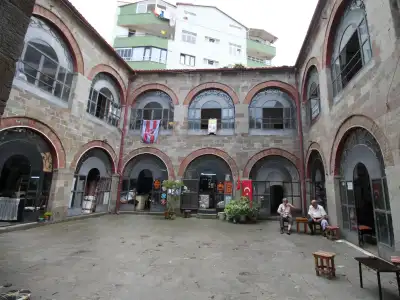
Visitors often note that while compact, the mosque is meticulously crafted and its original window paintwork has been preserved. Thanks to its central location, the courtyard remains lively throughout the day, making it a popular spot for both worshipers and sightseers.
History and Complex
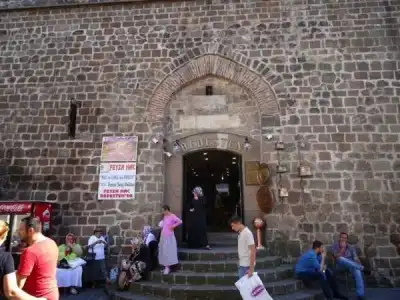
The mosque was built in 1514 by Sultan Selim I in memory of his mother, Gülbahar Hatun. Originally part of a large complex (külliye) that included a tomb, madrasa, soup kitchen, primary school, bathhouse, and Quran recitation school, only the mosque and tomb survive today. The mosque's original inscription plaque is lost; the inscription seen above the entrance door today dates to a restoration in 1883-84. The tomb, however, was built earlier in 1505, making it the oldest structure of the complex.
Architectural Details
The structure follows the hospice-style (zaviyeli/tabhaneli) layout typical of early Ottoman architecture. The 12x12-meter square main prayer hall is covered by a dome resting on pendantives, supported externally by a dodecahedral drum. The walls combine ashlar stone with dark gray and yellowish-white stones around windows and arches. Illuminated by a total of 23 windows, the interior is remarkably brighter than expected. The marble mihrab features simple side borders with a top decorated in floral motifs. Visitors particularly appreciate the preserved original glass paintwork.
Tomb and Courtyard
To the east of the mosque stands an octagonal domed tomb housing the sarcophagus of Gülbahar Hatun. Except for the north facade, all sides feature windows topped with carved relief medallions. Above the southeastern door lies the foundation inscription and two Bismillahs. The courtyard stays lively throughout the day, becoming particularly busy around prayer times with visitors and congregants.
How to Get There
The mosque is located on the south side of Atapark in the Ortahisar district of central Trabzon. Within walking distance of the city center and close to the Zağnos Bridge, it can easily be visited along the same route as other historical monuments in Ortahisar. Public transport routes in central Trabzon provide convenient access.
Nearby Attractions
Because of its central location, it is best planned as part of a central Trabzon walking tour rather than a standalone stop. Atapark, Ortahisar Fortress, and nearby historic Ottoman structures are all within walking distance, easily fitting into a half-day city center itinerary.
Visiting Tips and Rules
As an active place of worship, postpone visits during prayer times or maintain strict silence. Visitors must remove their shoes at the entrance, and women should wear a headscarf. Silence is particularly appreciated in the tomb section; taking photos can be slightly challenging during peak hours.
This content originates from neresigezilir.com and may not be copied without permission.
Gülbahar Hatun Mosque Videos
Gülbahar Hatun Mosque videos load when you open this section to keep the page fast.
Show videos
FAQ
Updated: