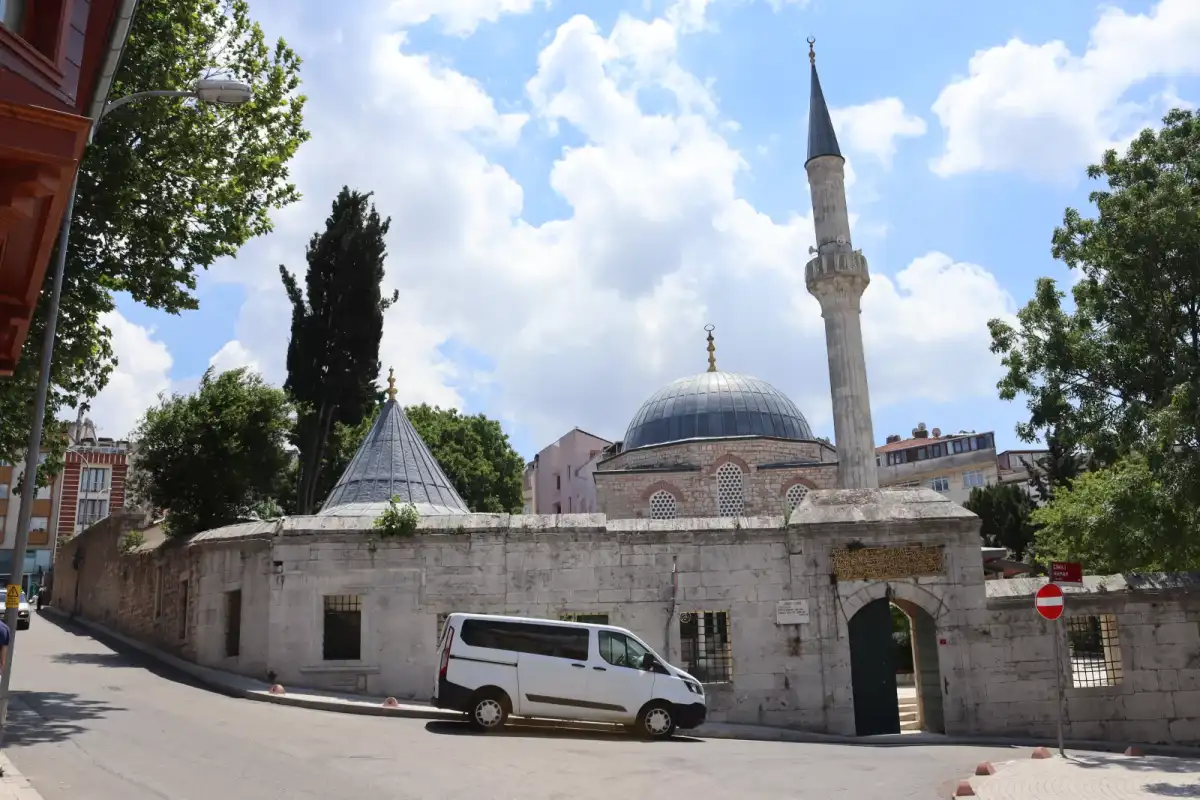
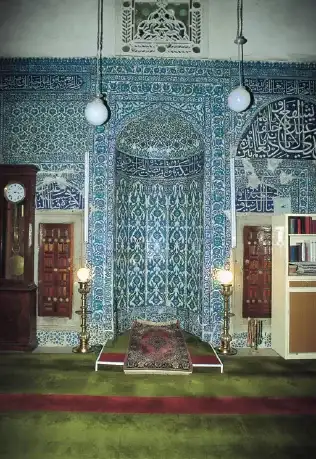
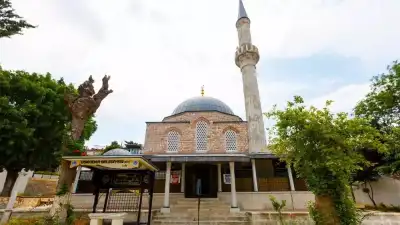
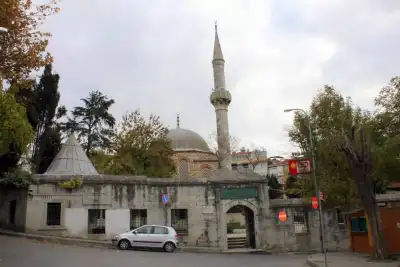
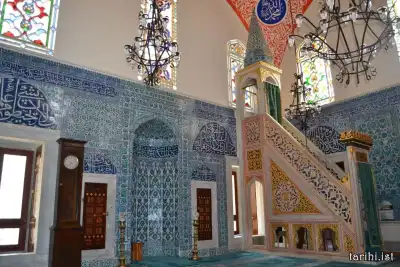
Çinili Mosque is a 17th-century Ottoman mosque commissioned by Kösem Sultan in 1640 in Üsküdar, Istanbul. Famous for its interior fully adorned with Iznik tiles, it is free to visit and remains an active place of worship.
Çinili Mosque (literally "The Tiled Mosque") takes its name from the exquisite Iznik tiles covering its interior walls. It was commissioned between 1638 and 1640 by Mahpeyker Kösem Sultan. As the wife of Sultan Ahmed I and mother to Sultans Murad IV and Ibrahim, Kösem Sultan was the most influential figure during the period known as the Sultanate of Women in 17th-century Ottoman politics. Designed by Kasımağa, a successor of the Mimar Sinan school, the mosque is not as large as the imperial royal mosques, yet it creates a beautifully balanced composition with its single-domed sanctuary, porticoed entrance, and graceful minaret.
Inside, intricate motifs of tulips, carnations, and hyacinths in shades of cobalt blue, turquoise, green, and coral red adorn the walls. Dating back to the first half of the 17th century, these tiles are considered among the last great productions of the Iznik workshops before their decline. Visitors often remark on how natural light streaming through the windows brings the glazed surfaces to life, creating an immersive atmosphere despite the mosque's compact size. Visiting outside prayer times is recommended, as only the exterior can be seen when the interior doors are closed.
The mosque was originally built as part of a social complex (külliye) comprising a madrasa, a public fountain (sebil), a primary school (mektep), and a Turkish bath (hamam). Although the bath and school have undergone changes over time, the overall complex layout remains legible. Located in a quiet neighborhood of Üsküdar away from the crowds of Sultanahmet or Süleymaniye, it remains a tranquil, uncrowded gem.
Guide's Note
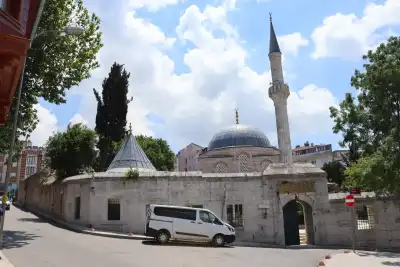
Çinili Mosque stands out as a small-scale neighborhood mosque from the Ottoman era. Its interior historic tiles and fine craftsmanship elevate it beyond a simple place of worship; many visitors find it well worth the detour to admire this historic artwork up close. Foreign travelers also show great interest, particularly praising the tile decorations.
The mosque courtyard contains historical tombs and a tile workshop; however, there is a lack of on-site signage explaining whether the workshop is active or who rests in the tombs. It is helpful to research these aspects prior to your visit.
- Access outside prayer times: At least one visitor noted that when arriving outside prayer hours, an attendant refused to open the doors. To avoid disappointment, plan your visit strictly around prayer schedules.
- Lack of informational signs: There are no explanatory signs on-site regarding the courtyard tombs or tile workshop.
When to Visit
Since the mosque is an active place of worship, entering the interior during prayer times can be difficult. Experience shows that visiting between prayer hours allows full access to the tilework; otherwise, you may only be able to view the exterior. Late mornings and afternoons, especially on non-Friday days, are most suitable. Always check current prayer times before heading out.
How to Get There
The classic route is taking a ferry to Üsküdar Pier and walking along Çavuşdere Avenue past Mihrimah Sultan Mosque, which takes about 30 minutes. If you prefer not to walk uphill, bus and minibus routes stop at Bağlarbaşı, from where the mosque is only a few minutes' walk. Coming from Kadıköy or Beşiktaş via ferry followed by a short bus ride or walk is both scenic and convenient.
Location in Üsküdar
The mosque is located on Çinili Hamam Street in the Murat Reis neighborhood, close to Bağlarbaşı. Set slightly inland from the Üsküdar waterfront, it sees very few tourists, preserving an authentic neighborhood feel. Other notable Üsküdar mosques, such as Şakirin Mosque and Valide-i Atik Mosque, are nearby and can easily be added to your itinerary.
How Much Time to Budget
Because the mosque is relatively small, 20 to 30 minutes is usually sufficient. However, those wishing to study the tiles in detail or photograph the changing light may want to spend a bit longer. It can be easily combined with other Üsküdar attractions (Mihrimah Sultan Mosque, Şemsi Pasha Mosque, waterfront) for a half-day Üsküdar tour.
Best Photography Angles
Inside, the tile panels surrounding the mihrab feature the most intricate designs. Colors appear most vibrant when daylight streams through the windows onto the glazed tile surfaces. From the outside, the minaret and porticoed entrance offer simple yet elegant photographic subjects. If the mosque is not busy, you can capture quiet shots inside using natural light without needing a flash or tripod.
Things to Keep in Mind
As an active mosque, modest dress is required; head coverings for women are usually available near the entrance. Shoes must be removed before entering. During prayer services, it is best to wait quietly on the side or visit after prayers conclude. Note that wheelchair access is not available, so entry may be difficult for visitors with mobility challenges.
Kösem Sultan and the Külliye
The mosque was designed not as a standalone structure, but as part of a complex (külliye) featuring a madrasa, fountain, public spigot, school, and bathhouse. While some structures have been altered over time, the master layout is still visible. Kösem Sultan's commissioning of this complex reflected her immense political influence at court, serving both religious and social welfare functions in the community.
This content originates from neresigezilir.com and may not be copied without permission.
FAQ

Updated: