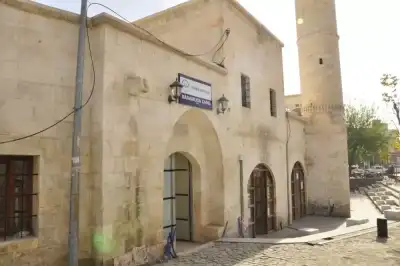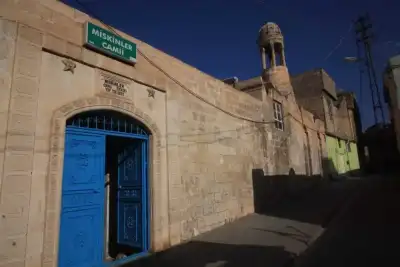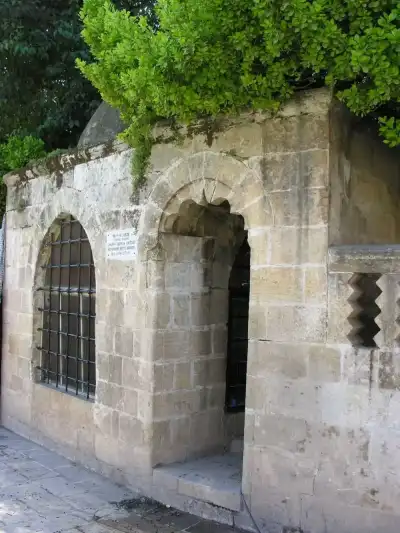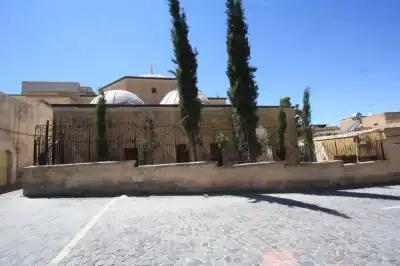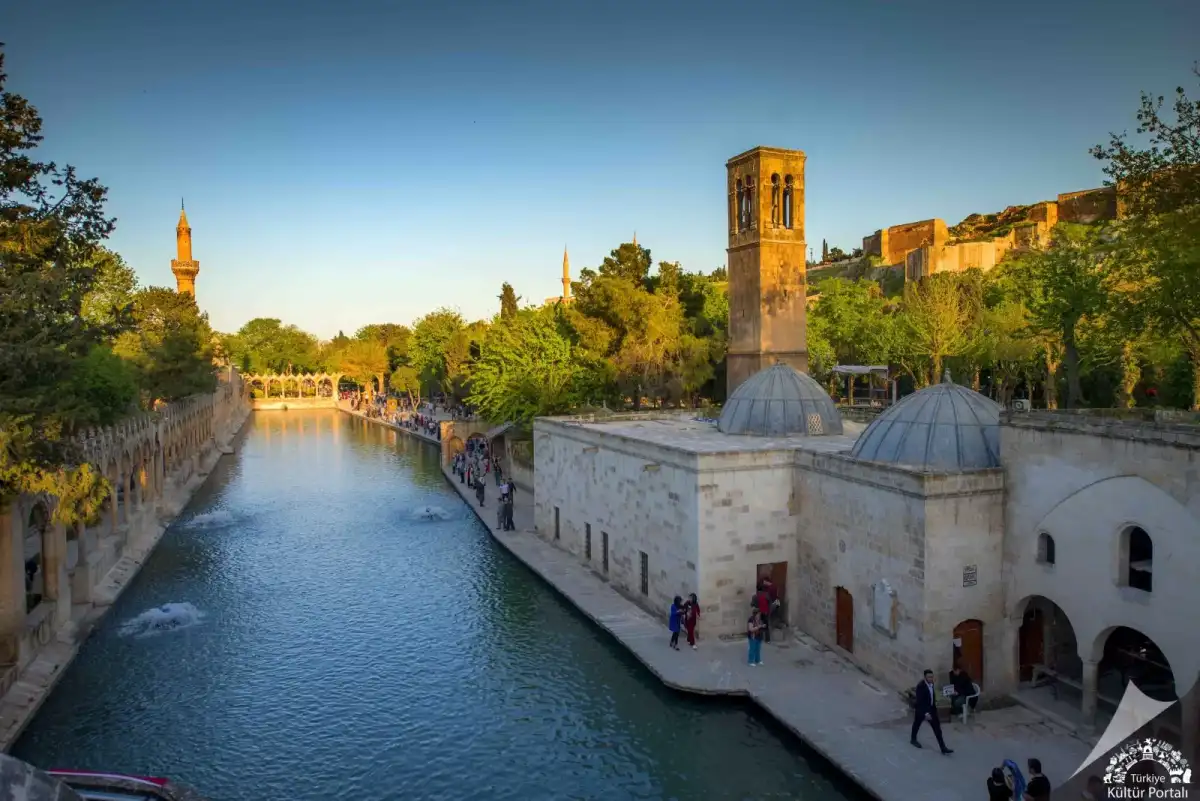
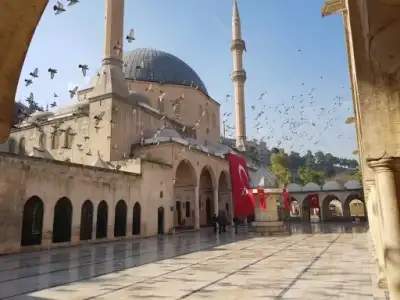
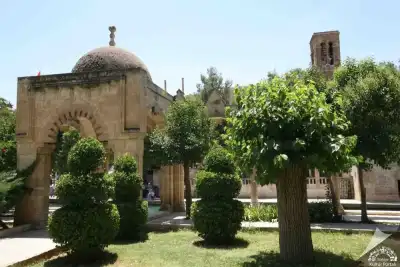
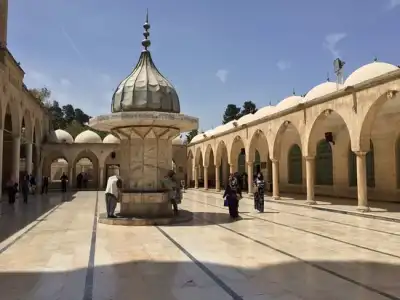
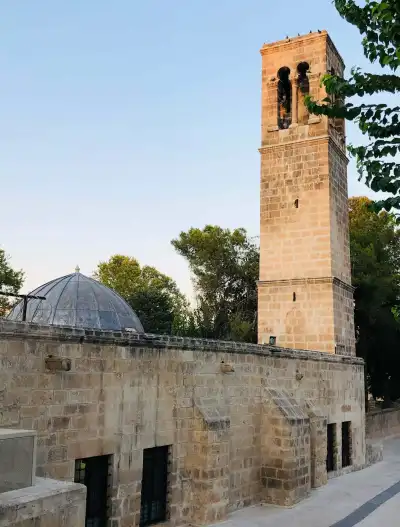
Halilürrahman Mosque is a historic Ottoman mosque built in 1523 on the southern shore of Balıklıgöl in Şanlıurfa, located on the sacred grounds near the cave believed to be the birthplace of Prophet Abraham.
Halilürrahman Mosque is considered the oldest structure of the complex surrounding Balıklıgöl, the landmark symbol of Şanlıurfa. Rising near the western corner of the lake's southern shore, the mosque was built by Muhammed Salih Pasha in 1523 during the Ottoman era. Featuring a rectangular plan, the building is also locally known as Döşeme Mosque; this name is thought to derive from the importance given to the mosque's stone paving (döşeme).
The site where the mosque stands holds a very special place in Islamic tradition. Standing on sacred ground where Prophet Abraham was believed to be cast into the fire—only for God to transform the flames into a rose garden—the structure welcomes thousands of visitors and pilgrims every year. Positioned right next to Balıklıgöl, the mosque is an integral part of this mystical atmosphere, locally referred to by the people of Şanlıurfa as 'Ağ Balık'. Its connection to the adjacent cave makes a visit even more spiritually meaningful.
Guide's Note
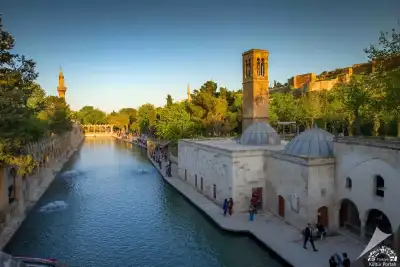
Halilürrahman Mosque is a historic landmark along the shores of Şanlıurfa's Balıklıgöl that most visitors consider a must-see. The mosque forms part of a larger complex (külliye) alongside madrasas and tombs; as a result, visitors appreciate it not just as a place of worship, but as a complete historical sanctuary. Converted into a mosque during the reign of Abbasid Caliph Al-Ma'mun, the structure underwent several restorations during the Ayyubid and Ottoman periods, largely gaining its present appearance during the 1810 restoration.
The interior features two main sections: a lower glass-floored area where water is visible, revered as the spot where Prophet Abraham was thrown into the fire, and the main prayer hall above. Visitors often note their belief in the healing properties of the water visible in this lower section. Men and women enter through separate entrances, and general cleanliness receives positive remarks. With its striking reflection along the lake, the building stands out both for faith tourism and historical architecture.
- Occasional restricted access: At least one visitor mentioned that the mosque was closed during their visit and they could not go inside. It is recommended to check if it is open before planning your visit.
- Crowds and peak periods: Drawing large numbers of visitors together with Balıklıgöl, the area can become quite busy, particularly on weekends and holidays.
About Halilürrahman Mosque
Balıklıgöl, a key stop on every itinerary to Şanlıurfa, is not just a single site but the center of a complex comprising mosques, tombs, and sacred caves. As the oldest and most rooted structure of this complex, Halilürrahman Mosque has stood on the lake's southern shore for centuries. Built in 1523 by Muhammed Salih Pasha during the Ottoman period, the mosque stands out with its rectangular floor plan and modest architecture that perfectly suits the region's spiritual character.
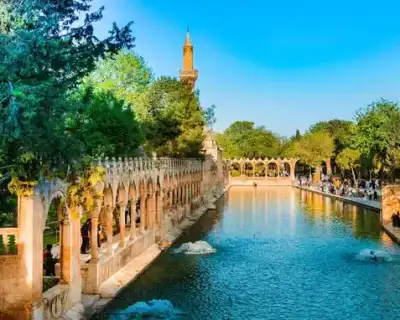
Another widely known local name for the building is Döşeme Mosque. Visitors come here not only to pray, but also to experience the sacred soil associated with Prophet Abraham. Watching the carp swimming in the clear waters of Balıklıgöl with the mosque's minaret in the background creates one of Şanlıurfa's most iconic views.
Historical Background
The site where Halilürrahman Mosque stands is directly associated with Prophet Abraham in Islamic tradition. According to legend, King Nimrod cast Abraham into a roaring fire; however, by divine command, the fire turned into a pool of water and the burning logs became carp. The body of water known today as Balıklıgöl symbolizes that miracle. The adjacent cave is revered as the birthplace of Prophet Abraham and forms the spiritual centerpiece of the complex.
Various structures existed on this site prior to the Ottoman era, but the current standing mosque dates to the 16th-century Ottoman period. Although it underwent various restorations over the centuries, the building has largely preserved its original character.
When to Visit?
Şanlıurfa experiences extremely hot summers, with temperatures often exceeding 40°C in July and August. Those planning a summer visit should aim for early morning or late afternoon hours. April, May, September, and October offer the most comfortable climate and moderate crowd levels.
The mosque and its surroundings become exceptionally crowded during Friday prayer times and religious holidays. If you prefer a quiet visit, head there on a weekday morning. In the evening, artificial lighting highlights Balıklıgöl and the mosque, offering a captivating view.
How to Get There?
Halilürrahman Mosque is very close to Şanlıurfa city center. Taking a taxi from anywhere in town and mentioning Balıklıgöl is sufficient, as drivers know the area well. Public minibuses (dolmuş) serving the Balıklıgöl route also drop passengers off right near the mosque.
If driving, simply follow Balıklıgöl Street. Parking options are available around the area, though finding a spot can be difficult on weekends and holidays. Şanlıurfa GAP Airport is about a 35-40 minute drive from the city center.
Photography Spots
Halilürrahman Mosque offers rich opportunities for photography. Shots taken from the opposite shore of Balıklıgöl frame the mosque, minaret, and lake together in a single view—a perspective that looks particularly stunning in morning light. The reflection of the minaret shimmering on the lake surface is another favorite composition.
In the evening, as artificial lights turn on, the mosque and its surroundings take on a completely different allure. Wide-angle lenses are ideal for capturing both the mosque's architecture and the full landscape of Balıklıgöl. Low-angle shots of the minaret taken from inside the courtyard also offer an interesting perspective.
Where to Eat Nearby?
The area surrounding Halilürrahman Mosque and Balıklıgöl is an excellent starting point to explore Şanlıurfa's famous culinary scene. Nearby restaurants serve local specialties like çiğ köfte, lahmacun, katmer, and liver kebabs. Urfa kebab remains the city's signature dish with its signature mild spice blend.
Tea gardens around Balıklıgöl provide pleasant spots to relax and enjoy Turkish tea after your tour. Thanks to its proximity to the historic bazaar, numerous dining options are easily accessible within walking distance.
Suggested Itinerary
Exploring Halilürrahman Mosque as part of the broader Balıklıgöl area makes for a far richer visit. Start early in the morning at the mosque, then visit the adjacent Cave of Prophet Abraham. Stroll around the lake and see Rızvaniye Mosque and Lake Aynzeliha on the opposite shore.
In the afternoon, walk over to the city's historic Grand Bazaar (Kapalı Çarşı), where coppersmiths, spice vendors, and traditional handicrafts await. Return to Balıklıgöl in the evening to enjoy the illuminated scenery. While Şanlıurfa can be seen in a single day, setting aside two days allows for a much more relaxed experience.
This content originates from neresigezilir.com and may not be copied without permission.
Halilürrahman Mosque (Döşeme Mosque) Videos
Halilürrahman Mosque (Döşeme Mosque) videos load when you open this section to keep the page fast.
Show videos
FAQ
Updated: