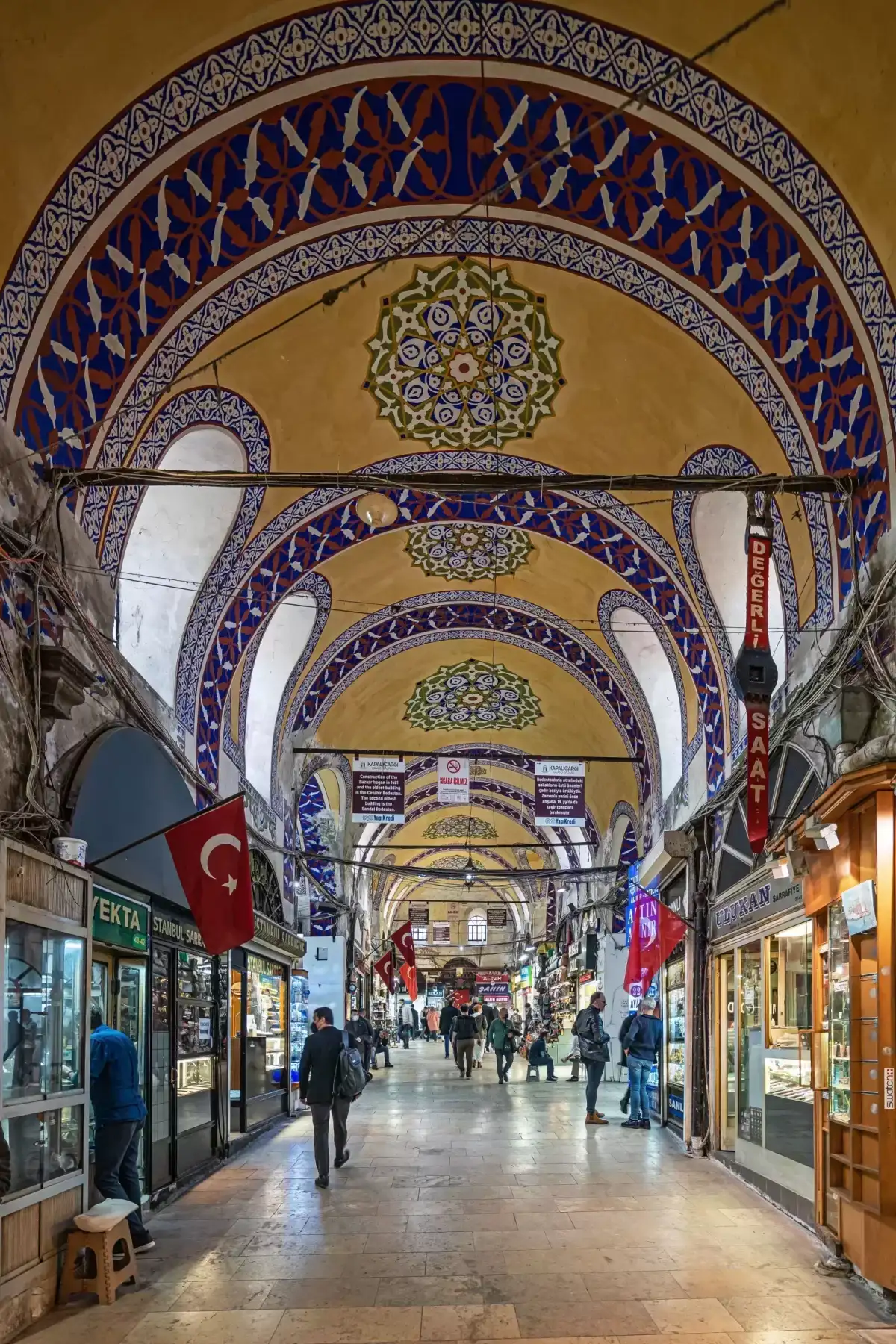
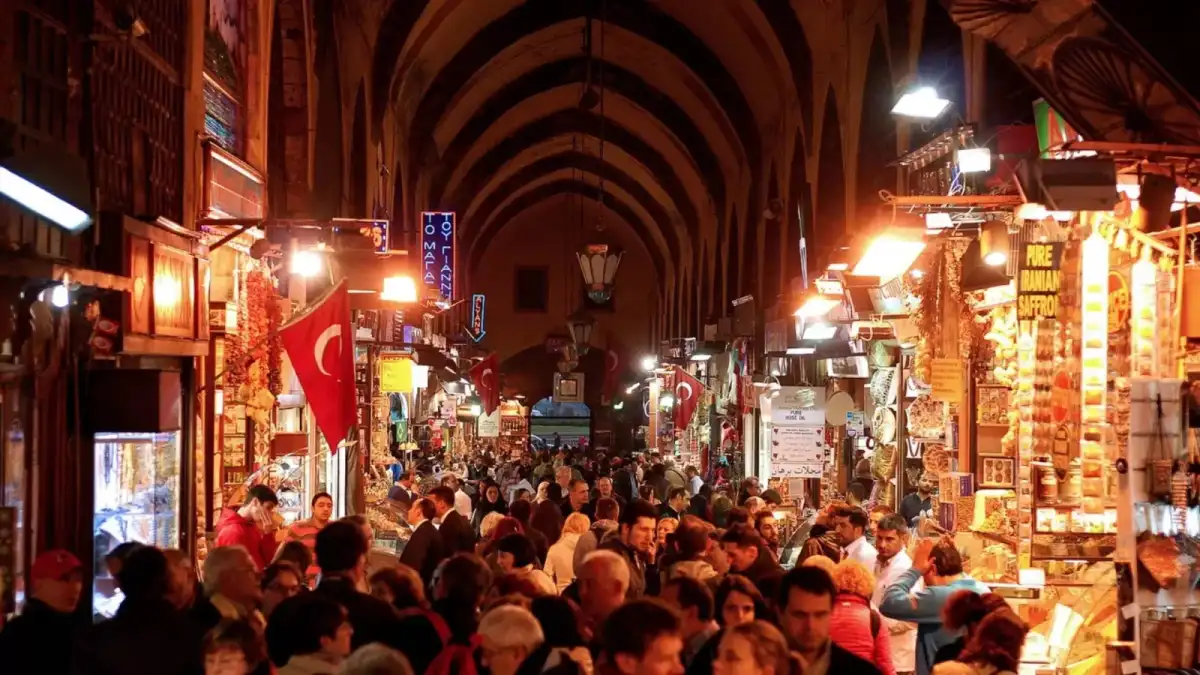
The Grand Bazaar is one of the world's largest and oldest covered markets, operating since 1461 between Beyazıt and Nuruosmaniye in Istanbul's Fatih district. Housing nearly 4,000 shops selling gold, carpets, spices, and handicrafts, admission is completely free.
The core of the bazaar, the Inner Bedesten, was commissioned in 1461 by Sultan Mehmed the Conqueror. Expanded during the reign of Suleiman the Magnificent, it was gradually covered, and surrounding streets were incorporated over time. Today, it spans an area of 45,000 square meters housing more than 4,000 shops. Visitors can enter through 22 gates, the most famous of which are Beyazıt, Çarşıkapı, Nuruosmaniye, Mahmutpaşa, and Kuyumcular. Wandering aimlessly in the crowd can easily lead to getting lost, so keeping track of your exit gate before entering is quite helpful.
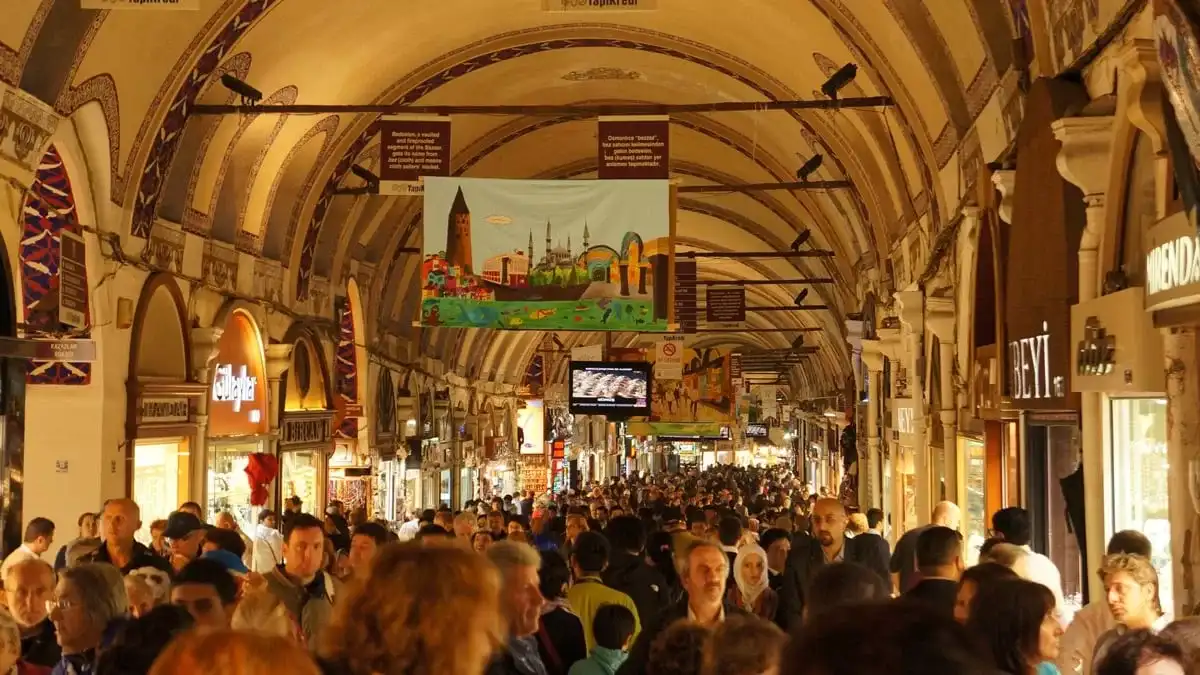
Some visitors come to shop, while others come simply to explore. A point frequently highlighted in reviews is that its unique atmosphere allows for hours of wandering without buying a single item. Some mention that caution is needed regarding prices. Bargaining is essential in shops without displayed price tags, and many visitors emphasize never accepting the initial quoted price. Some reviewers note that the crowds during peak hours can feel overwhelming, while others point out that identical items can often be found cheaper in the streets outside the market.
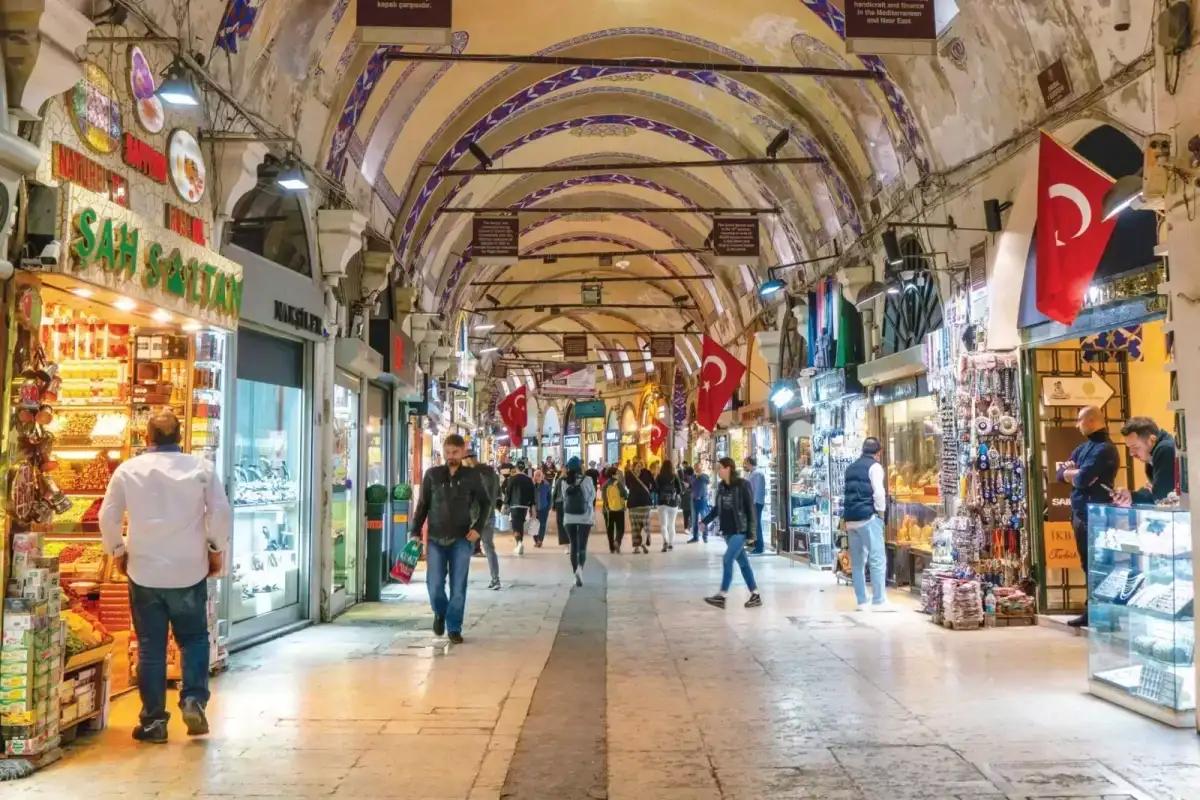
Jewelers, carpet merchants, leather stores, evil eye charms, and souvenir shops all stand side by side. In addition to Turkish Lira, Euros and US Dollars are widely accepted. The streets resemble a labyrinth, but this is part of its distinct charm. Don't be afraid to get lost; one of the exit gates is always nearby.
Guide's Note
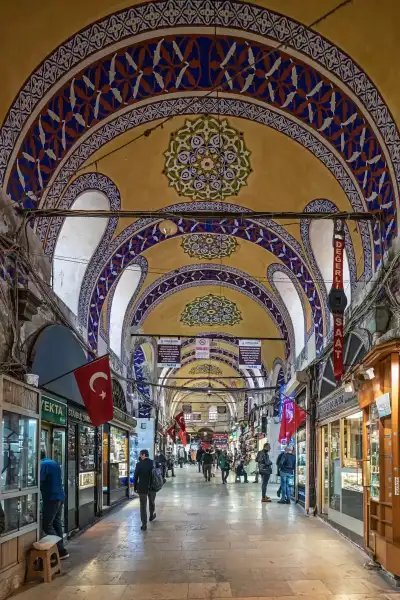
The Grand Bazaar is a popular destination for those seeking a traditional shopping experience, offering a wide array of products including clothing, jewelry, spices, souvenirs, and Turkish delight. Visitors note that compared to other city center stores, the variety of souvenirs here is much broader and prices can occasionally be more affordable. Positive experiences have also been shared regarding currency exchange, with competitive exchange rates available at several booths inside the bazaar.
Price bargaining is a point particularly emphasized by visitors. Multiple reviews state that non-hesitant negotiation can lead to significant price reductions. Additional discounts are often provided for cash payments, and foreign currencies such as Euros are commonly accepted alongside Turkish Lira.
On the other hand, some visitors highlight points to keep in mind:
- The bazaar is vast and maze-like, making navigation challenging; downloading a map beforehand or marking shops to visit can save time.
- Heavy crowds can make strolling comfortably difficult.
- While one visitor noted prices were higher than outside the bazaar, another pointed out instances of inflated pricing; comparing prices before making a purchase is recommended.
When to Visit
The market is closed on Sundays and religious holidays, and open from 08:30 to 19:00 on other days. Arriving close to opening time offers a chance to explore the shops before tourist crowds arrive. In the afternoon, especially on weekends, the narrow alleys get packed, which some visitors find uncomfortable. Even in warm summer months, the market is covered and stays shaded, making it a comfortable visit even on hot days.
How to Get There
The most practical option is the T1 tram line. Get off at the Beyazıt-Kapalıçarşı stop on the Kabataş-Bağcılar route and walk for 3 minutes. Visitors coming from the Asian side can take the Marmaray to Sirkeci and transfer to the same tram line. A similar transfer route works from Üsküdar. For bus travelers, lines 336 and BN1 stop near the Fatih district, though the tram remains faster for most visitors.
Nearby Attractions
The Grand Bazaar sits right in the heart of the historic peninsula. The Süleymaniye Mosque, Galata Bridge, and New Mosque (Yeni Cami) are all within walking distance. Nuruosmaniye Mosque directly adjoins one of the bazaar gates, making it easy to visit on the same day. The Book Bazaar (Sahaflar Çarşısı) is near the Beyazıt gate, offering a great stop for book lovers.
How Much Time to Spend
For visitors just browsing, 1 to 1.5 hours is sufficient. If you plan to shop, haggle, and stop for a coffee or tea, your visit can extend to 2–3 hours. The market is large and the streets look similar, so taking your time makes for a much more enjoyable experience.
Things to Watch Out For
The most frequent warning in visitor reviews concerns pricing. Bargaining is practically a rule in shops without price tags; never accept the initial asking price. Some visitors point out occasional overcharging tactics, so buying from shops with clearly displayed prices is safer. Reviews also note that identical items are sold cheaper in the surrounding streets outside the market, so comparing prices is worthwhile.
Best Photography Spots
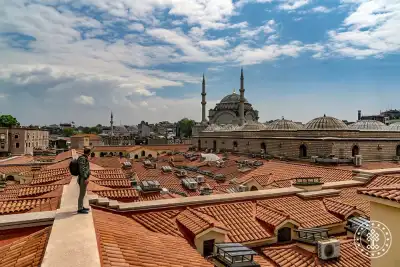
Daylight filtering from above into the domed main corridors provides great photo opportunities. There are also access points to the rooftops of the bazaar; the view overlooking the historic peninsula roofs is a lesser-known detail that many visitors miss. Display windows along the jewelers' street also provide colorful and vibrant compositions.
What to Buy
The jewelers' lanes are famous for their variety of gold and silver jewelry. Carpet and rug shops, leather goods, evil eye charms, ceramics, and copperware are also widely available. For spices, heading to the nearby Spice Bazaar (Mısır Çarşısı) makes more sense as it is a dedicated structure for spice trade.
This content originates from neresigezilir.com and may not be copied without permission.
FAQ
Updated: